
American Airlines Flight AAL3160 Boeing 737-800 Diverts to Philadelphia from Boston in 2026
American Airlines flight AAL3160, a Boeing 737-800 traveling from Boston to Chicago, diverted to Philadelphia International Airport on August 9, 2026, causing significant passenger disruption.

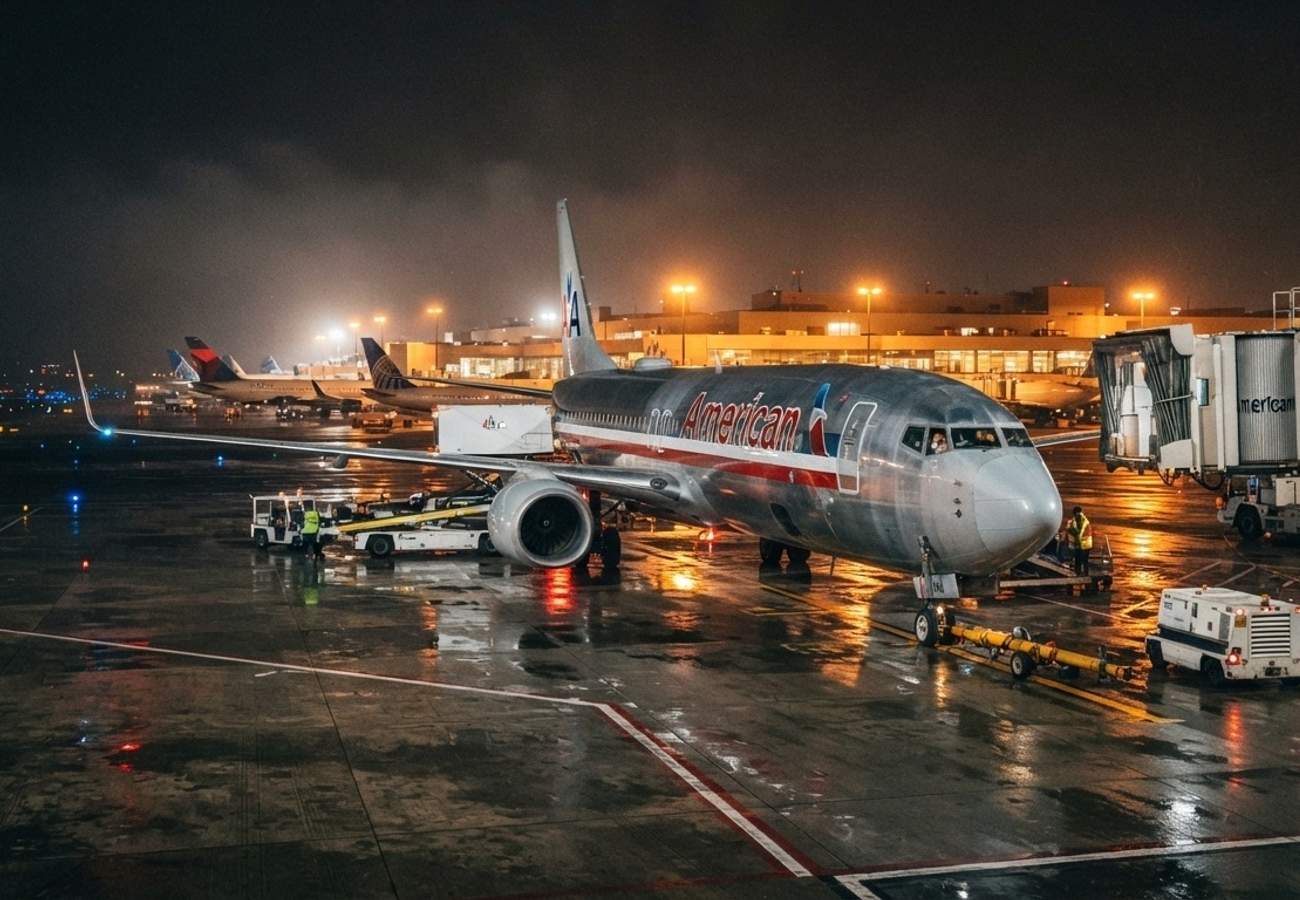
Image generated by AI
Flight AAL3160, operating from Boston to Chicago, was forced to divert to Philadelphia International Airport on August 9, 2026. The incident involving a Boeing 737-800 has left passengers facing significant schedule disruptions.
On August 9, 2026, American Airlines flight AAL3160 experienced an unplanned operational change that prevented it from reaching its intended destination. The aircraft, a Boeing 737-800 registered as N972AN, was scheduled to transport passengers from Boston Logan International Airport (BOS) to Chicago O’Hare International Airport (ORD).
Flight tracking data from FlightAware and Flightradar24 indicates that while the flight had a scheduled departure of 7:17 PM EDT, it actually took off from Boston at approximately 10:07 PM local time. The flight was originally expected to arrive in Chicago at 9:35 PM, but the flight path was modified mid-journey, resulting in an emergency diversion to Philadelphia International Airport (PHL).
Flight and Airport Impact Breakdown
The diversion caused an immediate ripple effect for passengers and ground operations. The specific data regarding the disruption is as follows:
- Flight Number: AAL3160
- Aircraft Model: Boeing 737-800 (Registration: N972AN)
- Route: Boston Logan International (BOS) $\rightarrow$ Chicago O'Hare (ORD)
- Diversion Point: Philadelphia International Airport (PHL)
- Actual Departure: 10:07 PM EDT, August 9, 2026
- Impact: Complete diversion from the intended Midwest destination to a Northeastern hub.
While American Airlines, airport authorities, and federal aviation regulators have not yet publicly confirmed the specific trigger for the diversion, such actions are typically prompted by technical malfunctions, medical emergencies, severe weather, or air traffic control restrictions.
Passenger Rights and Advisory
For the affected passengers on AAL3160, a diversion creates a complex legal and operational scenario regarding compensation and care. Since this was a domestic U.S. flight, passengers are governed by U.S. Department of Transportation (DOT) guidelines rather than EU261/2004.
Our analysis of U.S. aviation policy suggests the following for affected travelers:
- Duty of Care: While U.S. law is less stringent than European mandates, airlines typically provide meal vouchers and communication facilities during significant delays. If the diversion resulted in an overnight stay in Philadelphia, passengers should request hotel accommodations from American Airlines.
- Rebooking Rights: For the affected passenger, this means the airline is obligated to rebook them on the next available flight to Chicago O'Hare at no additional cost.
- Refund Eligibility: If a passenger chooses not to travel further due to the diversion and the resulting delay, they may be entitled to a refund of the unused portion of their ticket, depending on the airline's contract of carriage.
- Documentation: Passengers are advised to keep all receipts for out-of-pocket expenses (food, transport, lodging) incurred in Philadelphia to submit for reimbursement claims.
Industry Analyst View
The diversion of AAL3160 underscores the critical role of "alternate airport" planning in the U.S. National Airspace System. Philadelphia International Airport serves as a strategic relief valve for flights traversing the East Coast toward the Midwest.
The use of the Boeing 737-800, a workhorse of the domestic fleet, ensures that most major U.S. hubs have the necessary ground infrastructure to handle these aircraft during unplanned landings. From an operational standpoint, the decision to divert—even without a declared emergency—reflects a "safety-first" culture where pilots prioritize precautionary landings over pushing toward a destination when variables change.
The delay in official communication regarding the cause of the diversion is standard procedure while the airline conducts internal maintenance reviews or awaits official reports from the flight crew.
Safety remains the primary metric of success in aviation, even when it results in operational inefficiency.
Related Travel Guides
Disclaimer
This article is for informational and educational purposes only. It does not constitute legal, financial, or professional advice. While we strive to provide accurate and up-to-date information, travel policies, regulations, and conditions change rapidly. Always verify information with official sources before making travel decisions. Nomad Lawyer makes no representations about the accuracy, reliability, completeness, or suitability of the information provided. Readers should consult qualified professionals for advice specific to their circumstances. The views expressed in this article are those of the author and do not necessarily reflect the views of Nomad Lawyer.
Kunal K Choudhary
Co-Founder & Contributor
A passionate traveller and tech enthusiast. Kunal contributes to the vision and growth of Nomad Lawyer, bringing fresh perspectives and driving the community forward.
Learn more about our team →