
American Airlines Flight AA1942 Boeing 737-800 Diverts to Cleveland Hopkins Airport in 2026
American Airlines Flight AA1942 experienced a significant operational disruption on July 6, 2026, diverting a Boeing 737-800 to Cleveland Hopkins International Airport instead of New York LaGuardia.

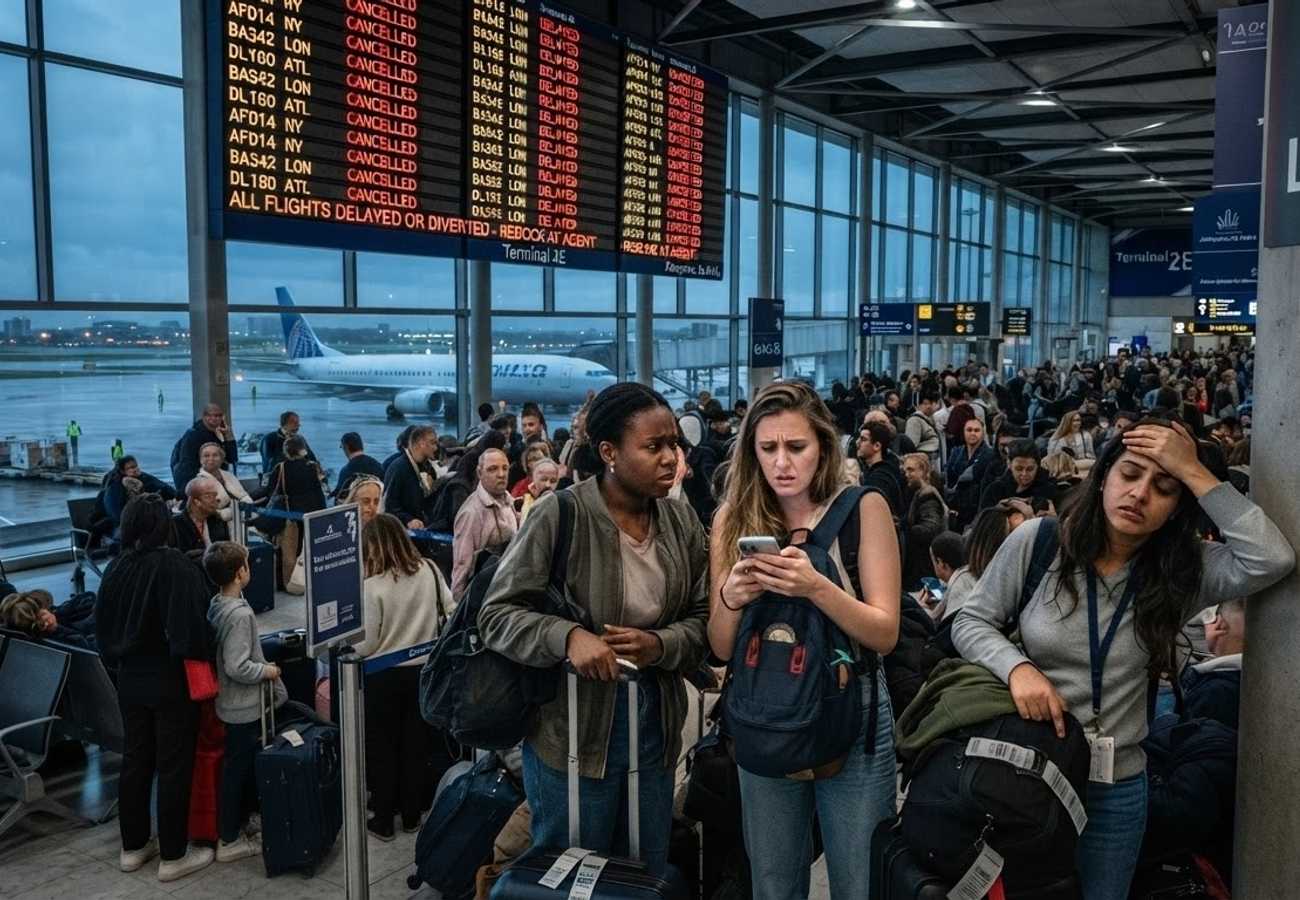
Image generated by AI
American Airlines Flight AA1942, operating from Charlotte to New York LaGuardia, was forced to divert to Cleveland Hopkins International Airport on July 6, 2026. The incident resulted in a nearly six-hour arrival delay for passengers aboard the Boeing 737-800.
The operational disruption began at Charlotte Douglas International Airport (CLT). Flight AA1942, registered as N919NN, departed Gate B5 at approximately 5:16 PM EDT. This departure occurred 1 hour and 59 minutes after its scheduled 3:17 PM EDT takeoff.
Rather than proceeding to New York LaGuardia (LGA), the aircraft altered its course toward Cleveland. The flight touched down at Cleveland Hopkins International Airport (CLE) at Gate 14 at approximately 11:01 PM EDT. This landing was 5 hours and 46 minutes behind the original scheduled arrival time of 6:07 PM EDT.
Operational Breakdown: Flight AA1942
- Aircraft Type: Boeing 737-800 (B738)
- Registration: N919NN
- Origin: Charlotte Douglas International Airport (CLT)
- Intended Destination: New York LaGuardia Airport (LGA)
- Diversion Point: Cleveland Hopkins International Airport (CLE)
- Total Arrival Delay: 5 hours and 46 minutes
Flight Timeline and Logistics
| Event | Scheduled Time | Actual Time | Variance |
|---|---|---|---|
| Departure (CLT) | 3:17 PM EDT | 5:16 PM EDT | +1h 59m |
| Arrival (LGA/CLE) | 6:07 PM EDT | 11:01 PM EDT | +5h 46m |
While the specific catalyst for the diversion remains unconfirmed by the carrier, industry observers note that such maneuvers are typically triggered by technical anomalies, medical emergencies, or sudden adverse weather shifts. The diversion process requires immediate synchronization between the flight deck, airline operations centers, and Air Traffic Control (ATC).
The diversion left passengers in a state of uncertainty at Cleveland Hopkins International Airport. Because the aircraft did not complete its original route to New York, travelers faced disruptions to ground transportation, hotel bookings, and connecting flights.
Why This Matters: Industry Implication
Our analysis of this event indicates a critical vulnerability in high-frequency domestic corridors. The Charlotte-to-New York route is one of the busiest in the U.S. aviation network. When a diversion occurs on such a high-density path, the ripple effect extends beyond the immediate passengers.
The 1 hour and 59 minute delay at departure suggests the flight was already under operational stress before the diversion occurred. This "compounding delay" pattern often puts pressure on crew duty hours, potentially limiting the options for the airline to fly the same aircraft back to the original destination immediately. For the aviation industry, this underscores the necessity of robust recovery plans at secondary hubs like Cleveland to mitigate the impact of primary route failures.
Forward Outlook
Market trends suggest that passengers are increasingly seeking transparency regarding "operational reasons" for diversions. While safety is the primary driver, the lack of immediate public confirmation regarding the cause of AA1942's diversion may lead to increased passenger frustration and demands for better real-time communication.
Expect American Airlines to prioritize fleet reliability and crew scheduling flexibility to prevent the compounding delays seen in this instance. Travelers on these high-traffic routes should continue to maintain flexible schedules and utilize real-time tracking apps to anticipate disruptions before they are officially announced.
Safety protocols remain the priority, regardless of the resulting schedule volatility.
Related Travel Guides
Disclaimer
This article is for informational and educational purposes only. It does not constitute legal, financial, or professional advice. While we strive to provide accurate and up-to-date information, travel policies, regulations, and conditions change rapidly. Always verify information with official sources before making travel decisions. Nomad Lawyer makes no representations about the accuracy, reliability, completeness, or suitability of the information provided. Readers should consult qualified professionals for advice specific to their circumstances. The views expressed in this article are those of the author and do not necessarily reflect the views of Nomad Lawyer.
Raushan Kumar
Founder & Lead Developer
Full-stack developer with 11+ years of experience and a passionate traveller. Raushan built Nomad Lawyer from the ground up with a vision to create the best travel and law experience on the web.
Learn more about our team →