
Federal Investigation Launched After American Airlines and Air Canada Jets Nearly Collide at JFK Airport
Breaking airline news and aviation industry updates for 2026.

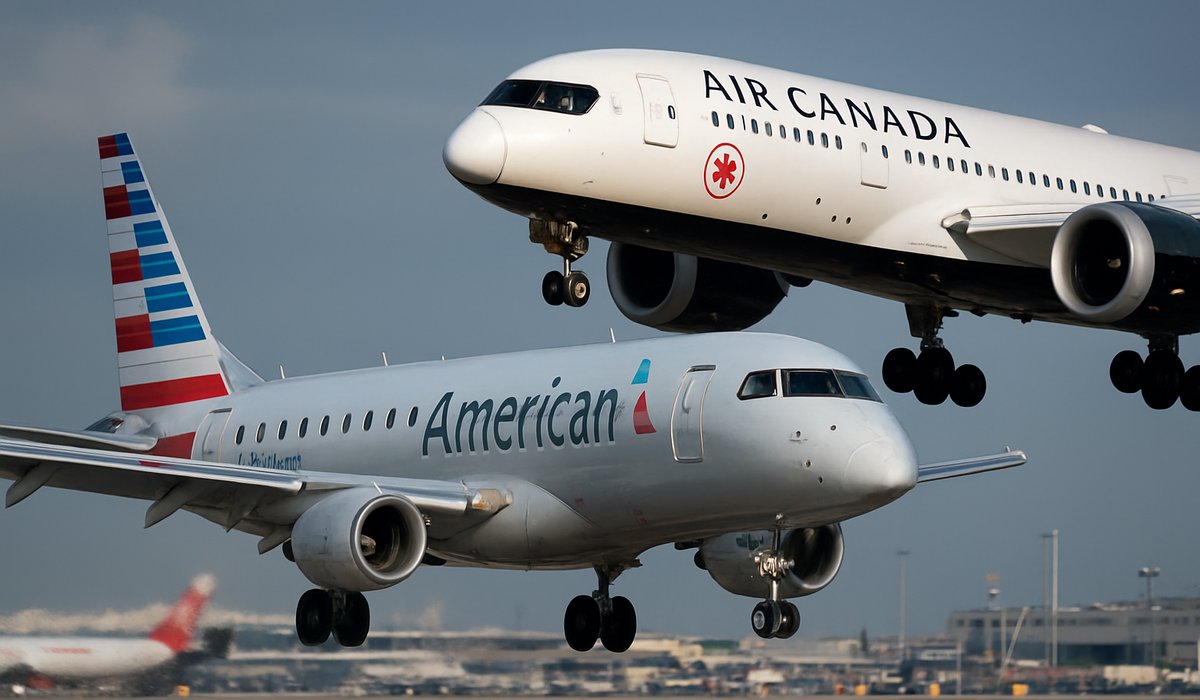
Image generated by AI
Federal Investigation Launched After American Airlines and Air Canada Jets Nearly Collide at JFK Airport
Two regional aircraft came dangerously close during parallel runway approach, raising fresh safety concerns at one of America's busiest hubs
Close Call at Major Hub Sparks Safety Review
U.S. aviation regulators have opened a formal investigation into a potentially catastrophic near-miss at New York's John F. Kennedy International Airport, where an American Airlines regional jet and an Air Canada aircraft passed within 350 feet of each other while attempting simultaneous landings on parallel runways.
The incident, involving two Embraer E175 regional jets, occurred as both aircraft were on final approach to adjacent runways. According to preliminary findings from federal authorities, the American Airlines-operated E175 deviated significantly from its assigned flight path, prompting both crews to receive terrain awareness and warning system (TCAS) alerts before executing emergency go-around procedures.
Aircraft Safety Systems Activate Mid-Descent
The dual go-around maneuvers prevented what could have resulted in a catastrophic collision, with both crews ultimately landing safely at the New York-area facility. The incident underscores the critical role of onboard collision avoidance systems in preventing mid-air accidents at congested metropolitan airports.
JFK Airport, one of the nation's busiest air traffic hubs, handles complex simultaneous approach operations across multiple parallel runways. The tight spacing required for such procedures demands precise adherence to assigned flight paths and consistent air traffic control coordination.
Aviation Safety Standards Under Scrutiny
The near-collision raises questions about approach procedures, pilot adherence to flight paths, and communication protocols during high-traffic periods. Federal Aviation Administration (FAA) investigators are examining whether procedural gaps, weather conditions, or crew coordination issues contributed to the deviation.
This incident reflects broader concerns within the aviation industry regarding safety margins at major metropolitan airports, where increasing passenger volumes and flight frequencies create cumulative operational pressures.
Both airlines have stated their full cooperation with the ongoing investigation. The FAA has not released additional details regarding potential enforcement actions or corrective measures.
FAQ: Understanding Near-Miss Incidents at Major Airports
What is a TCAS alert and how does it prevent collisions? TCAS (Traffic Collision Avoidance System) is an onboard safety system that detects nearby aircraft and automatically issues warnings or resolution advisories to pilots when collision risk is detected, independent of ground-based air traffic control.
Why do airports use parallel runways for simultaneous approaches? Parallel runway operations increase airport capacity and reduce delays during peak travel periods, though they require precise spacing and strict adherence to assigned flight paths to maintain separation minimums.
What is the standard minimum separation distance between aircraft during approach? Regulatory minimums vary by airport configuration and weather conditions, but typically require at least 1,000 feet of vertical separation or specific lateral distances between aircraft on parallel approaches.
How common are near-miss incidents at major U.S. airports? While exact figures vary by reporting year, serious incidents remain statistically rare relative to millions of annual operations, though they receive immediate investigation and regulatory attention.
What happens during a go-around procedure? A go-around is an emergency maneuver where pilots abort their landing approach, climb back to a safe altitude, and circle the airport for another landing attempt—a standard safety procedure taught in pilot training.
Related Travel Guides
Flight Delay Compensation Guide 2026
Understanding Airline Route Changes
Airport Security Process Updated (2026)
External Resources
Disclaimer
This article is for informational and educational purposes only. It does not constitute legal, financial, or professional advice. While we strive to provide accurate and up-to-date information, travel policies, regulations, and conditions change rapidly. Always verify information with official sources before making travel decisions. Nomad Lawyer makes no representations about the accuracy, reliability, completeness, or suitability of the information provided. Readers should consult qualified professionals for advice specific to their circumstances. The views expressed in this article are those of the author and do not necessarily reflect the views of Nomad Lawyer.
Kunal K Choudhary
Co-Founder & Contributor
A passionate traveller and tech enthusiast. Kunal contributes to the vision and growth of Nomad Lawyer, bringing fresh perspectives and driving the community forward.
Learn more about our team →