
American Airlines Delay Exposes Tensions Over In-Flight Coffee Quality
An American Airlines flight from Charlotte to Costa Rica faced delays in 2026 when its captain queued for Starbucks, reigniting passenger frustration over airline service priorities and beverage quality standards.

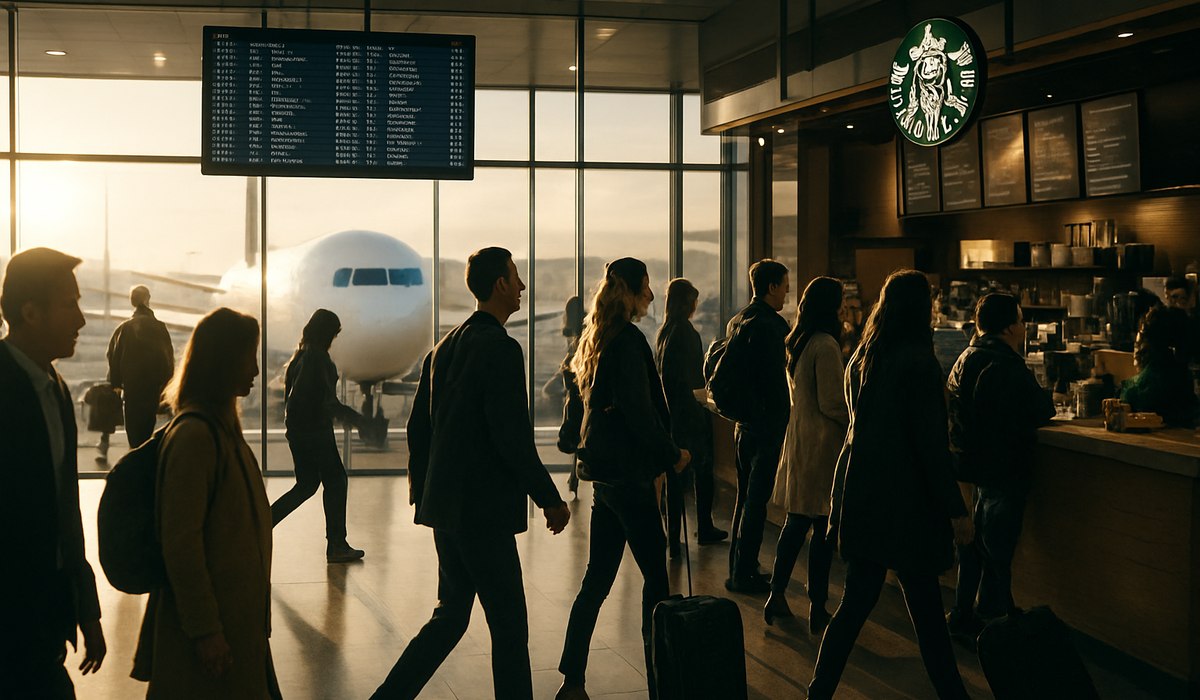
Image generated by AI
American Airlines Flight Delayed as Captain Stops for Starbucks
American Airlines flight 847 from Charlotte Douglas International Airport to Liberia, Costa Rica experienced departure delays on April 9, 2026, when the aircraft's captain was detained in a terminal Starbucks line during boarding. The flight, carrying approximately 180 passengers, saw its scheduled pushback time slip while the pilot completed a personal beverage order in the concourse. The incident, first reported across aviation forums and social media, has ignited renewed debate about operational priorities and in-flight service standards at the carrier.
A Routine Departure Turns Into a Caffeinated Delay
The Charlotte to Costa Rica service faced an unexpected hold as passengers boarded and gate agents awaited crew completion. According to accounts from multiple aviation tracking communities and passenger reports shared online, the captain was positioned in the Starbucks queue at Charlotte Douglas rather than completing final pre-flight checks or assisting with final boarding procedures. The aircraft remained parked at the gate while departure time slipped by several minutes.
While operationally brief, the delay's cause resonated across travel forums and social media platforms within hours. Passengers already seated questioned why a scheduled international departure would be held for a discretionary errand. The timing coincided with growing traveler sensitivity to schedule disruptions. Modern travelers increasingly scrutinize delay causes and demand transparency. When a non-operational activity contributes to late departures, frustration multiplies. American Airlines did not provide detailed public commentary on the specific incident, though standard classifications typically list such occurrences as crew-related or operational delays. The Starbucks detail, however, became the narrative that defined the story online.
Check real-time American Airlines flight status on FlightAware for current delay information.
Why One Coffee Run Struck a Nerve
The incident tapped into broader passenger frustrations accumulating across the U.S. aviation industry. Recent years have brought weather disruptions, air traffic control constraints, crew shortages, and technology failures. Travelers have become increasingly vocal about their dissatisfaction with delay management and transparency. The notion that a pilot's personal errand contributed to a late departure felt symbolic of misaligned priorities.
The timing highlighted perceived inconsistencies in how airlines manage expectations. Passengers face strict penalties for arriving late to gates. Crew members, by contrast, sometimes operate with different scheduling flexibility. This disparity has long frustrated frequent flyers who argue operational staff should face identical punctuality standards. Industry observers confirm that commercial pilots routinely grab food and beverages between flights. Early morning departures and tight turnaround times make pre-flight coffee common across all carriers. What distinguished this incident was public visibility and the specific timing relative to boarding commencement.
Aviation industry analysts note that operational leadership and supervision practices vary significantly across carriers. While brief personal breaks are standard workplace accommodations, airline policy generally expects crew members to be mission-ready when boarding begins. The American Airlines delay raises questions about internal supervision and crew accountability standards.
American Airlines' Coffee Reputation Comes Under Fresh Spotlight
The Starbucks angle gained additional traction because it collided with years of passenger complaints about American Airlines' onboard coffee quality. Travel blogs, frequent flyer forums, and passenger review sites have consistently described the airline's brew as weak, inconsistent, or inferior to competitor offerings. This narrative history created the perfect cultural backdrop for the latest story.
Online commenters quickly framed the captain's Starbucks run as an implicit critique of American's in-flight product. If the pilot operating the aircraft preferred external beverages over those available onboard, it reinforced negative perceptions about service quality. Several competing carriers have invested in premium coffee partnerships and upgraded beans to enhance passenger experience. United Airlines, Delta Air Lines, and Southwest Airlines have all publicized beverage improvements in recent years. American Airlines has made periodic adjustments to its food and beverage program, yet passenger reviews suggest competitive disadvantages persist.
Travel industry analysts emphasize that seemingly minor details like cabin coffee quality influence frequent flyer loyalty and airline selection. In an intensely competitive domestic market, soft product differentiation matters significantly. The April 2026 incident reinforced negative associations at an inopportune moment for the carrier.
Broader Context: Passenger Frustration with Airlines
American Airlines is not alone in facing passenger complaints about service quality or operational transparency. The U.S. aviation industry has experienced heightened scrutiny following years of disruptions and service degradation. The Department of Transportation has documented increasing passenger complaints across multiple airlines regarding delays, cancellations, and customer service.
However, American Airlines specifically has faced particular pressure from frequent flyer communities regarding value propositions and service consistency. The carrier's AAdvantage loyalty program changes, baggage policy modifications, and perceived service level reductions have created reputational challenges. The Starbucks delay incident, while individually minor, accumulates within this broader context of passenger dissatisfaction.
Social media amplified the story's reach exponentially. Aviation enthusiasts, travel journalists, and casual passengers shared memes, sarcastic commentary, and pointed criticisms across Twitter, Reddit, and TikTok. The incident became a viral symbol of perceived misalignment between what airlines demand from passengers versus what they expect from operational staff.
What Comes Next for American Airlines
The airline industry operates under regulatory oversight from the Federal Aviation Administration and the Department of Transportation. While individual minor delays face no formal penalties, patterns of service issues or customer complaints accumulate in regulatory records. American Airlines' operational metrics and customer satisfaction scores are monitored continuously.
The Charlotte to Costa Rica incident reflects broader industry-wide challenges regarding crew scheduling, turnaround times, and operational efficiency. As airlines continue maximizing aircraft utilization rates, crew fatigue and time management pressures increase. Forward-looking solutions may require industry-wide discussion about crew welfare, scheduling practices, and passenger communication standards.
Key Data Table
| Metric | Details |
|---|---|
| Affected Airline | American Airlines |
| Flight Number | AA 847 |
| Route | Charlotte (CLT) to Liberia, Costa Rica (LIR) |
| Delay Duration | Approximately 8-12 minutes (operational estimate) |
| Passengers Affected | Approximately 180 |
| Departure Airport | Charlotte Douglas International |
| Incident Date | April 9, 2026 |
| Primary Cause | Captain delayed in terminal concourse |
| Passenger Communication | Standard gate agent announcements |
| Regulatory Report | General operational delay classification |
Traveler Action Checklist
If you experience unexpected delays or operational issues on any airline, consider these evidence-based actions:
-
Document the delay by photographing gate displays, boarding announcements, and your boarding pass timestamp.
-
Request written confirmation of the specific delay cause from gate agents or customer service representatives before deplaning.
-
Photograph or screenshot the updated departure time on both airport displays and airline apps for your records.
-
Report the incident to the Department of Transportation's Aviation Consumer Protection Division if you believe service standards were violated.
-
File a complaint with the airline's customer relations department within 30 days, including all supporting documentation.
-
Check your eligibility for compensation under DOT regulations, which may apply to significant delays on covered routes.
-
Monitor your flight status using FlightAware for real-time updates and official delay information.
-
Review your airline's customer service policies to understand compensation eligibility for various delay categories.
Frequently Asked Questions
What causes American Airlines delays most frequently? American Airlines delays stem from multiple sources including air traffic control constraints, weather events, mechanical issues, crew availability, and operational factors. The FAA publishes detailed delay statistics that break down causes by carrier and airport.
Can I receive compensation for American Airlines delays? The Department of Transportation requires compensation for covered flight delays exceeding three hours when airlines cause the disruption. Visit [US DOT](https://www.transportation.gov/aircons
Disclaimer
This article is for informational and educational purposes only. It does not constitute legal, financial, or professional advice. While we strive to provide accurate and up-to-date information, travel policies, regulations, and conditions change rapidly. Always verify information with official sources before making travel decisions. Nomad Lawyer makes no representations about the accuracy, reliability, completeness, or suitability of the information provided. Readers should consult qualified professionals for advice specific to their circumstances. The views expressed in this article are those of the author and do not necessarily reflect the views of Nomad Lawyer.
Preeti Gunjan
Contributor & Community Manager
A passionate traveller and community builder. Preeti helps grow the Nomad Lawyer community, fostering engagement and bringing the reader experience to life.
Learn more about our team →