
American Airlines Flight AA3647 Triggers Regional Airport Disruptions and Travel Chaos Following Sudden Diversion to Waco: Latest Airline News
As Envoy Air-operated flight AA3647 suddenly diverts to Waco, passengers face unexpected travel chaos, highlighting the fragility of regional connectivity into massive Texas aviation hubs.

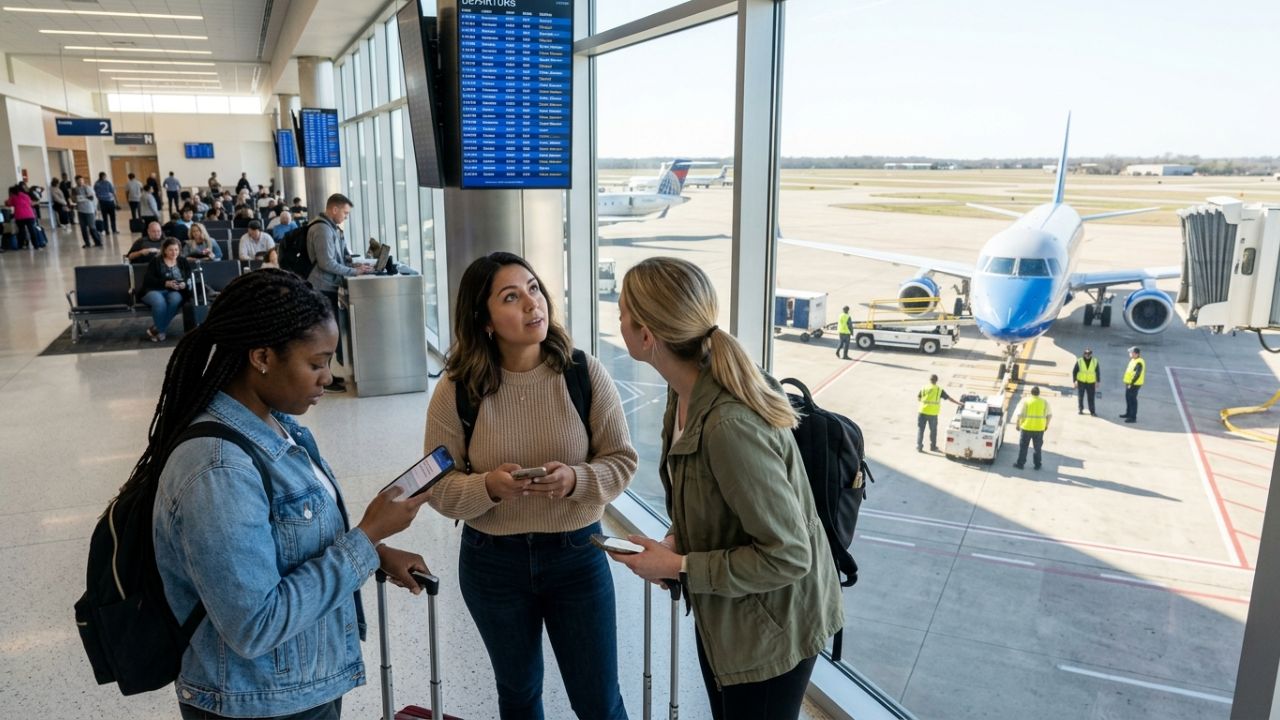
Image generated by AI
In a highly visible operational interruption that rapidly triggered localized travel chaos and severe airport disruptions across the Texas regional aviation network, an early morning commuter flight bound for one of the world's busiest hubs has been suddenly grounded. Reported on June 20, 2026, American Airlines flight AA3647, officially operated by regional partner Envoy Air, abruptly altered its route on June 19, abandoning its final approach into Dallas/Fort Worth International Airport (DFW). Instead, the aircraft executed an unscheduled diversion to Waco Regional Airport. While officials have not confirmed a life-threatening emergency, this sudden mid-air rerouting instantly severed vital connecting itineraries, exposing passengers to the severe threat of cascading flight cancellations. The incident sharply highlights the intense logistical fragility of feeder flights supplying massive aviation gateways, firmly commanding today's most crucial headline in breaking airline news and essential global aviation updates.
By introducing direct passenger coordination and dynamic scheduling backups, the regional aviation hubs target growing passenger demand across vital commerce sectors. The choice to coordinate flight departures in phases helps to manage gate capacity, supporting the country's broader regional transportation network.
Context: The Vulnerability of the Regional Spoke
For the global tourism and domestic aviation industry, the sudden diversion of American Airlines flight AA3647 serves as a stark reminder of the massive logistical consequences tied to regional flight disruptions.
Historically, the Dallas/Fort Worth (DFW) mega-hub relies entirely on high-frequency "spoke" flights operated by regional carriers like Envoy Air to continuously feed passengers onto highly lucrative international and transcontinental routes. When a flight like AA3647, originating in Abilene, fails to complete its scheduled journey, the resulting travel chaos is instantaneous. Dozens of passengers booked on this early morning service were explicitly relying on a 6:20 a.m. arrival at DFW to catch massive connecting flights across the American Airlines network. By diverting to Waco, those carefully planned itineraries were completely destroyed. While flight diversions are heavily utilized as standard precautionary measures to prioritize passenger safety over schedule integrity, the lack of an immediate, official explanation from the airline or aviation authorities has drawn intense scrutiny regarding the specific operational or mechanical circumstances that forced the Embraer 175 out of the DFW arrival queue.
To view live flight schedules, verify the active operational status of the Envoy Air regional network, or to track potential route restorations out of Texas, travelers must consult official aviation directories. For direct updates regarding how this specific diversion impacts your subsequent connecting flight cancellations out of DFW, travelers should aggressively utilize the official portals of American Airlines. To explore live flight tracking and monitor the exact severity of the cascading bottlenecks across competitor hubs navigating similar early morning disruptions, passengers can consult the official FlightAware tracking service.
Section-Wise Breakdown: Navigating the Diversion
The Abilene Departure and Delayed Takeoff
The disruption of flight AA3647 actually began on the tarmac at Abilene Regional Airport. The flight was officially scheduled to depart during the crucial early morning peak period at 5:18 a.m. local time. However, operational data confirms the aircraft was delayed on the ground, eventually taking off at approximately 5:38 a.m. In the highly compressed environment of short-haul regional flying, a 20-minute departure delay heavily cuts into the crew's available buffer time, instantly raising the stakes if unexpected technical or weather issues materialize en route to the hub.
The Decision to Abandon Dallas/Fort Worth
The flight path from Abilene to Dallas/Fort Worth is remarkably short, meaning pilots and dispatch teams have an incredibly narrow window to make critical decisions. As the aircraft approached the massive, highly congested airspace surrounding DFW, the crew altered course. Instead of attempting to integrate into the heavy arrival traffic of the global hub, they executed a sudden turn toward Waco Regional Airport. Because DFW handles thousands of aircraft movements daily, any minor issue—whether it be severe air traffic congestion, pop-up weather systems, or a minor technical indication requiring inspection—makes a diversion to a quieter facility like Waco the safest and most efficient operational response.
The Grounding at Waco Regional Airport
Upon safely landing at Waco Regional Airport, the flight was officially suspended. Waco serves as an excellent diversion point because it can accommodate regional jets quickly without the massive holding patterns associated with major hubs. However, for the passengers trapped onboard, arriving in Waco rather than Dallas guarantees immediate travel chaos, as the regional airport lacks the massive rebooking infrastructure and alternate aircraft necessary to instantly rescue stranded travelers.
Technical Roster: Flight AA3647 Diversion Data
To ensure absolute factual accuracy regarding the specific aircraft involved, the exact operational timelines, and the routing coordinates that defined this sudden interruption, the following matrix details the verified flight data:
AA3647 Flight Diversion Data Matrix
| Flight Parameter | Verified Operational Detail |
|---|---|
| Flight Designation | American Airlines AA3647 (Operated by Envoy Air) |
| Aircraft Type & Registration | Embraer 175 (N245NN) |
| Origin Airport | Abilene Regional Airport, Texas |
| Scheduled Destination | Dallas/Fort Worth International Airport (DFW) |
| Diversion Airport | Waco Regional Airport, Texas |
| Scheduled Departure Time | 5:18 a.m. (Local Time) |
| Actual Departure Time | 5:38 a.m. (Local Time) |
| Scheduled Arrival Time (DFW) | 6:20 a.m. (Local Time) |
Data strictly reflects the verified operational routing and timeline of the June 19, 2026 diversion, highlighting the specific delay out of Abilene and the subsequent grounding in Waco.
Passenger Impact: The Severed Connection
For the passengers relying on the Envoy Air network to bridge their travel from regional Texas to the global economy, the sudden diversion of AA3647 triggered a highly stressful logistical nightmare and severe travel chaos.
The immediate passenger impact of this unscheduled landing is the complete destruction of the onward itinerary. An early morning flight scheduled to land at DFW at 6:20 a.m. is populated almost entirely by travelers holding boarding passes for 8:00 a.m. connecting flights to major financial centers like New York or international vacation destinations. By landing in Waco, these passengers completely missed those crucial connections. While Envoy Air ground staff typically attempt to arrange onward transportation via bus to Dallas or rebook passengers on later flights, the reality is that major legacy carriers are operating at historically high load factors. Rebooking a stranded passenger out of Waco often takes 24 to 48 hours, forcing the traveler to absorb the massive financial costs of lost hotel reservations, missed meetings, and extreme airport disruptions.
Industry Analysis: The Precautionary Culture
Aviation safety experts monitoring the sudden rerouting of AA3647 explicitly caution against assuming mechanical failure without verified evidence, noting that the modern airline industry is built entirely on a highly conservative, precautionary safety culture.
Analysts emphasize that a diversion does not automatically indicate a dangerous event or a life-threatening emergency. Pilots operating aircraft like the Embraer 175 are strictly trained to act conservatively; they will actively choose an alternate airport like Waco long before a minor issue—such as a sensor warning or unexpected headwind—escalates into a massive operational problem. Because DFW is one of the largest operational bases for American Airlines, forcing a potentially compromised aircraft into its massive landing queue risks shutting down a runway and triggering hundreds of cascading flight cancellations. By diverting to Waco, the crew protected the broader American Airlines network from catastrophic airport disruptions, allowing engineers to safely assess the aircraft on the ground without paralyzing the Texas airspace.
Actionable Advice for Surviving Regional Diversions
Because passengers cannot control mid-air technical inspections or severe airspace congestion, you must execute this strategic survival checklist the exact second your regional flight is diverted to avoid compounding travel chaos:
- Bypass the Regional Service Desk: If you are diverted to a small facility like Waco Regional Airport, absolutely do not wait in line at the single customer service desk. Regional airports do not have the staffing to rebook 70 stranded passengers quickly. Immediately open the American Airlines mobile app to rebook your DFW connection digitally, or call the airline's international help desk (such as the UK number) to connect with an agent instantly, bypassing the overwhelmed US call centers.
- Aggressively Monitor Your Checked Baggage: During a diversion, your checked luggage will likely remain trapped in the cargo hold of the grounded aircraft until a formal operational decision is made. If the airline opts to bus passengers from Waco to DFW, explicitly confirm with the ground staff if your bags are being transferred to the bus or if they are remaining on the aircraft. Never board ground transport without knowing the exact physical location of your luggage.
- Propose Alternate Ground Transport: Do not passively wait 6 hours for the airline to charter a bus from Waco to Dallas. Check rideshare apps like Uber or Lyft. While a 100-mile rideshare is expensive, splitting the cost with three other stranded passengers will get you to DFW in under two hours, giving you a massive tactical advantage in securing the final available seats on later connecting flights before the rest of your flight arrives.
FAQ: American Airlines Flight AA3647 Diversion
Why did American Airlines flight AA3647 divert to Waco?
While an official reason remains undisclosed, the flight abruptly altered its route from Abilene to DFW and executed an unscheduled landing at Waco Regional Airport, likely as a precautionary operational measure.
What aircraft was operating this Envoy Air flight?
The flight was operated by an Embraer 175 regional jet, registered as N245NN, flying under the American Eagle regional network banner.
Does a flight diversion mean the plane was in danger?
No. Aviation experts stress that diversions are a standard, highly conservative safety measure designed to address minor technical issues, weather, or airspace congestion before they can escalate into severe emergencies.
The Reality of Navigating the Regional Spoke
The sudden diversion of Envoy Air flight AA3647 proves definitively that the massive hub-and-spoke aviation network remains highly vulnerable to localized operational disruptions. By relying heavily on high-frequency regional jets to funnel passengers into mega-hubs like DFW, airlines accept the reality that a single precautionary landing in Waco can instantly sever dozens of global itineraries and trigger severe travel chaos. Yet, as travelers desperately attempt to salvage their missed connections and escape regional airport grounding, they must accept a critical new reality: surviving a flight diversion requires extreme digital proactivity, a total refusal to wait passively for airline-chartered ground transport, and the tactical readiness to secure alternate routing the exact second the aircraft touches down at the wrong airport.
Key Takeaways
- Sudden Route Alteration: American Airlines flight AA3647 (operated by Envoy Air) abruptly diverted from its scheduled DFW arrival to land at Waco Regional Airport.
- The Aircraft Involved: The flight was operated by an Embraer 175, registration N245NN, scheduled to fly from Abilene to Dallas.
- Timeline Interruptions: After departing Abilene late at 5:38 a.m., the diversion prevented the aircraft from hitting its crucial 6:20 a.m. DFW arrival target.
- Severed Connections: The unscheduled landing in Waco triggered severe travel chaos for passengers relying on the early morning flight to catch massive DFW connecting flights.
- Precautionary Safety: Aviation analysts stress that diversions are standard procedures to handle minor technical or airspace issues, protecting the mega-hub from cascading flight cancellations.
Related Travel Guides
Massive Travel Chaos Paralyzes Chicago O'Hare with 1,425 Disruptions
Disclaimer
This article is for informational and educational purposes only. It does not constitute legal, financial, or professional advice. While we strive to provide accurate and up-to-date information, travel policies, regulations, and conditions change rapidly. Always verify information with official sources before making travel decisions. Nomad Lawyer makes no representations about the accuracy, reliability, completeness, or suitability of the information provided. Readers should consult qualified professionals for advice specific to their circumstances. The views expressed in this article are those of the author and do not necessarily reflect the views of Nomad Lawyer.
Kunal K Choudhary
Co-Founder & Contributor
A passionate traveller and tech enthusiast. Kunal contributes to the vision and growth of Nomad Lawyer, bringing fresh perspectives and driving the community forward.
Learn more about our team →