
America250 Cannot Celebrate Freedom While Honoring Slaveholders in 2026
As America marks its 250th anniversary in 2026, Trump administration plans to install statues of slaveholders and Confederate figures spark fierce debate over what the nation truly chooses to honor during commemorations.

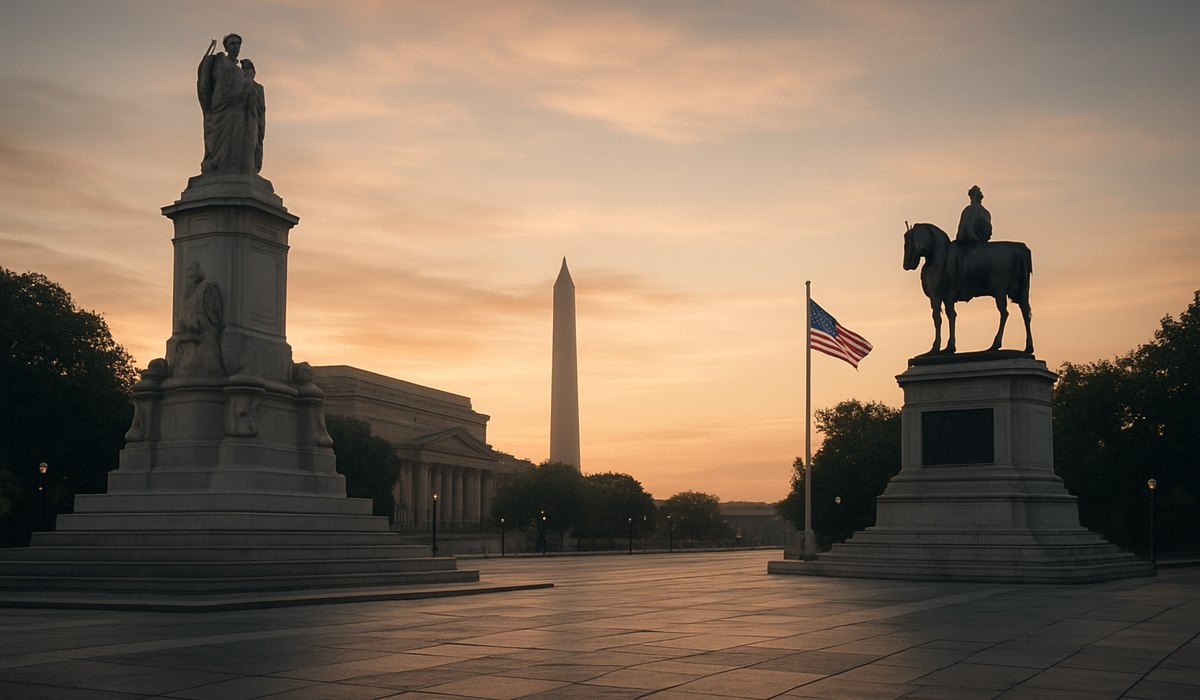
Image generated by AI
What America250 Celebrations Reveal About National Values
As the United States approaches its 250th anniversary in 2026, the Trump administration's decision to install statues of slaveholders and Confederate generals in Washington, D.C. has ignited nationwide debate over commemoration and historical integrity. The temporary placement of an equestrian statue of Caesar Rodney—who enslaved approximately 200 people—in Freedom Plaza represents a fundamental contradiction: how can a nation celebrate freedom while honoring those who denied it to millions?
This controversy extends beyond single statues. The 2025 reinstallation of Confederate General Albert Pike in Judiciary Square and a replica of Christopher Columbus in downtown D.C. signal a pattern of America250 planners choosing to elevate figures responsible for enslavement and indigenous genocide during what should be a moment of national reflection.
Controversial Statues at the Heart of America250 Celebrations
The America250 commemoration framework has become a flashpoint for competing visions of American identity. America250 cannot celebrate national values authentically while installing monuments to slaveholders and Confederate leaders. These choices transform a bicentennial milestone into what critics argue is a deliberate revision of whose contributions America values most.
Caesar Rodney's statue, removed from Wilmington, Delaware during 2020 racial justice protests, now stands in the nation's capital as a symbol of America's founding. Yet Rodney's legacy cannot be separated from the 200 enslaved individuals he owned. Similarly, Albert Pike fought to preserve slavery through the Confederacy. Christopher Columbus initiated centuries of indigenous displacement and death.
Each statue carries weight for travelers and citizens visiting D.C. during anniversary celebrations. The National Park Service, which manages Freedom Plaza and surrounding commemorative spaces, faces ongoing pressure from advocacy groups requesting contextual historical plaques. According to the American Historical Association, statues erected without comprehensive historical context can distort public understanding of pivotal historical periods.
The broader question facing America250 planners involves whether commemorations should celebrate founding figures uncritically or acknowledge their full historical records. This debate directly impacts how visitors and school groups experience monuments during the 250th anniversary year.
Why This Matters: Slavery Remains Living Memory, Not Distant History
Understanding the America250 controversy requires recognizing that slavery is not ancient history for millions of American families. While politicians and planners debate historical figures, descendants of enslaved people carry direct family connections to bondage that span fewer than 100 years across generations.
The generational timeline compresses American history dramatically. A person born enslaved in the 1850s could have had a child in the 1880s, a grandchild in the 1920s or 1930s, and that grandchild could still be alive today. This means Americans currently in their late eighties and early nineties grew up hearing firsthand accounts from relatives born into slavery.
These living connections transform how families experience America250 celebrations. For many Black Americans, monuments to slaveholders don't represent historical education—they represent ongoing erasure of family trauma and achievement. The Pew Research Center's 2021 survey found that 67 percent of Black Americans view Confederate monuments as symbols of racism rather than historical preservation.
This reality explains why the America250 statue controversy generates such passionate responses. Visiting Washington, D.C. during anniversary celebrations means encountering physical tributes to people who caused generational harm. For some visitors, these monuments trigger complicated family histories that remain emotionally present across living memory.
The Pattern: From Caesar Rodney to Albert Pike to Christopher Columbus
Examining individual statues reveals a troubling pattern in America250 planning decisions. Each represents a choice to elevate historical figures despite—or in some cases, because of—their roles in slavery, genocide, and human rights violations.
Caesar Rodney signed the Declaration of Independence and enslaved 200 people. He was removed from Wilmington's public square in 2020 but elevated to Freedom Plaza as part of America250 planning.
Albert Pike served as a Confederate general, fought to preserve slavery, and led troops against Union forces. His statue was removed from D.C. following 2020 racial justice protests but reinstalled in 2025 by the Trump administration.
Christopher Columbus initiated colonization processes that resulted in indigenous genocide, slavery, and cultural destruction across the Americas. A Baltimore statue honoring Columbus was toppled by protesters in 2020, yet a replica now stands in D.C. as part of anniversary commemoration.
These three figures represent a consistent historical narrative: men whose achievements in founding and early American history are being prioritized over their devastating impacts on enslaved and indigenous peoples. The pattern suggests that America250 planners are making deliberate choices about which histories matter most.
For travelers visiting commemorative sites during 2026, these statues will dominate public spaces and media coverage. The National Endowment for the Humanities, which provides grant funding for America250 projects, emphasizes that commemorations should include "honest accounting of all aspects of American history."
What Commemorating Slaveholders Says About American Values
Public monuments function as declarations of national values. When governments install statues in prominent locations during major anniversaries, they send signals about whom America honors and why. The America250 statue controversy reflects deeper questions about national identity.
Installing monuments to slaveholders during a 250th-anniversary celebration sends a specific message: that founding achievement matters more than the human beings enslaved during America's founding. This prioritization has consequences for how American democracy is understood domestically and internationally.
Travel industry observers note that America250 tourism campaigns face complexity when major commemorative sites include contested monuments. Cities planning anniversary events must navigate between attracting visitors and addressing legitimate historical concerns from affected communities. Chicago's Museum of Science and Industry, the Library of Congress, and the National Archives all face decisions about how to frame founding-era history during 2026 celebrations.
The values question becomes particularly acute for international visitors. Many nations have grappled with how to acknowledge their own histories of colonialism and slavery. Germany's approach to Nazi monuments—removing them while establishing museums dedicated to honest historical reckoning—offers a contrasting model. The United States' decision to install slavery-era monuments during its most prominent national celebration suggests a fundamentally different approach to historical accountability.
For travelers planning Washington, D.C. visits during America250, understanding this context enriches and complicates the experience. Freedom Plaza and other commemorative sites become spaces where competing versions of American history literally share the same ground.
Key Data: America250 Monument Controversy by the Numbers
| Factor | Data Point | Source/Context |
|---|---|---|
| Enslaved persons owned by Caesar Rodney | ~200 individuals | Historical records from Delaware |
| Year Rodney statue removed from Wilmington | 2020 | Following racial justice protests |
| Year Albert Pike statue reinstalled in D.C. | 2025 | Trump administration decision |
| Black Americans viewing Confederate monuments as racism symbols | 67% | Pew Research Center 2021 survey |
| Generational distance from slavery for some living Americans | Fewer than 100 years across 3-4 generations | Demographic analysis of Silent Generation |
| America250 official years | 2026 (250th anniversary of 1776) | U.S. commemorative calendar |
| States removing Confederate monuments since 2020 | 40+ states | Southern Poverty Law Center tracking |
What This Means for Travelers
Numbered Actionable Takeaways for Visitors During America250 Year
-
Research monument contexts before visiting Washington, D.C. commemorative sites. Multiple online resources, including the American Historical Association and activist-led statue database websites, provide detailed historical information about figures honored in public spaces. Understanding full biographical records enhances your visit and supports informed citizenship.
-
Seek out counter-narratives and community-centered exhibits. Washington, D.C. institutions including the National Museum of African American History and Culture, the Library of Congress, and university museums offer contextual historical programming during 2026. These
Raushan Kumar
Founder & Lead Developer
Full-stack developer with 11+ years of experience and a passionate traveller. Raushan built Nomad Lawyer from the ground up with a vision to create the best travel and law experience on the web.
Learn more about our team →