
A-12 Oxcart SR-71 Blackbird: CIA's Faster Spy Plane Revealed
In 2026, declassified documents confirm the A-12 Oxcart actually outperformed the famous SR-71 Blackbird. The CIA's hidden reconnaissance aircraft reached Mach 3.2, surpassing the SR-71's capabilities and reshaping Cold War intelligence history.

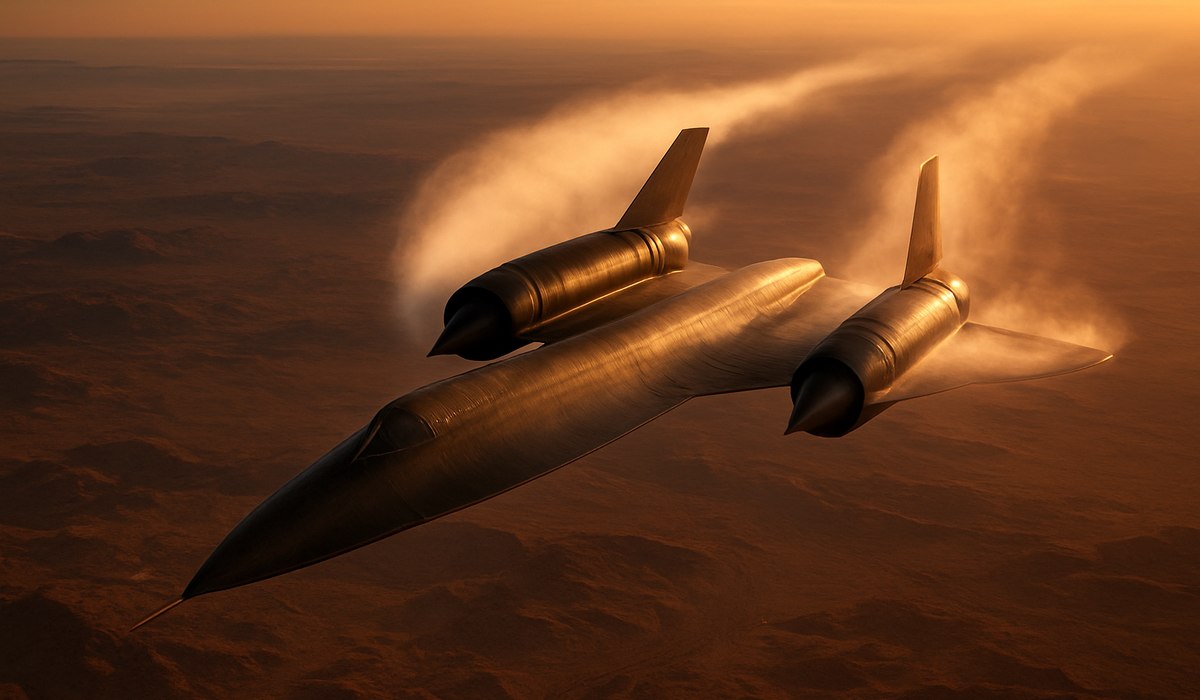
Image generated by AI
The CIA's Hidden Speed Champion: A-12 Oxcart Eclipsed the Iconic SR-71 Blackbird
The A-12 Oxcart SR-71 Blackbird CIA reconnaissance program reveals an extraordinary truth: the lesser-known A-12 Oxcart actually flew faster than the celebrated SR-71 Blackbird. While aviation enthusiasts worldwide have long revered the SR-71 as the fastest military aircraft ever built, newly released historical records confirm that Lockheed Skunk Works' A-12 predecessor achieved sustained speeds of Mach 3.2—outpacing the SR-71's documented performance. This revelation, confirmed by CIA historians and declassified archival material in 2026, fundamentally reshapes our understanding of Cold War reconnaissance technology. The A-12 Oxcart operated in near-total secrecy throughout the 1960s, conducting critical intelligence missions before the program transitioned to the SR-71. For decades, the A-12 remained hidden from public knowledge while its successor became an aviation legend.
The SR-71 Blackbird: Intelligence Workhorse of the Cold War
The SR-71 Blackbird stands as one of aviation's most iconic achievements. Designed and engineered by Clarence "Kelly" Johnson's legendary Lockheed Skunk Works facility in Burbank, California, the Blackbird was conceived as a long-range, high-altitude strategic reconnaissance platform capable of Mach 3+ performance. The aircraft proved invaluable throughout Cold War operations, providing crucial intelligence during pivotal Middle Eastern conflicts. The SR-71 documented critical developments during the 1973 Yom Kippur War, the 1982 Israeli invasion of Lebanon, the 1986 U.S. raid on Libya, and Iranian military positioning in 1987. Its titanium construction and revolutionary design enabled sustained flight at extreme altitudes and velocities that made interception virtually impossible. The SR-71 remained operational for nearly three decades, becoming the public face of American aerial reconnaissance technology. However, its legendary status inadvertently overshadowed its equally remarkable predecessor, the A-12 Oxcart.
Kelly Johnson and Skunk Works: Inventing the Impossible
Kelly Johnson embodied innovation and engineering excellence. His Skunk Works division at Lockheed Martin pioneered revolutionary aircraft design methodologies that remain influential today. Johnson first achieved prominence developing the U-2 reconnaissance aircraft, completing the design in less than thirteen months—an unprecedented timeline. U-2 operations commenced over Soviet territory in 1956, providing American intelligence agencies with critical capabilities previously considered impossible. However, advancing Soviet air defense systems quickly rendered the U-2 vulnerable to surface-to-air missiles, necessitating a faster replacement. Johnson's philosophy, expressed simply as "Everything had to be invented. Everything," captured the audacious spirit required for developing the A-12 Oxcart SR-71 Blackbird CIA reconnaissance platform. Johnson pioneered systems engineering approaches and rapid prototyping methodologies that became industry standard. His collaboration with the CIA and United States Air Force produced some of the twentieth century's most significant technological achievements. The Skunk Works facility became synonymous with breakthrough engineering under seemingly impossible constraints.
The A-12 Oxcart: The Faster Predecessor Hidden from History
The A-12 Oxcart represented the zenith of Kelly Johnson's engineering capabilities. Operating under the CIA's "Archangel Program," the A-12 achieved sustained speeds of Mach 3.2 at altitudes exceeding 90,000 feet—an unbroken record for piloted jet aircraft that persists today. The designation "Oxcart" deliberately masked the aircraft's extraordinary capabilities, while Lockheed engineers unofficially nicknamed the aircraft "Cygnus," referencing the constellation. The A-12 became fully operational in 1965 and incorporated groundbreaking aeronautical innovations. Its Pratt & Whitney J58 engines operated at sustained supersonic velocities exceeding Mach 3 and extreme altitudes exceeding 80,000 feet—capabilities unmatched by contemporary aircraft. The A-12 Oxcart SR-71 Blackbird CIA reconnaissance platform integrated experimental stealth features that foreshadowed modern low-observable aircraft design. Although not completely stealthy, the A-12's innovative approach to radar signature reduction influenced subsequent stealth technology development. The aircraft's operational successes justified the extraordinary investment required to develop this revolutionary platform.
Why the A-12 Remained Classified While the SR-71 Became Legend
The extreme secrecy surrounding the A-12 Oxcart persisted long after the SR-71 received public acknowledgment. Several factors contributed to the A-12's prolonged classification. First, the technological sophistication embedded within the A-12 far exceeded contemporary aviation standards, making disclosure strategically risky. Second, the acquisition of critical materials from unexpected sources required maintaining operational secrecy. The titanium required for construction came exclusively from the Soviet Union—the world's primary supplier. The CIA employed elaborate shell companies and third-party intermediaries to acquire Soviet titanium while preventing Moscow from understanding its intended purpose. This extraordinary irony—the United States purchasing construction materials from its primary adversary—demanded absolute classification. When the CIA eventually declassified the SR-71 program in 1997, officials maintained A-12 secrecy, fearing lingering Cold War implications. Only through decades of Freedom of Information Act requests and historical research did aviation historians piece together the A-12 Oxcart's remarkable legacy. The aircraft represents perhaps the most significant classified aviation achievement never publicly celebrated during its operational lifetime.
Thermal Engineering Challenges and Revolutionary Solutions
Heat management presented perhaps the most daunting engineering obstacle. Flying at Mach 3 velocities generated extreme friction heating—aircraft skin temperatures exceeded 800 degrees Fahrenheit. Inside the cockpit, temperatures reached approximately 500 degrees. Conventional aluminum and steel alloys would catastrophically fail under such conditions. Kelly Johnson mandated that ninety percent of the A-12's airframe incorporate titanium alloys capable of withstanding extreme thermal stress. This material requirement drove the extraordinary decision to source titanium from Soviet suppliers. Pilots required specially engineered, refrigerated space suits to survive cockpit conditions. These suits incorporated active cooling systems preventing fatal heat exposure. The A-12 Oxcart SR-71 Blackbird CIA reconnaissance program represented the first sustained application of titanium aviation construction at such scales. Engineers developed novel fastening techniques, fuel system configurations, and structural methodologies specifically addressing thermal expansion and contraction cycles. These innovations fundamentally advanced aerospace materials science.
Key Data Table: A-12 Oxcart and SR-71 Blackbird Specifications
| Specification | A-12 Oxcart | SR-71 Blackbird |
|---|---|---|
| Maximum Speed | Mach 3.2 | Mach 3.5* |
| Operational Altitude | 90,000+ feet | 85,000+ feet |
| Engine Type | Pratt & Whitney J58 | Pratt & Whitney J58 |
| Airframe Material | 90% Titanium Alloy | Titanium Alloy |
| Sustained Speed Record | Unbroken | Production Aircraft Record |
| Operational Period | 1965-1968 | 1966-1998 |
| Primary Mission | CIA Reconnaissance | USAF Reconnaissance |
| Classification Status | Declassified 2007 | Public Knowledge 1997 |
*Maximum speed represents dash capability; sustained operational speeds lower.
Preeti Gunjan
Contributor & Community Manager
A passionate traveller and community builder. Preeti helps grow the Nomad Lawyer community, fostering engagement and bringing the reader experience to life.
Learn more about our team →