
Amadeus Delivers Strong First Half 2026 Performance Despite Middle East Disruptions Impacting Global Air Travel Demand
Amadeus reported 5.1% revenue growth at constant currency for H1 2026, maintaining profitability despite global air traffic experiencing negative growth in April and May for the first time in 15 years outside Covid-19.

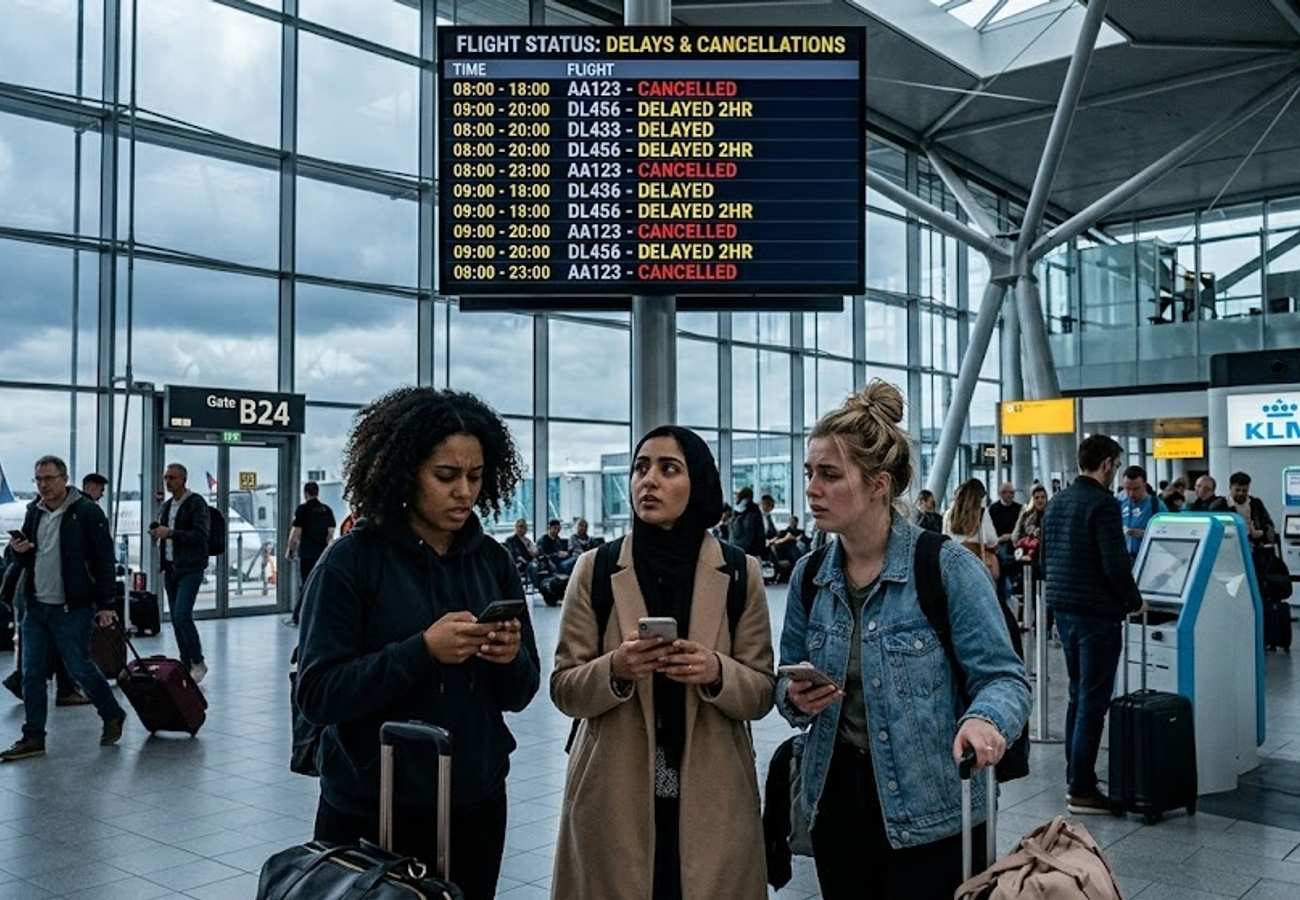
Image generated by AI
Global air traffic experienced negative growth in April and May 2026 for the first time in 15 years outside the Covid-19 period, yet Amadeus still delivered 5.1% constant-currency revenue growth and €472.2 million in free cash flow.
The Local Trend Revealed
The first half of 2026 marked a significant shift for the global aviation sector. Geopolitical instability in the Middle East created flight interruptions, cancellations, and reduced booking activity across international markets from March onwards. For technology providers serving the travel industry, this meant adapting to sudden drops in passenger volumes while maintaining operational reliability for airline and hospitality clients.
Amadeus Group revenue reached €3.33 billion in the first six months of 2026, representing a 2.3% increase year-on-year and 5.1% growth at constant currency. Operating income rose to €943.2 million, up 0.6%, while adjusted EBIT climbed to €1.01 billion, a 4.9% increase at constant currency. Adjusted diluted EPS expanded 7.3% at constant currency, and adjusted EBIT margin stood at 30.3%.
The company completed its previously announced €500 million share repurchase programme in June 2026. Net financial debt stood at €2.58 billion on June 30, 2026, equivalent to 1.0 times last-twelve-month EBITDA.
Segment Performance: Where Growth Came From
The Air IT Solutions division remained the strongest contributor. Revenue from this segment increased 8.7% at constant currency, driven by higher adoption of technology solutions among airline customers and continued growth across airport technology and professional services. Revenue generated per passenger boarded increased 7.5% at constant currency. Passengers boarded through Amadeus-connected systems reached 1.09 billion, up only 1.1% as international air traffic growth weakened.
The Hospitality and Other Solutions (HOS) division delivered 9.2% revenue growth at constant currency, reaching €543.4 million. New customer implementations, higher transaction activity, and large-scale deployments of the Amadeus Central Reservation System (ACRS) supported this momentum.
Air Distribution faced the most pressure. Revenue increased just 1.1% at constant currency to €1.58 billion, while total bookings declined 3.7% to 238 million. Revenue per booking rose 5.1% at constant currency, helping offset weaker transaction volumes.
Cultural and Environmental Value
For the visitor, the real impact of these financial results is practical. When geopolitical events disrupt flight networks, the technology infrastructure behind bookings, rebookings, and airport operations determines how quickly travellers can adjust plans. Amadeus supported airline customers in handling travel disruptions caused by Middle East geopolitical events during the second quarter, contributing to higher transaction activity even as overall booking volumes fell.
The company's planned acquisition of IDEMIA Public Security (IPS), a specialist in biometric and identity technology services, advanced during the period with regulatory approval expected before completion. This move signals a broader industry direction toward seamless, identity-verified travel experiences that reduce friction at airports and border crossings.
Regional tourism bodies and aviation authorities have increasingly relied on connected digital ecosystems to manage disruption. The International Air Transport Association and similar bodies continue working with technology providers to standardise disruption-response protocols, ensuring that local economies dependent on tourism can maintain visitor flows even during periods of geopolitical uncertainty.
Visitor Insider Tips
Off-peak booking windows: With total bookings declining 3.7% in H1 2026, travellers who booked outside peak Middle East-connected corridors found better availability and pricing. Consider routing through secondary hubs when geopolitical tensions affect primary pathways.
Monitor airline technology adoption: Airlines using next-generation reservation and operational platforms can reaccommodate passengers faster during disruptions. Check whether your carrier has upgraded its booking infrastructure before purchasing tickets on routes vulnerable to geopolitical interruptions.
Payment infrastructure matters: Amadeus reported growth in payment solutions alongside hospitality technology. Destinations with modernised payment and reservation systems tend to process refunds and rebookings more efficiently during travel disruptions, directly affecting traveller experience.
Biometric processing on the horizon: The pending IDEMIA Public Security acquisition signals faster biometric processing at airports. Travellers should prepare for identity-verified check-in procedures becoming standard at major international hubs within the next 12 to 18 months.
Tourism Outlook
The first half of 2026 demonstrated that diversification across airline technology, hospitality platforms, payment solutions, and identity services provides stability when individual markets experience volatility. For destinations reliant on international air traffic, the period reinforced the need for resilient digital infrastructure that can adapt to sudden geopolitical shifts.
The negative air traffic growth in April and May — unprecedented outside the pandemic era — suggests that regional instability now has immediate, measurable effects on global travel patterns. Destinations and tourism boards that invest in flexible booking systems, robust cancellation policies, and alternative routing options will be better positioned to maintain visitor numbers during future disruptions.
Amadeus expects regulatory approval for the IDEMIA acquisition before completion, which would strengthen its position in biometric and identity verification services. This acquisition, combined with continued investment in airline and hospitality technology, indicates that the travel industry's digital transformation will accelerate rather than slow down.
Related Travel Guides
Disclaimer
This article is for informational and educational purposes only. It does not constitute legal, financial, or professional advice. While we strive to provide accurate and up-to-date information, travel policies, regulations, and conditions change rapidly. Always verify information with official sources before making travel decisions. Nomad Lawyer makes no representations about the accuracy, reliability, completeness, or suitability of the information provided. Readers should consult qualified professionals for advice specific to their circumstances. The views expressed in this article are those of the author and do not necessarily reflect the views of Nomad Lawyer.
Preeti Gunjan
Contributor & Community Manager
A passionate traveller and community builder. Preeti helps grow the Nomad Lawyer community, fostering engagement and bringing the reader experience to life.
Learn more about our team →