
Global Flight Disruptions Expose Fragile Aviation Networks in 2026
Global flight disruptions reveal how concentrated tech dependencies and geopolitical conflicts create cascading aviation failures. A single software glitch grounded 5,000+ flights, exposing systemic vulnerabilities in 2026 air travel infrastructure.

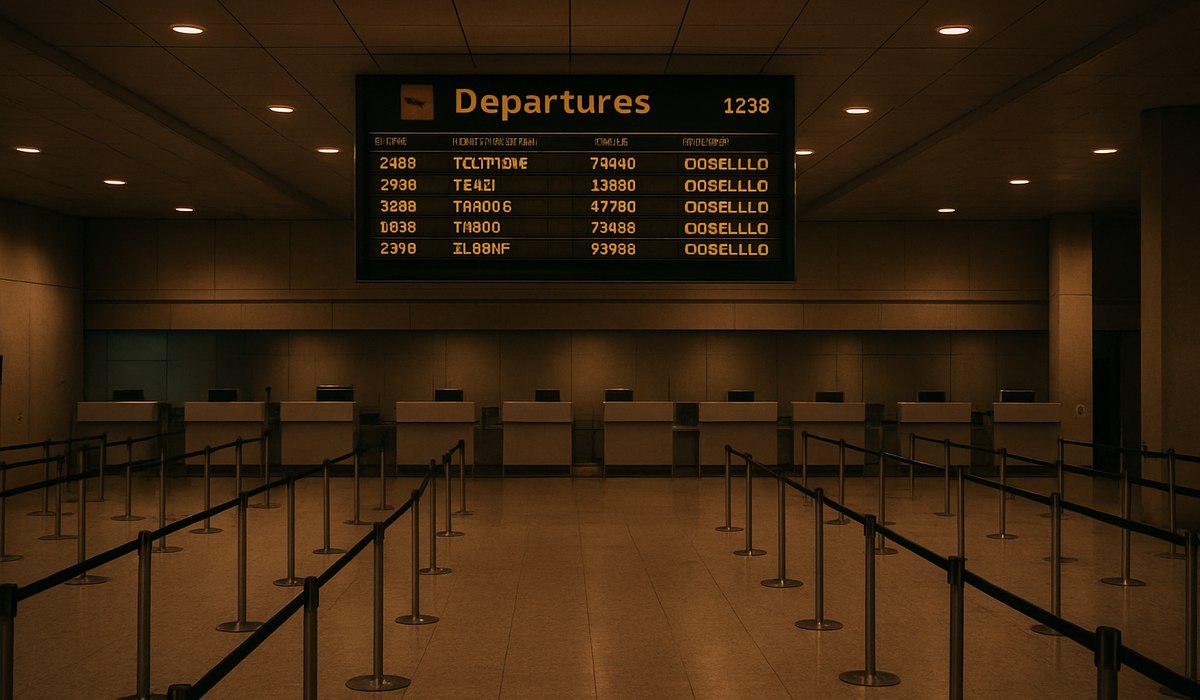
Image generated by AI
A Single Software Error Grounds Thousands Across Global Networks
A critical cybersecurity platform configuration error cascaded through global aviation infrastructure on July 19, 2024, cancelling over 5,000 flights and affecting nearly five percent of all scheduled flights worldwide. The incident illustrated a stark reality: modern aviation depends heavily on concentrated digital infrastructure, creating dangerous single points of failure. Delta Air Lines absorbed the heaviest impact, implementing thousands of cancellations across multiple days as operations centers, crew management systems, and airport infrastructure struggled to recover simultaneously. Financial disclosures revealed the carrier faces hundreds of millions in losses from the outage alone.
The global flight disruptions triggered by this technology failure exposed how deeply interconnected aviation systems have become. When one cybersecurity vendor's update faltered, it paralyzed departure control systems, check-in kiosks, ground handling platforms, and even hotel networks travelers rely upon. The outage extended recovery windows far beyond a single day, forcing manual workarounds that slowed operations across multiple continents.
Tech Outages Reveal Hidden Single Points of Failure
The aviation industry's digitalization journey has created extraordinary efficiency gains—but at a cost. Airlines now depend on specialized software platforms for critical functions: aircraft maintenance tracking, crew scheduling, fuel management, passenger reservations, and real-time flight operations. When these systems concentrate within a handful of technology providers, a single vulnerability can trigger cascading failures across entire networks.
The July 2024 incident demonstrated this vulnerability vividly. A routine software update to a widely-deployed cybersecurity platform introduced a configuration error that crashed Windows systems globally. Within hours, airlines reported inability to manage aircraft departures, airports couldn't process passenger check-ins, and ground handlers lacked data to coordinate cargo and baggage movements. Delta's recovery required manual intervention at hundreds of locations, creating bottlenecks that persisted for days.
Travel management companies and risk consultancies have issued repeated warnings about this structural fragility. The concentration of critical aviation functions across a limited number of technology providers means that operational resilience now depends entirely on those vendors' quality assurance protocols. A 2025 incident involving Alaska Airlines reinforced these concerns: a single failed hardware component at a data center triggered fleet-wide grounding for several hours, resulting in 150+ cancellations and widespread network delays. The brevity of that outage masked an alarming truth—modern aviation networks possess minimal redundancy in their most critical functions.
For detailed flight tracking information during disruptions, check FlightAware, which provides real-time updates on cancellations and delays.
The CrowdStrike Cascades: When One Error Grounds Thousands
July 19, 2024 entered aviation history as one of the industry's most severe technology-driven disruption events. The outage's global scope—affecting airlines, airports, and ground handling operations simultaneously across multiple time zones—created a perfect storm of cascading failures that revealed the fragility of interconnected aviation systems.
Major international carriers reported simultaneous operational paralysis. Beyond Delta's multi-day recovery, other global carriers struggled with backup systems that hadn't been activated in years, staff unfamiliar with manual procedures, and coordination challenges across hundreds of airports. The incident demonstrated that most airlines lack practical testing of their contingency protocols at realistic scale.
What made this global flight disruption particularly severe was the rapid spread through aviation's supply chain. Ticketing platforms went offline, preventing new bookings. Ground handling companies couldn't track aircraft movements. Fuel suppliers lacked real-time delivery coordination. The interconnectedness that normally drives efficiency became a liability when a single vulnerability propagated through the system.
Passenger frustration mounted as airlines struggled to provide accurate information about rebooking options and compensation eligibility. Many travelers faced multi-day waits with minimal updates about the underlying technical problems or estimated recovery timelines. The incident raised questions about whether aviation's digital infrastructure could survive similar shocks in the future.
Beyond July 2024: Recurring Infrastructure Vulnerabilities
The CrowdStrike incident wasn't an isolated failure—subsequent events confirm that systemic vulnerabilities persist throughout global aviation networks. The 2025 Alaska Airlines outage demonstrated that hardware failures in centralized data centers pose equal risks to software glitches. When a critical component failed at a single data center, the airline couldn't route traffic through backup systems quickly enough to prevent hundreds of cancellations.
Industry analysts increasingly describe these incidents as inevitable consequences of aviation's concentrated digital architecture. Airlines, airports, and technology providers have optimized for efficiency rather than redundancy. Budget pressures discourage maintaining backup systems that sit idle during normal operations. The result: global flight disruptions now occur with regularity sufficient to warrant contingency planning across the entire industry.
Cybersecurity experts warn that malicious actors recognize aviation's vulnerability. A deliberate attack targeting widely-used aviation software could trigger disruptions far exceeding the accidental CrowdStrike incident. The industry currently lacks coordinated protocols for responding to attacks of that scale.
The FAA has issued guidance on infrastructure resilience, available at faa.gov, though enforcement mechanisms remain weak. Most airlines have implemented incremental improvements—testing backup systems more frequently, diversifying software vendors, maintaining expanded manual procedures—but fundamental architectural vulnerabilities persist.
What Airlines and Airports Must Do to Build Resilience
Building true resilience in aviation networks requires systematic infrastructure changes that most carriers currently lack resources or motivation to implement. Industry experts recommend a multi-layered approach: geographic redundancy in data centers, vendor diversity across critical systems, modernization of manual procedures and staff training, and regular disaster recovery testing at scale.
Several forward-thinking carriers have begun implementing these measures. Some maintain duplicate operations centers in geographically separated locations. Others diversify their cybersecurity vendors to avoid single-provider dependencies. However, the aviation industry's tight profit margins discourage expensive redundancy investments that show no financial returns during normal operations.
International aviation authorities have begun coordinating responses to infrastructure vulnerabilities. IATA and EUROCONTROL have published resilience frameworks, though adoption remains voluntary and inconsistent across global carriers. The lack of regulatory enforcement means that infrastructure improvements depend largely on market pressure—which typically materializes only after major disruptions.
Passengers benefit when pressure mounts on carriers to improve systems. Information about passenger rights during operational failures is available through the U.S. Department of Transportation, which provides regulatory guidance on compensation obligations.
Traveler Action Checklist
When global flight disruptions occur, travelers can take concrete steps to protect their interests and obtain compensation:
-
Monitor official airline channels for updated flight status—check your airline's website and mobile app before contacting customer service, which typically becomes overwhelmed during major outages.
-
Document everything including original booking confirmation, cancelled flight details, communication attempts with the airline, and any out-of-pocket expenses for rebooking or accommodations.
-
Know your rights regarding compensation—in the U.S., carriers must provide meals, accommodations, and rebooking options during weather-related delays; tech outages fall into a legal gray area where compensation is often negotiable.
-
Request written confirmation of any rebooking offers or compensation promises—verbal agreements during chaotic situations lack enforceability.
-
File complaints with the U.S. Department of Transportation if the airline denies compensation you believe is justified; regulatory agencies maintain complaint databases that influence future enforcement action.
-
Contact your travel insurance provider immediately if you purchased coverage; claim windows for missed connections often close within days of disruptions.
-
Connect with other affected passengers through social media to coordinate group complaints; regulatory agencies often prioritize cases with significant passenger volume.
-
Request standby availability on competing carriers if your airline cannot rebook you within 24 hours; most carriers have reciprocal agreements during major operational failures.
Key Global Flight Disruption Data Table
| Event | Date | Flights Cancelled | Primary Cause | Duration | Airlines Affected | |
Disclaimer
This article is for informational and educational purposes only. It does not constitute legal, financial, or professional advice. While we strive to provide accurate and up-to-date information, travel policies, regulations, and conditions change rapidly. Always verify information with official sources before making travel decisions. Nomad Lawyer makes no representations about the accuracy, reliability, completeness, or suitability of the information provided. Readers should consult qualified professionals for advice specific to their circumstances. The views expressed in this article are those of the author and do not necessarily reflect the views of Nomad Lawyer.
Preeti Gunjan
Contributor & Community Manager
A passionate traveller and community builder. Preeti helps grow the Nomad Lawyer community, fostering engagement and bringing the reader experience to life.
Learn more about our team →