
Alexandria Joins San Diego and US Tourism Giants Crossing Billion-Dollar Milestones

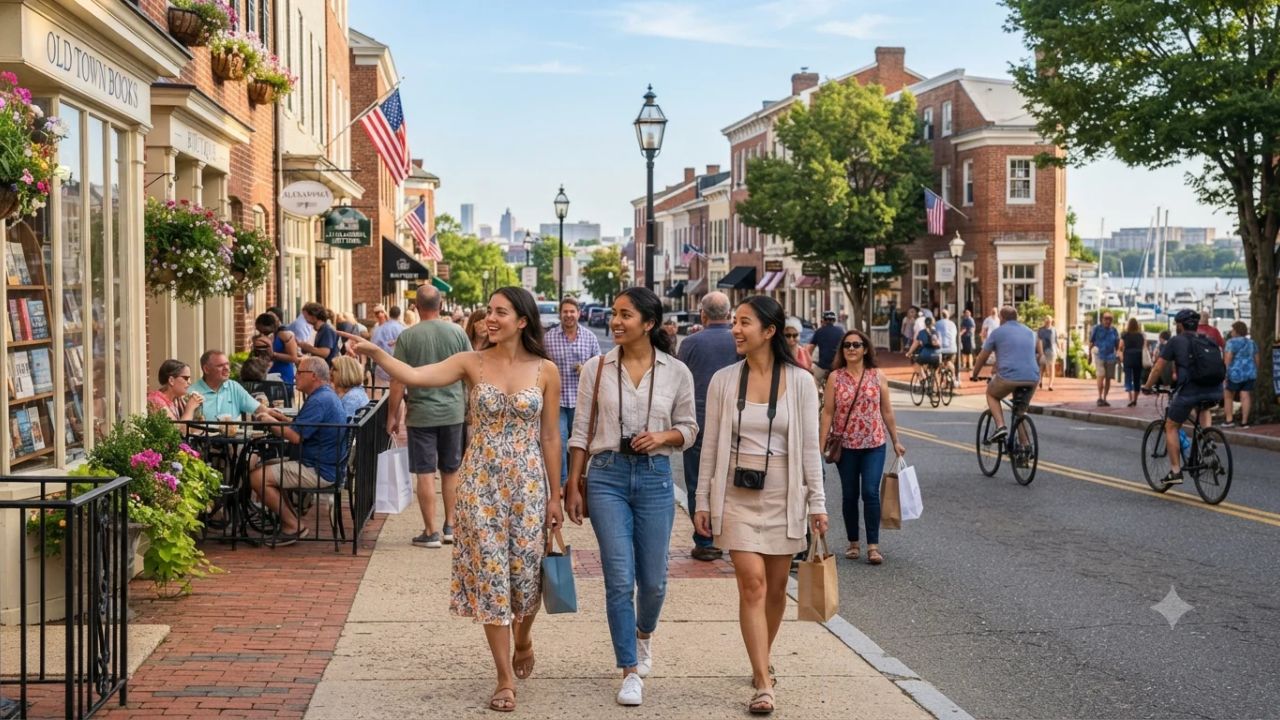
Image generated by AI
Surpassing $1.016 billion in annual visitor expenditures after an 8 percent year-over-year surge, Alexandria, Virginia, has officially entered the ten-figure tourism echelon, proving that compact historic enclaves can match the economic momentum of America's multi-billion-dollar entertainment metropolises. Generating $88 million in local consumption tax revenues and sustaining more than 5,700 municipal jobs across fiscal year 2025 alone, the colonial Potomac River seaport demonstrates a structural evolution in American leisure travel where pedestrian walkability, independent commerce, and authentic heritage deliver unprecedented visitor yields.
Geographic Compression vs Metropolitan Scale: The Economics of the Ten-Figure Seaport
The achievement of a billion-dollar visitor economy in Alexandria represents a profound departure from traditional tourism modeling. Historically, crossing the ten-figure spending benchmark required the physical scale of mega-destinations: commercial airline hubs, thousand-room convention hotels, or sprawling corporate theme parks. Hubs like San Diego, Orlando, and Las Vegas generate multi-billion-dollar outputs by processing tens of millions of arrivals across expansive geographic footprints.
Alexandria reached its milestone within a remarkably compact urban frame. Spanning just 15 square miles directly across the Potomac River from Washington, D.C., the city anchors its visitor economy on Old Town Alexandria, an intact 18th-century grid of cobblestone streets, preserved federal brick architecture, and an accessible waterfront esplanade. According to economic assessments by Visit Alexandria, visitor spending expanded from $941 million in 2023 to $1.016 billion in 2024, proving that human-scale historic preservation generates superior spending density per square mile compared to traditional suburban attraction corridors.
This momentum mirrors a broader national pivot. Modern domestic travelers are actively trading homogenized commercial strips for destinations offering authentic community character, local gastronomy, and high walkability. By integrating boutique hospitality directly into active residential neighborhoods, Alexandria converts quick day-trippers into high-yield overnight guests who spend heavily across independent retail, chef-driven taverns, and cultural boat charters.
Municipal Spend Benchmarks: How Heritage Enclaves Measure Against Convention Hubs
The widening scope of America's billion-dollar tourism club highlights an evolving division between high-density cultural towns and high-capacity convention metropolises. While tier-one hubs rely on massive delegate counts and corporate conventions, emerging regional players in Virginia and across the country are maximizing revenue through higher spending per visitor hour.
Official destination data reveals that traveler expenditures are diversifying far beyond hotel room charges, flowing directly into neighborhood food services, boutique merchants, and localized transit networks.
| Destination & Region | Sovereign State | Visitor Spending Baseline | Annual Visitor Inflow | Primary Economic Engine |
|---|---|---|---|---|
| Alexandria | Virginia | $1.016 Billion (2024 Record) | Sustains 5,700+ local jobs | Old Town heritage, waterfront walkability, D.C. proximity |
| Charlottesville & Albemarle | Virginia | Over $1.0 Billion (2025) | Albemarle: $603.5M yield | Monticello heritage, UVA campus, Piedmont wine corridor |
| Arlington County | Virginia | $4.5 Billion (2023) | 7.1 Million travelers | National monuments, defense business, Reagan National Airport |
| San Diego | California | Multi-Billion-Dollar Scale | Tens of millions annually | Coastal recreation, biotech conventions, Balboa Park |
| Orlando | Florida | Multi-Billion-Dollar Scale | Over 70 Million travelers | World-scale theme parks, international convention trade |
| New York City | New York | Multi-Billion-Dollar Scale | Over 60 Million travelers | Broadway theater, global finance, cultural institutions |
| Chicago | Illinois | Multi-Billion-Dollar Scale | Over 50 Million travelers | Architectural tourism, McCormick Place exhibitions |
| Nashville | Tennessee | Multi-Billion-Dollar Scale | Over 15 Million travelers | Music City entertainment, culinary tourism, corporate summits |
| Las Vegas | Nevada | Multi-Billion-Dollar Scale | Tens of millions annually | Strip gaming, world-championship sports, mega-resorts |
| Miami | Florida | Multi-Billion-Dollar Scale | Global international hub | Cruise homeports, international art fairs, beach resorts |
As detailed by the San Diego Tourism Authority, major coastal hubs leverage year-round climate, expansive convention centers, and international air connections to sustain multi-billion-dollar balance sheets. Yet Alexandria's rapid ascent proves that smaller destinations do not need massive exhibition halls to command serious economic power. By focusing on authentic waterfront amenities, curated public art, and preserved historic narrative, smaller cities can capture a disproportionate share of regional disposable income.
The Potomac and Piedmont Corridors: Regional Tourism Multipliers Across Virginia
Alexandria’s fiscal milestone is not an isolated event; it represents the eastern anchor of a statewide tourism surge across the Commonwealth. Virginia has established a formidable multi-billion-dollar travel economy by linking historic urban centers with agricultural and outdoor leisure belts.
Directly north of Alexandria, Arlington County generated $4.5 billion in visitor spending from 7.1 million travelers in 2023, supporting 27,567 regional jobs. Arlington leverages its position as the immediate gateway to the nation's capital, housing the Pentagon, Arlington National Cemetery, and corporate hospitality towers adjacent to Ronald Reagan Washington National Airport (DCA).
Simultaneously, western Virginia's Piedmont region has crossed the ten-figure milestone. The Charlottesville and Albemarle County destination market surpassed $1 billion in visitor expenditures in 2025, with Albemarle County alone accounting for $603.5 million. Supported by research from the Virginia Tourism Corporation, this growth reflects an expanding appetite for agro-tourism: visitors combine visits to the UNESCO-listed Monticello estate and the University of Virginia with boutique vineyard trails and Blue Ridge Mountain excursions. Together, these regional markets demonstrate that multi-stop travelers increasingly package urban history with rural recreation on a single multi-day itinerary.
Expert Analysis: Pedestrian Yield Optimization, Tax Relief Dividends, and the Supply Constraint
For travelers visiting historic secondary cities, the direct consequence of this billion-dollar spending boom is a premium travel environment defined by elevated room rates and tight weekend availability. In Alexandria's Old Town, physical geography prevents the construction of massive high-rise hotels. The historic district's strict architectural zoning codes protect its 18th-century skyline but strictly constrain room inventory.
The pricing pressure this creates means that average daily room rates in Old Town regularly match or exceed luxury hotel rates in downtown Washington, D.C. Leisure travelers who wait until the final two weeks to book boutique accommodations frequently find themselves displaced to secondary highway hotels along the Capital Beltway. Rather than diminishing visitor interest, this scarcity has reinforced the district’s exclusive, high-end appeal.
For local residents, this commercial success delivers a tangible economic dividend. The $88 million in local consumption tax revenue generated by Alexandria visitors in fiscal year 2025 provides direct municipal relief, funding public education, roadway repairs, and emergency services without increasing residential property tax rates.
To maximize value within these supply-constrained historic markets, travelers must rethink traditional booking behavior. Navigating Alexandria or Charlottesville during peak autumn and spring floral blooms requires locking in hotel reservations at least three to five months in advance. In addition, scheduling mid-week stays from Tuesday through Thursday enables visitors to experience cobblestone retail corridors, waterfront water taxis, and nationally acclaimed dining rooms without the crush of regional weekend day-trippers.
Key Takeaways
- Ten-Figure Milestone: Alexandria surpassed $1.016 billion in visitor spending in 2024, marking an 8 percent annual increase over 2023 and cementing its status as an elite historic destination.
- Municipal Tax Relief: Tourism generated $88 million in local consumption tax revenue in fiscal year 2025 and directly sustained over 5,700 hospitality and retail jobs in Alexandria.
- Regional Virginia Momentum: Albemarle County and Charlottesville crossed $1 billion in combined visitor spending in 2025, while neighboring Arlington County generated $4.5 billion.
- Compact Walkability Advantage: Unlike sprawling convention metropolises, Alexandria’s growth demonstrates that preserved historic architecture and pedestrian waterfronts generate extraordinary spending density.
- Severe Inventory Limits: Strict historic preservation zoning restricts new hotel construction, driving lodging rates upward and necessitating multi-month advance reservations for weekend travelers.
FAQ: US Destination Tourism Milestones 2026
How much visitor spending did Alexandria, Virginia generate in 2024?
Alexandria recorded $1.016 billion in visitor spending in 2024, representing an 8 percent increase over the $941 million recorded in 2023, while generating $88 million in municipal tax revenue.
How does Alexandria compare to major tourism cities like San Diego?
While San Diego commands a multi-billion-dollar tourism economy driven by massive convention centers and beaches, Alexandria achieves its billion-dollar volume through compact historic walkability, independent restaurants, and waterfront heritage.
What other Virginia destinations crossed the billion-dollar mark?
Charlottesville and Albemarle County surpassed $1 billion in combined visitor spending in 2025, driven by Monticello and wine tourism, while Arlington County generated $4.5 billion in visitor spending.
What are the main attractions driving Alexandria’s tourism boom?
Tourism is anchored by Old Town Alexandria's preserved 18th-century cobblestone streets, vibrant Potomac River waterfront dining, independent boutique shopping, and direct water-taxi connections to Washington, D.C.
Along the brick-lined sidewalks of Old Town, Alexandria demonstrates that when a city preserves its soul, every cobblestone becomes an enduring foundation for economic vitality.
Related Travel Guides
Morristown Festival on the Green & Historic Downtown Guide
Springfield Illinois Hotel Surge & Route 66 Lincoln Tourism Guide
Disclaimer
This article is for informational and educational purposes only. It does not constitute legal, financial, or professional advice. While we strive to provide accurate and up-to-date information, travel policies, regulations, and conditions change rapidly. Always verify information with official sources before making travel decisions. Nomad Lawyer makes no representations about the accuracy, reliability, completeness, or suitability of the information provided. Readers should consult qualified professionals for advice specific to their circumstances. The views expressed in this article are those of the author and do not necessarily reflect the views of Nomad Lawyer.
Naina Thakur
Contributor & Travel Specialist
Travel enthusiast and legal writer covering visa regulations, responsible tourism, and cultural journeys across global destinations.
Learn more about our team →