
Merger Friction Sparks Travel Chaos: Alaska Airlines Overhauls Hawaiian Crew Uniforms on New Dreamliner Routes to Defeat International Airport Disruptions
As massive legacy airline mergers trigger severe operational anxiety and the terrifying threat of flight cancellations, Alaska Air Group aggressively standardizes Hawaiian Airlines crews on new long-haul routes.

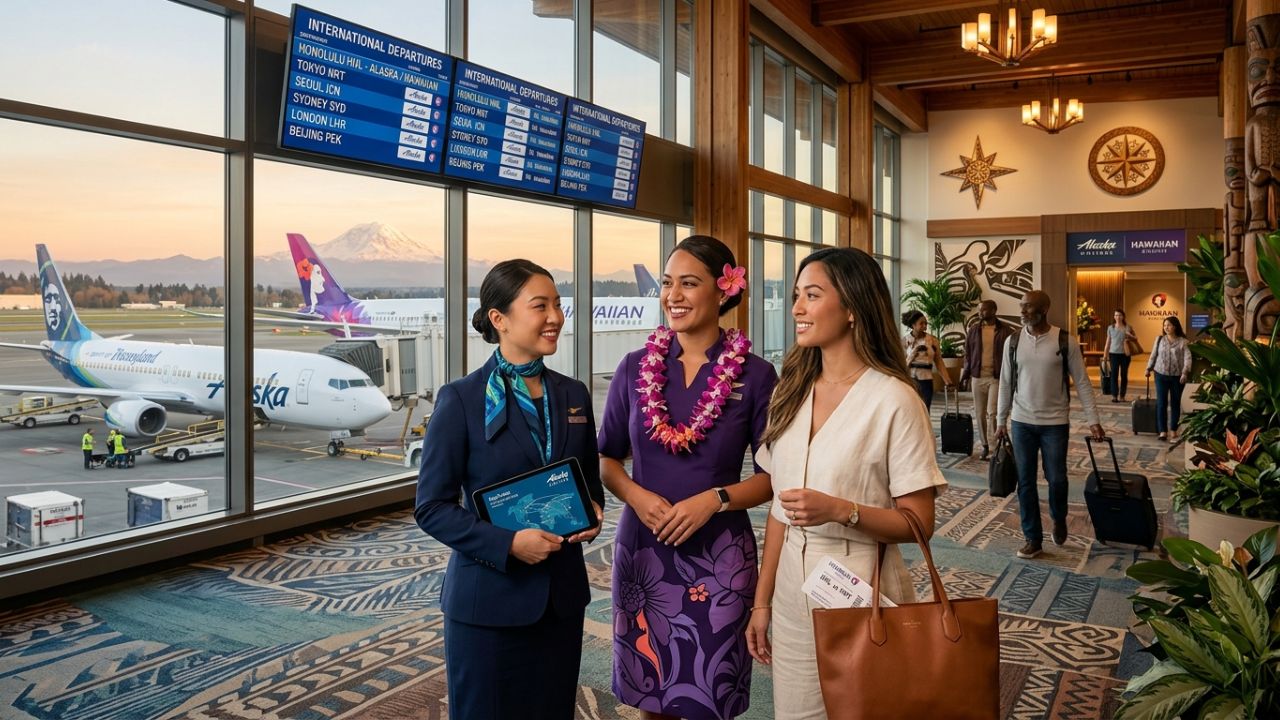
Image generated by AI
A Massive Airline Integration Triggers Operational Anxiety
While massive sectors of the global passenger network frequently battle highly unpredictable weather events and localized mechanical breakdowns, complex corporate airline mergers remain an incredibly terrifying catalyst for sudden, unmanageable terminal congestion. Delivering highly urgent, breaking airline news, verified international aviation sources confirm that Seattle, Honolulu, Tokyo, Seoul, and London are currently at the absolute, fiercely contested center of one of the United States’ most massive aviation integrations. While desperate travelers already attempt to navigate sudden, terrifying airport disruptions caused by summer volume, these exclusive aviation updates reveal that Alaska Air Group is battling severe internal friction as it violently forces the operational integration of Hawaiian Airlines.
The aggressive corporate merger has instantly triggered widespread operational anxiety among staff and passengers alike. In an era where a single localized labor dispute can completely sever vital domestic itineraries and trigger massive cascading flight cancellations, this forced cultural integration guarantees a heavily stressful transition period. The most explosive development currently threatening to derail smooth operations involves sudden, mandatory appearance standards for Hawaiian Airlines flight attendants forcibly reassigned to new, ultra-long-haul international operations departing from Seattle-Tacoma International Airport. By aggressively standardizing global operations to compete with legacy heavyweights, Alaska Air Group is risking a massive loss of brand loyalty that could easily plunge the airline into rolling travel chaos.
Expanded Overview: The Scale of the Seattle Expansion
The sudden, highly publicized execution of this operational standardization serves as an undeniable example of how rapidly corporate mergers can completely dismantle the physical and cultural logistics of a beloved regional airline. A highly critical component of Alaska Air Group’s aggressive integration strategy is the immediate establishment of Seattle as an absolute primary long-haul mega-hub for massive international expansion. To execute this, approximately 250 highly trained Hawaiian Airlines flight attendants have been forcefully reassigned to Seattle to physically support growing Boeing 787-9 Dreamliner operations serving highly lucrative destinations across Europe and Asia.
Seattle has violently become the absolute most important theater within Alaska Air Group’s long-term network domination plans. The city already functions as Alaska Airlines’ absolute largest hub, and the forced addition of massive long-haul Dreamliner services positions it as an impenetrable gateway connecting North America directly with international destinations. As new, ultra-competitive routes are aggressively launched to massive markets in Asia and Europe, the airline is violently investing in workforce expansion. However, forcing island-based crews into a rigid, corporate global mold creates immense logistical friction, heavily increasing the risk of crew scheduling conflicts that directly cause severe terminal delays.
Section-Wise Breakdown of the Merger Disruption
The Cultural Uniform Dispute
For absolute decades, Hawaiian Airlines has been universally recognized for its incredibly distinctive, highly welcoming visual identity. Flight attendants proudly wearing traditional flowers, leis, and aloha shirts have become the absolute physical symbols of the airline’s legendary hospitality. However, as Hawaiian crews are forcefully pushed to operate grueling international flights that are not directly connected to Hawaii, Alaska Air Group is aggressively implementing incredibly rigid, standardized appearance policies. On certain Seattle-based international services, crew members have been explicitly instructed to completely abandon traditional Hawaiian presentation and strictly follow Alaska Airlines’ corporate uniform standards.
Protecting the Core Hawaiian Market
The incredibly controversial corporate policy applies primarily to massive long-haul routes connecting Seattle directly with destinations in Europe and Asia. In a desperate bid to prevent total brand collapse and massive localized protests, Hawaiian-themed elements remain strictly permitted on Hawaii-focused operations. This highly fractured uniform policy creates immense scheduling complexity, forcing flight attendants to constantly switch uniforms based on their assigned routes, heavily increasing the risk of pre-flight operational delays.
The Boeing 787-9 Dreamliner Strategy
This massive integration is violently taking place during a period of unprecedented, high-stakes international growth. Alaska Air Group is aggressively utilizing Hawaiian Airlines’ massive Boeing 787-9 Dreamliner fleet to forcefully accelerate expansion into overseas markets. Long-haul international operations require a terrifyingly different level of service coordination and operational integration than domestic flying. Airlines desperately seek standardized onboard experiences to ensure highly demanding premium customers receive a consistent product, but stripping away Hawaiian's cultural identity risks alienating the massive leisure market that built the airline's reputation.
Verified Merger Route Integration Impact Table
To fully comprehend the massive operational scale and strategic fallout dictating this highly volatile corporate integration, the following table explicitly details how specific route hubs are being violently impacted:
| Affected Aviation Hub | Aircraft & Crew Deployment | Merger Integration & Cultural Impact |
|---|---|---|
| Seattle (SEA) | Massive Boeing 787-9 Dreamliner international base | 250 Hawaiian flight attendants forcefully reassigned to standardized long-haul routes |
| Honolulu (HNL) | Core domestic and regional island operations | Retention of traditional Hawaiian cultural uniforms to prevent brand collapse |
| Tokyo / Seoul | Highly aggressive long-haul Asian route expansion | Mandatory enforcement of Alaska Airlines global corporate appearance standards |
| London (LHR) | New, ultra-competitive European international routes | Severe internal friction over highly standardized premium cabin service execution |
Passenger Impact: Confused Branding and Operational Anxiety
For the modern international commuter attempting to navigate this highly volatile merger, the passenger impact is incredibly confusing and potentially exhausting. In a summer season heavily defined by the constant threat of cascading regional delays, the forced integration of two massively different airline cultures drastically increases a passenger's exposure to severe terminal anxiety.
Travelers booking tickets on a "Hawaiian Airlines" Boeing 787-9 to Tokyo or London will be violently surprised to find crews stripped of their traditional leis and forced into standard corporate attire. This massive loss of cultural identity destroys the unique onboard experience that travelers actively pay a premium for. Furthermore, as flight attendants fiercely adapt to conflicting uniform mandates and new, aggressive long-haul routing, the terrifying risk of crew fatigue and subsequent flight cancellations violently skyrockets. Passengers are strongly urged to proactively monitor their booking status and fully expect severe operational friction as the merger solidifies.
Industry Analysis: The Fragility of Airline Consolidations
From a macroeconomic and industry operations perspective, the localized uniform dispute highlights a massive, terrifying truth: airline mergers are incredibly dangerous for operational stability. Travel analysts heavily emphasize that maintaining Hawaiian Airlines' connection to Hawaii's tourism ecosystem remains absolutely critical for survival. Airline experiences often form a traveler’s absolute first and last impression of a destination.
By actively stripping away the cultural authenticity of Hawaiian Airlines on its most massive, high-profile international routes, Alaska Air Group is taking an incredibly terrifying gamble. The challenge lies in violently balancing ruthless operational efficiency with cultural authenticity, particularly as the airline group aggressively grows into one of the absolute largest, most dominant international operators on the U.S. West Coast.
Conclusion: A Highly Volatile Corporate Integration
The massive, highly publicized operational integration of Hawaiian Airlines into the Alaska Air Group represents a severe operational crisis for the Pacific aviation sector. By actively forcing 250 flight attendants to abandon their cultural heritage on new Dreamliner routes, Alaska Air Group guarantees an incredibly stressful, highly controversial transition period. As the expansion into Tokyo, Seoul, and London continues, travelers are heavily urged to aggressively monitor their bookings, prepare for confusing brand experiences, and fully expect massive terminal delays as the airline desperately battles to maintain connectivity amidst unprecedented corporate travel chaos.
Key Takeaways
- Massive Crew Reassignment: Over 250 Hawaiian Airlines flight attendants have been violently reassigned to Seattle to operate massive Boeing 787-9 Dreamliner international flights.
- Cultural Identity Stripped: On new routes to Europe and Asia, Hawaiian crews are forcefully forbidden from wearing traditional leis and aloha shirts, mandated instead to wear Alaska corporate uniforms.
- Severe Operational Friction: The highly fractured uniform policy—where Hawaiian attire is only allowed on Hawaii-bound flights—creates massive scheduling complexity and threatens flight delays.
- Global Expansion Strategy: Alaska Air Group is aggressively utilizing Hawaiian's widebody fleet to launch massive, highly competitive new routes to Tokyo, Seoul, and London.
- Brand Loyalty at Risk: The aggressive standardization threatens to alienate millions of tourists who specifically book Hawaiian Airlines for its legendary, authentic cultural hospitality.
Disclaimer: The specific crew reassignments, uniform policy mandates, and route expansion strategies presented in this report are based on verified corporate announcements regarding the Alaska Air Group and Hawaiian Airlines integration as of mid-2026. Official airline branding, crew scheduling, and international route deployments are highly volatile and subject to continuous, real-time update based on corporate integration directives. Prospective passengers are urgently advised to fiercely monitor their specific booking status and verify active flight operators directly via the airline's official portal prior to departure.
Disclaimer
This article is for informational and educational purposes only. It does not constitute legal, financial, or professional advice. While we strive to provide accurate and up-to-date information, travel policies, regulations, and conditions change rapidly. Always verify information with official sources before making travel decisions. Nomad Lawyer makes no representations about the accuracy, reliability, completeness, or suitability of the information provided. Readers should consult qualified professionals for advice specific to their circumstances. The views expressed in this article are those of the author and do not necessarily reflect the views of Nomad Lawyer.
Kunal K Choudhary
Co-Founder & Contributor
A passionate traveller and tech enthusiast. Kunal contributes to the vision and growth of Nomad Lawyer, bringing fresh perspectives and driving the community forward.
Learn more about our team →