
Alaska Airlines Scraps Aging Hawaiian 717 Fleet to Prevent Massive Interisland Travel Chaos and Airport Disruptions Across the Pacific: Latest Airline News
Facing critical maintenance shortages that threaten massive flight cancellations, Alaska Airlines aggressively phases out Hawaiian Airlines' aging 717 fleet to prevent severe interisland travel chaos.

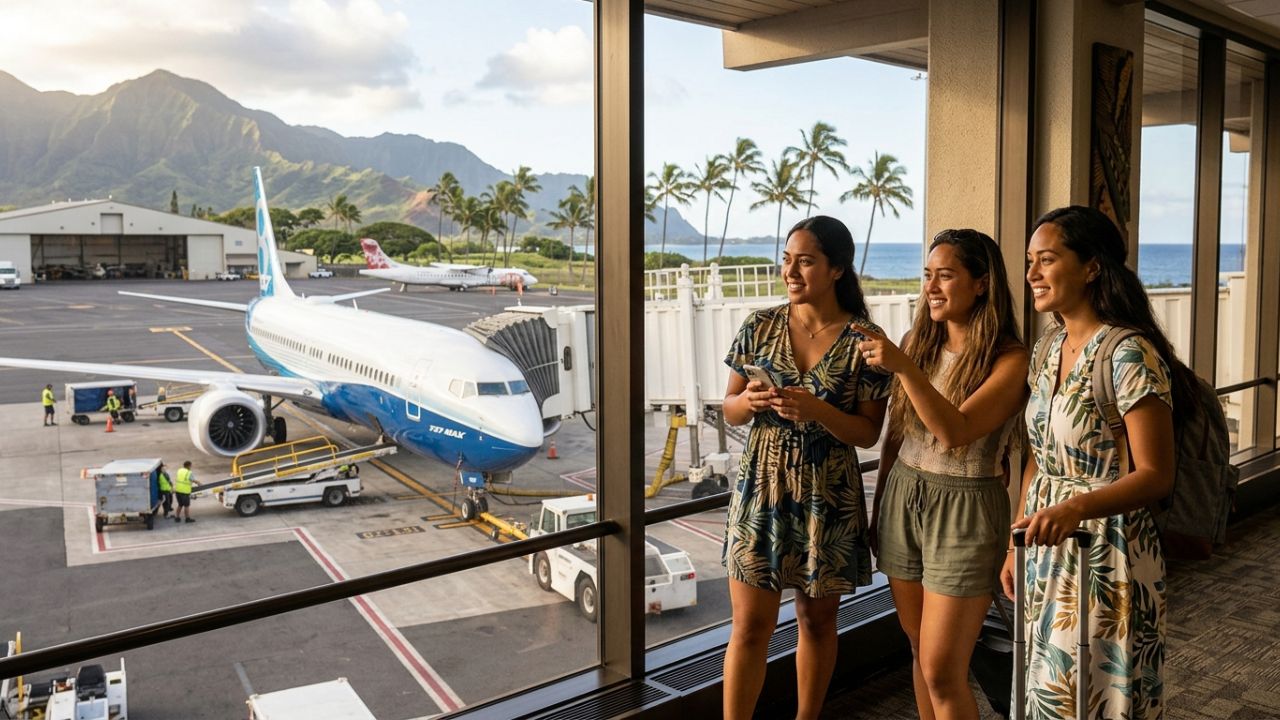
Image generated by AI
In a massive corporate fleet restructuring designed specifically to insulate the vulnerable Pacific aviation network from crippling travel chaos and systemic flight cancellations, Alaska Air Group has formally announced the total replacement of Hawaiian Airlines' aging Boeing 717 fleet. Reported on June 20, 2026, this highly anticipated operational pivot, orchestrated directly by Alaska Air Group President Shane Tackett following the high-profile merger, actively addresses a critical asset bottleneck. Because the aging regional jets can no longer reliably secure specialized spare engine parts, maintaining them actively invites massive daily airport disruptions. By aggressively pushing an all-Boeing 737 transition blueprint to cover vital short-hop interisland routes, the parent company is entirely reshaping the capacity and economic structure of high-frequency island hopping, dominating today's most crucial headline in breaking airline news and essential global aviation updates.
By introducing direct passenger coordination and dynamic scheduling backups, the regional aviation hubs target growing passenger demand across vital commerce sectors. The choice to coordinate flight departures in phases helps to manage gate capacity, supporting the country's broader regional transportation network.
Context: Eradicating the 717 Maintenance Nightmare
For the global tourism and interisland aviation industry, the rapid deployment of the Alaska Airlines Boeing 737 fleet into Hawaiian airspace is a direct survival tactic against compounding travel chaos.
Historically, the twin-rear-engine Boeing 717-200 served as the undisputed, 128-seat workhorse of neighbor island travel, dominating the high-frequency trunk routes linking Honolulu (HNL) to Kahului (OGG), Lihue (LIH), and Hilo (ITO). However, keeping the remaining 19 units safely in the air has escalated into an incredibly expensive, highly dangerous logistical nightmare. The fleet maintains a massive average airframe age exceeding 23.7 years. Flying 25-to-45-minute overwater sectors subjects the landing gear and specialized Rolls-Royce BR715 engines to immense thermal and structural stress. Because global production ended decades ago, finding replacement parts is nearly impossible. If Alaska Airlines attempted to maintain this fleet indefinitely, the inevitable mechanical failures would trigger massive daily flight cancellations, stranding thousands of local commuters and international tourists in interisland terminal gridlock.
To view live flight schedules, verify the active aircraft assignment of your specific interisland itinerary, or to track potential route disruptions, travelers must consult official aviation directories. For direct updates regarding how this massive mainline transition protects your bookings from current flight cancellations out of major hubs like Honolulu and Kahului, travelers should aggressively utilize the official portals of Alaska Airlines and Hawaiian Airlines. To explore live flight tracking and monitor the exact severity of the cascading bottlenecks paralyzing competitor airlines clinging to aging regional jets, passengers can consult the official FlightAware tracking service.
Section-Wise Breakdown: The Shift to Mainline Operations
Pushing for Ultimate Fleet Commonality
Maintaining a massive, multi-brand fleet diversity under a single operational banner introduces severe overhead expenses and training friction. Prior to the corporate merger, Alaska Airlines was heavily committed to a highly profitable, all-Boeing mainline fleet strategy. By forcing the Alaska Airlines interisland Boeing 737 standard upon the Hawaiian network, the unified carrier aggressively prioritizes fleet commonality. Rather than introducing a foreign narrowbody—like the Embraer E195-E2—the carrier eliminates the need for separate pilot training, isolated maintenance crews, and unique spare parts inventories, ensuring long-term corporate survival.
The Threat to High-Frequency Schedules
The decision to utilize massive mainline narrowbodies for 30-minute island hops introduces heavy logistical friction that could trigger localized travel chaos. The Boeing 717 was celebrated for its low step-height and rapid quick-turn capabilities, perfectly matching the rapid flow of commuters. Deploying a larger Boeing 737-800 or MAX 8 changes the entire math behind Hawaii short-haul flights. A 160-seat aircraft takes significantly longer to load, deplane, and groom at the gate. Consequently, maintaining the historic frequency of 160 daily departures across the islands will be incredibly tough, forcing local travelers to adapt to a system built around fewer, much larger departures per day.
The U.S. Mainland Aircraft Rotation Strategy
To prevent the intense structural stress of quick-turn island hopping from destroying the expensive engines of the new 737 MAX 8 fleet, the airline has formulated a highly dynamic aircraft rotation strategy. Instead of keeping a Boeing 737 isolated on interisland hops all day, the carrier will actively rotate airframes between the U.S. mainland and the Hawaiian hubs. A 737 might fly from Seattle to Honolulu, execute two quick interisland loops to Maui, and immediately return to the West Coast. This allows the engines to experience extended cruise periods at high altitudes, actively balancing the thermal stress and preserving the fleet.
Technical Roster: Pacific Fleet Transition Data
To ensure absolute factual accuracy regarding the specific aircraft models, the capacity variations, and the official operational status of the outgoing and incoming fleets, the following matrix details the verified transition data:
Structural Fleet & Capacity Comparison Matrix
| Aircraft Model Type | Seating Capacity (Typical) | Average Fleet Age (2026) | Optimal Mission Range | Regional Fleet Status |
|---|---|---|---|---|
| Boeing 717-200 | 128 Passengers | 23.7 Years | 2,060 Nautical Miles | Phased Retirement Confirmed |
| Boeing 737-800 | 159 to 161 Passengers | 10.5 Years | 3,115 Nautical Miles | Primary Replacement Candidate |
| Boeing 737 MAX 8 | 159 Passengers | New Delivery Base | 3,550 Nautical Miles | Long-Term Network Core |
| Embraer E195-E2 | 120 to 146 Passengers | N/A (Evaluated) | 2,600 Nautical Miles | Excluded Due to Engine Profile |
Data strictly reflects the verified fleet consolidation blueprint confirmed by Alaska Air Group, highlighting the phased retirement of the 717-200 and the rejection of the Embraer E195-E2 in favor of the Boeing 737 mainline family.
Passenger Impact: Reduced Frequency vs. Guaranteed Reliability
For the thousands of local residents and international tourists who rely heavily on high-frequency interisland travel, the transition from the agile Boeing 717 to the massive Boeing 737 fundamentally alters the Hawaiian travel experience.
The immediate passenger impact of this mainline shift is the trade-off between schedule frequency and flight reliability. Historically, passengers enjoyed the extreme convenience of interisland flights departing every 45 minutes, allowing them to treat air travel like a bus service. The introduction of the Boeing 737 MAX 8—which holds roughly 159 passengers compared to the 717's 128—means the airline will likely consolidate flights, offering fewer daily departures to compensate for the longer boarding times. While passengers lose the extreme flexibility of rapid-fire schedules, they gain massive protection against travel chaos. Because the 737s are highly reliable, modern aircraft with a massive, shared pool of spare parts, passengers are no longer threatened by the sudden, massive flight cancellations that routinely plagued the aging, mechanically vulnerable 717 fleet.
Industry Analysis: The Eradication of Niche Aircraft
Aviation and financial industry analysts view the Alaska Air Group’s decision to retire the Boeing 717 as definitive proof that the economic realities of modern airline management leave absolute zero room for niche, specialized regional aircraft types.
Analysts note that while aviation purists mourn the loss of the custom-built regional quad-jets and twin-jet short-hop mainstays, standardizing the fleet is the only way to protect corporate margins against volatile macroeconomic headwinds. By substituting the 19 aging Hawaiian Airlines jets with standardized mainline assets, the combined carrier builds a highly adaptable network. If a Boeing 737 assigned to an interisland route suffers a mechanical fault, Alaska can instantly swap in another 737 arriving from the mainland, entirely preventing the airport disruptions that previously caused massive terminal gridlock. This transition signals that the future of global aviation belongs exclusively to massive, unified fleet structures that prioritize operational resilience over route-specific optimization.
Actionable Advice for Navigating the Hawaiian Transition
Because passengers cannot control corporate fleet consolidation or the retirement of aging regional jets, you must execute this strategic survival checklist to adapt to the new interisland 737 schedules and avoid travel chaos:
- Anticipate Reduced Schedule Flexibility: Under the older 717 model, if you missed your 10:00 a.m. flight to Maui, you could easily jump on the 10:45 a.m. departure. The larger Boeing 737 operations will likely result in consolidated, wider gaps between flights. You must absolutely treat interisland travel like a strict mainline departure; arriving at the Honolulu terminal late guarantees you will face severe travel chaos, as the next available flight may not depart for several hours.
- Prepare for Longer Boarding Procedures: The Boeing 737-800 and MAX 8 are significantly larger and hold over 30 more passengers than the outgoing 717s. Consequently, boarding and deplaning will take substantially longer. If you are scheduling interisland business meetings or booking a connecting international flight, you must aggressively expand your layover buffers to account for the slower movement of 160 passengers down a single narrowbody aisle.
- Capitalize on Mainline Upgrades: The shift to the Boeing 737 family brings massive mainline amenities to the short-hop interisland market. Ensure you download the official Alaska Airlines and Hawaiian Airlines apps to access the high-speed streaming entertainment and advanced Wi-Fi packages that the modern 737s feature, vastly improving your comfort during potential tarmac delays.
FAQ: The Hawaiian 717 Fleet Retirement
Why is Alaska Airlines replacing the Hawaiian Boeing 717 fleet?
The 19 Boeing 717 aircraft average 23.7 years of age; replacing them is an operational necessity due to the extreme scarcity of specialized engine parts and the high risk of mechanical flight cancellations.
What aircraft will fly the Hawaii interisland routes instead?
Alaska Air Group will replace the regional jets with its mainline narrowbody fleet, primarily utilizing the Boeing 737-800 and the new Boeing 737 MAX 8.
Will there be fewer flights between the Hawaiian islands?
Due to the larger seating capacity and longer boarding times of the Boeing 737 compared to the 717, the historic frequency of roughly 160 daily departures may be consolidated into fewer, larger flights.
The Reality of Navigating Standardized Aviation
The massive corporate decision to completely scrap the Hawaiian Airlines Boeing 717 fleet proves definitively that modern aviation giants will ruthlessly eliminate specialized regional assets to protect their networks from systemic travel chaos. By aggressively prioritizing fleet commonality and standardizing the Pacific corridor with the Boeing 737 MAX 8, Alaska Air Group has successfully future-proofed its interisland network against the massive flight cancellations caused by aging infrastructure. Yet, as local commuters and international tourists navigate these changing schedules, they must accept a critical new reality: securing a reliable island hop requires total adaptation to wider flight intervals, a complete refusal to treat air travel like a casual bus service, and the tactical readiness to navigate the longer boarding procedures inherent in massive mainline operations.
Key Takeaways
- Asset Retirement: Alaska Air Group has officially confirmed the phased retirement of the 19 aging Boeing 717-200 aircraft currently operating Hawaiian Airlines interisland routes.
- Mainline Replacement: The specialized regional jets will be replaced entirely by mainline narrowbodies, specifically the Boeing 737-800 and Boeing 737 MAX 8.
- Preventing Operational Chaos: The 23.7-year-old 717 fleet was facing critical spare parts shortages; the replacement actively prevents severe mechanical flight cancellations.
- Dynamic Fleet Rotation: To prevent engine damage from frequent short-hop flights, 737s will dynamically rotate between U.S. mainland routes and Hawaiian interisland loops.
- Capacity Over Frequency: Passengers must prepare for potentially fewer daily departures, as the larger 159-seat 737s take longer to turn around at the gate compared to the 128-seat 717s.
Related Travel Guides
Massive Travel Chaos Paralyzes Chicago O'Hare with 1,425 Disruptions
Disclaimer
This article is for informational and educational purposes only. It does not constitute legal, financial, or professional advice. While we strive to provide accurate and up-to-date information, travel policies, regulations, and conditions change rapidly. Always verify information with official sources before making travel decisions. Nomad Lawyer makes no representations about the accuracy, reliability, completeness, or suitability of the information provided. Readers should consult qualified professionals for advice specific to their circumstances. The views expressed in this article are those of the author and do not necessarily reflect the views of Nomad Lawyer.
Kunal K Choudhary
Co-Founder & Contributor
A passionate traveller and tech enthusiast. Kunal contributes to the vision and growth of Nomad Lawyer, bringing fresh perspectives and driving the community forward.
Learn more about our team →