
Alaska Airlines Deploys $135 Million Mega-Hub at PDX to Eradicate Flight Cancellations, Stop Severe Airport Disruptions, and Bypass Massive Travel Chaos: Latest Airline News
As travel chaos infects the US network, Alaska Airlines breaks ground on a massive $135 million PDX maintenance hub designed to eliminate mechanical flight cancellations.

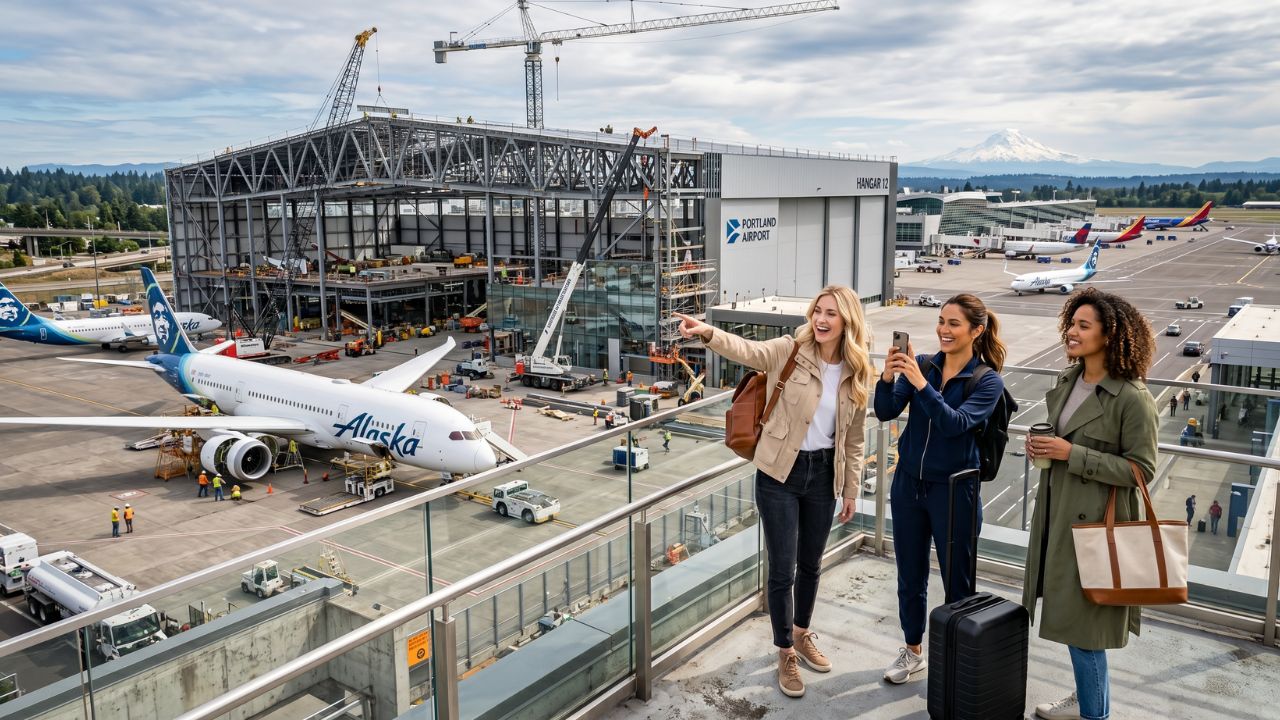
Image generated by AI
In a massive infrastructure offensive explicitly engineered to heavily armor the West Coast aviation network against the severe travel chaos and systemic flight cancellations infecting legacy US hubs, Alaska Airlines has officially broken ground on a colossal new maintenance facility at Portland International Airport (PDX). Announced on June 18, 2026, the staggering $135 million investment will construct a hyper-advanced, 185,000-square-foot hangar complex capable of simultaneously servicing multiple widebody and narrowbody aircraft. As legacy competitors frequently force passengers into devastating airport disruptions because they lack the localized maintenance capacity to quickly repair broken jets, Alaska Airlines is actively decentralizing its engineering capabilities. By embedding this massive repair hub directly into the high-traffic Pacific Northwest corridor, the carrier is guaranteeing faster turnaround times and unprecedented fleet reliability, driving today's most strategic headline in breaking airline news and absolutely vital global aviation updates.
By introducing direct passenger coordination and dynamic scheduling backups, the regional aviation hubs target growing passenger demand across vital commerce sectors. The choice to coordinate flight departures in phases helps to manage gate capacity, supporting the country's broader regional transportation network.
Context: The Hidden Mechanical Trigger for Terminal Gridlock
For the thousands of domestic tourists and corporate executives who frequently view systemic travel chaos as an unavoidable consequence of bad weather, the reality is far more industrial.
Historically, when an aircraft suffers a minor technical fault—such as a sensor failure or a hydraulic leak—the speed of the repair determines whether passengers fly or face immediate flight cancellations. Airlines that rely on heavily centralized maintenance hubs often have to fly a broken plane (empty) halfway across the country for repairs, instantly removing that aircraft from the passenger schedule and triggering cascading airport disruptions. Alaska Airlines has explicitly recognized this operational vulnerability. By injecting $135 million into Portland International Airport, the airline is building a massive localized defense matrix. The new facility features 125,000 square feet of dedicated aircraft maintenance space and an additional 60,000 square feet of engineering workshops. This massive footprint allows Alaska to simultaneously service up to three narrowbody jets or two widebody aircraft. This means when a plane breaks down in the Pacific Northwest, it is immediately routed into the PDX hangar, repaired, and returned to service before the localized delay mutates into the devastating travel chaos that currently paralyzes rival US networks.
To view live flight schedules, verify the active delay status of your specific itinerary, or to track active regional airspace restrictions, travelers must consult official aviation directories. For direct updates regarding how this massive maintenance surge guarantees the reliability of your specific West Coast connections, travelers should aggressively utilize the official portals of their operating carriers. To explore live flight tracking and monitor the exact severity of the cascading bottlenecks causing the flight cancellations at competitor hubs, passengers can consult the official FlightAware tracking service.
Section-Wise Breakdown of the Infrastructure Overhaul
The PDX Tactical Advantage
Portland International Airport (PDX) is a massive strategic node for Alaska Airlines. By placing this $135 million maintenance hub in Portland, the airline heavily decentralizes its operations away from its primary Seattle headquarters. If a massive winter storm or localized travel chaos strikes Seattle, the airline now possesses a fully independent, fully staffed secondary mega-hub capable of processing heavy maintenance and keeping the broader West Coast fleet flying without interruption.
Hawaiian Airlines Integration Readiness
This infrastructure project is perfectly timed to support Alaska's massive operational integration with Hawaiian Airlines. Merging fleets frequently causes severe airport disruptions due to mismatched maintenance schedules and engineering bottlenecks. Because the new PDX hangar is specifically designed to simultaneously handle two widebody aircraft (the backbone of the Hawaiian transpacific network), Alaska ensures it has the physical real estate to rapidly service these massive jets, aggressively protecting transpacific passengers from the brutal flight cancellations normally associated with airline mergers.
Economic and Employment Surge
Beyond fixing airplanes, the PDX mega-hub serves as a massive economic anchor, generating over 100 new, highly skilled aviation jobs. By aggressively hiring localized aircraft maintenance technicians and engineering specialists, Alaska Airlines ensures it has the human capital required to run this facility 24/7. When travel chaos threatens the network late at night, these dedicated technicians ensure aircraft are instantly repaired and ready for the morning departure bank.
Technical Roster: Alaska Airlines PDX Maintenance Data
To ensure absolute factual accuracy regarding the exact parameters of this massive infrastructure investment and the specific engineering capacities utilized to bypass regional congestion, the following matrix details the verified corporate deployment data:
Alaska Airlines PDX Infrastructure & Reliability Matrix
| Strategic Infrastructure Metric | Operational Verification |
|---|---|
| Operating Carrier | Alaska Airlines |
| Facility Location | Portland International Airport (PDX), USA |
| Total Financial Investment | Approximately $135 million |
| Aircraft Maintenance Floor Area | 125,000 square feet of dedicated service space |
| Operational Support Area | 60,000 square feet for engineering offices and workshops |
| Simultaneous Aircraft Capacity | Engineered for up to three narrowbody or two widebody aircraft |
| Economic Employment Impact | Generation of over 100 highly skilled aviation jobs |
| Strategic Integration Focus | Directly supports Hawaiian Airlines widebody fleet merger |
Passenger Impact: Benefiting from Invisible Reliability
For the thousands of West Coast commuters exhausted by the agonizing unpredictability of US air travel, this massive PDX maintenance hub provides an essential, invisible layer of protection.
The immediate passenger impact of this $135 million investment is the absolute preservation of schedule reliability. When travel chaos strikes an airport, passengers on airlines with inadequate maintenance infrastructure suffer massive delays because a single broken part requires a replacement to be flown in from a distant hub. Alaska Airlines' structural shift guarantees that the airline operates with massive local redundancy. If you are flying out of PDX and your aircraft experiences a mechanical issue, the airline simply rolls it into the massive new hangar and immediately swaps it with a freshly serviced jet. Passengers are no longer treated as collateral damage during mechanical breakdowns; they are managed through a highly efficient, locally backed recovery matrix that physically extracts them from terminal gridlock faster than any competing domestic carrier.
Industry Analysis: The Shift to Decentralized Maintenance
Aviation industry analysts view Alaska Airlines' massive $135 million investment at PDX as definitive proof that highly centralized airline operations are obsolete in an era defined by constant travel chaos.
Analysts note that legacy US carriers operating massive singular hubs (like Atlanta or Dallas) frequently suffer from catastrophic network meltdowns. If severe weather or labor strikes hit their sole maintenance base, the entire domestic network collapses into rolling flight cancellations. Industry experts warn that the airlines surviving the current era of airport disruptions are those investing heavily in decentralized infrastructure. By building a massive, secondary widebody-capable hub in Portland, Alaska Airlines is mathematically distributing its risk. This move signals a massive industry shift: the airlines that successfully bypass the crushing delays of modern aviation will be those that pre-position their engineers, spare parts, and massive hangars directly along their most heavily trafficked corridors.
Actionable Advice for Surviving North American Transit
While passengers cannot directly utilize aircraft hangars, you can execute this strategic planning checklist to fully leverage Alaska Airlines' highly reliable West Coast operational network:
- Route Through PDX During Winter Peaks: As Alaska Airlines completes this massive maintenance hub, PDX will become one of the most mechanically reliable airports in North America. During the volatile winter travel season, explicitly route your transit through Portland; if an aircraft breaks, the airline has the immediate local infrastructure to swap the plane and prevent your itinerary from collapsing into travel chaos.
- Exploit the Widebody Transpacific Shield: Because the new facility can process two widebody jets simultaneously, Alaska’s integration of the Hawaiian Airlines fleet will be highly protected. Book your transpacific flights originating from the Pacific Northwest with extreme confidence, knowing the airline has heavily insulated these routes from mechanical flight cancellations.
- Avoid Carriers Consolidating Maintenance: When booking domestic flights, avoid legacy airlines that are actively closing regional maintenance bases to save money. These airlines are mathematically guaranteed to execute sudden flight cancellations when a plane breaks down at an outstation because they lack the local engineers to fix the problem.
FAQ: Alaska Airlines PDX Hub & Travel Chaos
What is Alaska Airlines building at Portland International Airport?
The airline is investing approximately $135 million to construct a massive advanced maintenance hub, featuring 125,000 square feet of hangar space and 60,000 square feet of workshops, to rapidly repair aircraft and prevent travel chaos.
How does a new hangar stop flight cancellations?
When an aircraft breaks, airlines without local maintenance must wait for parts or fly the plane empty to a central hub, causing immediate flight cancellations. The PDX mega-hub allows Alaska to instantly fix up to three narrowbody or two widebody planes simultaneously, ensuring the schedule remains intact.
How many jobs will the new Alaska Airlines facility create?
The massive infrastructure project is expected to generate more than 100 highly skilled aviation jobs in the Portland region, ensuring the airline has the localized human capital required to combat airport disruptions 24/7.
The Reality of Operational Infrastructure
The massive $135 million PDX ground-breaking executed by Alaska Airlines proves definitively that robust, localized physical infrastructure is the ultimate defense against systemic travel chaos. By embedding a 185,000-square-foot mega-hub directly into the Pacific Northwest corridor, the Seattle-based carrier has provided its domestic network with a heavily armored bypass to regional terminal gridlock. As traditional legacy airlines desperately struggle to process surging passenger volumes—frequently triggering massive connecting queues, rolling flight cancellations, and excruciating airport disruptions due to a lack of decentralized repair capabilities—travelers must accept a critical new reality: avoiding brutal travel anxiety requires actively prioritizing airlines that treat immediate, localized mechanical reliability as a massive financial imperative.
Key Takeaways
- Massive Infrastructure Upgrade: Alaska Airlines is executing a $135 million investment to build a state-of-the-art maintenance mega-hub at Portland International Airport (PDX).
- Massive Physical Footprint: The facility includes 125,000 square feet of dedicated maintenance space and 60,000 square feet of engineering workshops.
- Preventing Flight Cancellations: The hangar can simultaneously service three narrowbody or two widebody aircraft, guaranteeing rapid repairs and directly preventing the mechanical delays that trigger travel chaos.
- Hawaiian Integration Protection: The widebody capability of the new hub ensures that the airline's integration with Hawaiian Airlines remains heavily insulated against operational airport disruptions.
- Passenger Survival: Travelers should aggressively prioritize transiting through heavily armored hubs like PDX, where airlines possess the physical infrastructure to instantly recover from technical breakdowns.
Related Travel Guides
Massive Travel Chaos Paralyzes Chicago O'Hare with 1,425 Disruptions
Disclaimer
This article is for informational and educational purposes only. It does not constitute legal, financial, or professional advice. While we strive to provide accurate and up-to-date information, travel policies, regulations, and conditions change rapidly. Always verify information with official sources before making travel decisions. Nomad Lawyer makes no representations about the accuracy, reliability, completeness, or suitability of the information provided. Readers should consult qualified professionals for advice specific to their circumstances. The views expressed in this article are those of the author and do not necessarily reflect the views of Nomad Lawyer.
Kunal K Choudhary
Co-Founder & Contributor
A passionate traveller and tech enthusiast. Kunal contributes to the vision and growth of Nomad Lawyer, bringing fresh perspectives and driving the community forward.
Learn more about our team →