
Alaska Airlines Flight ASA1493 Diverted to Minneapolis-Saint Paul Airport Due to Chicago Storms 2026
Severe convective storms over Chicago forced Alaska Airlines flight ASA1493 from San Diego to divert to Minneapolis-Saint Paul International Airport to ensure passenger safety and fuel reserves.

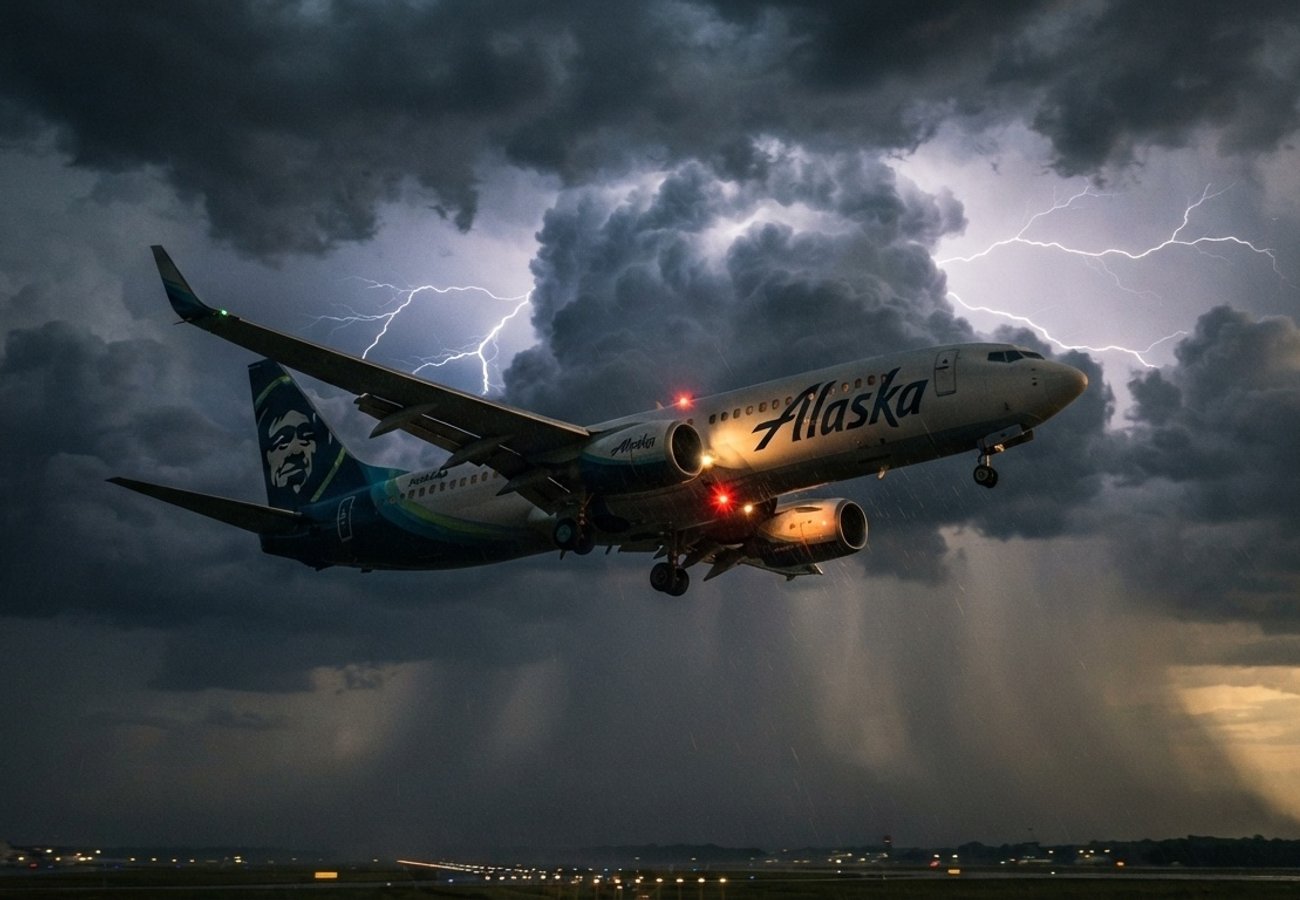
Image generated by AI
Severe convective storms and FAA-mandated ground delays forced Alaska Airlines flight ASA1493 to divert to Minneapolis-Saint Paul International Airport, prioritizing fuel safety over its scheduled Chicago arrival.
Weather-Driven Diversion of Flight ASA1493
Alaska Airlines flight ASA1493, traveling from San Diego, was forced to deviate from its planned trajectory on August 11, 2026. The aircraft was originally scheduled to arrive at its destination with a scheduled time of arrival (STA) of 11:36 EST. However, a massive system of convective storms blanketing the Midwestern United States disrupted standard approach corridors, leading air traffic control to order an immediate diversion.
The primary catalyst for the rerouting was the emergence of towering cumulonimbus clouds over the Chicago area. These formations are associated with intense lightning and microbursts, which created hazardous conditions for descending aircraft. As a result, the Federal Aviation Administration (FAA) implemented stringent ground delay programs and closed arrival airspace for Chicago O'Hare International Airport.
Operational Flight Specifications
The decision to divert was based on precise fuel management calculations. While commercial jets maintain reserves for standard holding patterns, the projected delays in Chicago exceeded safe operational limits. To avoid compromising the aircraft's structural integrity or fuel safety, the cockpit crew coordinated with ground dispatch to secure a landing slot at an approved secondary facility.
| Flight Detail | Specification |
|---|---|
| Flight Number | ASA1493 |
| Carrier | Alaska Airlines |
| Origin | San Diego, US |
| Intended Destination | Chicago, US |
| Diversion Airport | Minneapolis–Saint Paul International Airport (MSP) |
| Scheduled Arrival (STA) | 11:36 EST |
| Primary Cause | Convective Storms / FAA Ground Stop |
| Aircraft Type | Boeing 737 |
Traveler Logistics Guide: Navigating Diversions
From a ground-level perspective, the best way to navigate an unexpected flight diversion is to maintain digital connectivity with the airline's real-time tracking app rather than relying solely on gate announcements. When an aircraft is diverted to a secondary hub like Minneapolis-Saint Paul (MSP), passengers should follow these logistics protocols:
1. Connection Management If you have a connecting flight from the original destination, notify the airline agent immediately upon landing at the diversion airport. In cases of weather-related diversions, airlines typically prioritize rebooking passengers on the next available flight or providing hotel vouchers if the ground stop extends overnight.
2. Customs and Digital Transit For international travelers diverted to US hubs, ensure your digital travel authorizations are up to date. While ASA1493 was a domestic route, travelers moving through major hubs should utilize biometric processing (such as Global Entry or similar digital identities) to expedite the movement between diverted terminals and re-boarding gates.
3. Layover Optimization During unplanned tarmac delays, ensure you have a portable power bank. While cabin crews provide refreshments, the lack of scheduled gate access can lead to extended periods on the aircraft.
Infrastructure and Safety Impact
The diversion of ASA1493 highlights the volatility of Midwestern aviation corridors during peak storm seasons. The seamless transition to Minneapolis-Saint Paul International Airport demonstrates the efficacy of Instrument Flight Rules (IFR) and the coordination between flight crews and ground dispatch.
By utilizing MSP as a refueling and holding point, Alaska Airlines avoided the risks associated with severe turbulence and fuel exhaustion. The operation is categorized as a success because it adhered to the strict hierarchy of aviation safety: prioritizing passenger welfare over schedule adherence. Once the storm bands drifted eastward and the FAA lifted the ground stops, the aircraft successfully completed the final leg of its journey into Chicago.
Safety protocols ensure that even the most severe weather cannot compromise the integrity of modern commercial transit.
Related Travel Guides
Disclaimer
This article is for informational and educational purposes only. It does not constitute legal, financial, or professional advice. While we strive to provide accurate and up-to-date information, travel policies, regulations, and conditions change rapidly. Always verify information with official sources before making travel decisions. Nomad Lawyer makes no representations about the accuracy, reliability, completeness, or suitability of the information provided. Readers should consult qualified professionals for advice specific to their circumstances. The views expressed in this article are those of the author and do not necessarily reflect the views of Nomad Lawyer.
Raushan Kumar
Founder & Lead Developer
Full-stack developer with 11+ years of experience and a passionate traveller. Raushan built Nomad Lawyer from the ground up with a vision to create the best travel and law experience on the web.
Learn more about our team →