
Airlines Still Seating Passengers 3-3 on Narrowbody Jets in 2026
Airlines still seating economy passengers in cramped 3-3 configurations on narrowbody aircraft throughout 2026, prioritizing revenue over comfort despite growing passenger backlash and complaints.

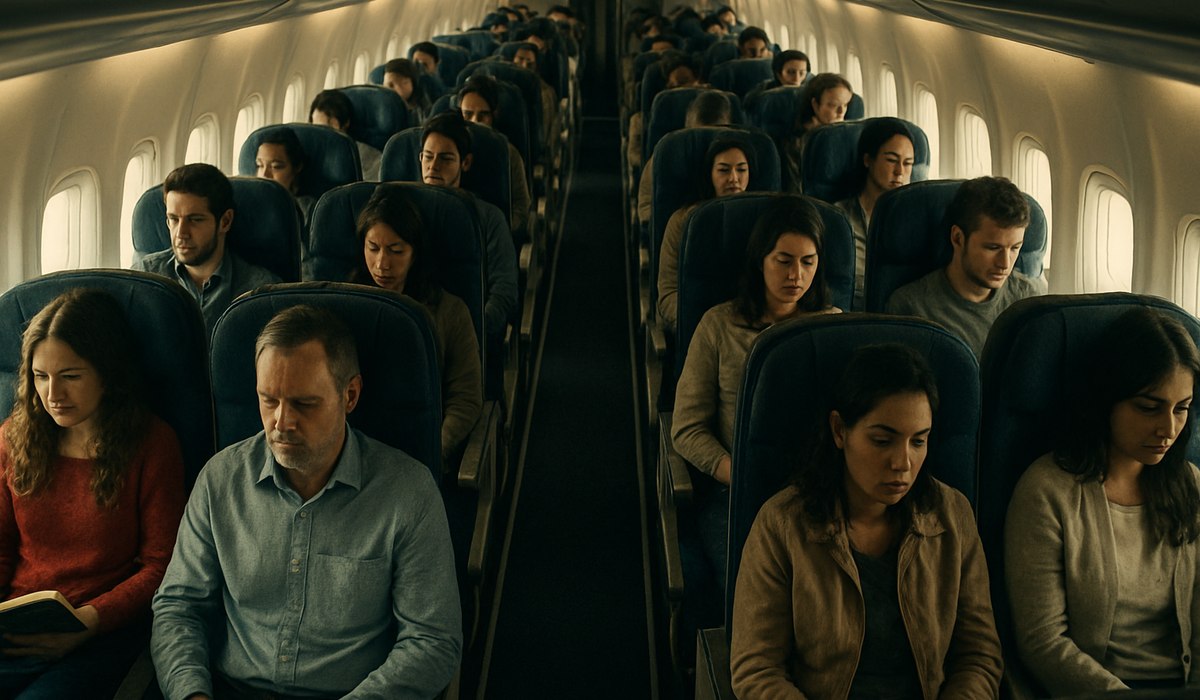
Image generated by AI
Airlines Still Seating Passengers in Tight 3-3 Configurations Despite Discomfort
Major global carriers continue operating narrowbody aircraft with the industry-standard 3-3 seating layout throughout 2026, even as passenger complaints reach unprecedented levels. From budget carriers to full-service legacy airlines, operators refuse to abandon these high-density cabin configurations that prioritize revenue generation over passenger comfort. The economics of modern aviation demand that airlines still seating economy passengers in such cramped arrangements, transforming regional and domestic routes into profit-maximization exercises at the expense of traveler wellbeing.
The 3-3 seating pattern—featuring three seats on each side of a single center aisle—has become ubiquitous across Boeing 737, Airbus A320, and similar narrowbody fleets. Despite technological advances in aircraft design and mounting evidence of passenger dissatisfaction, carriers worldwide show no signs of retreating from these configurations. This business model reflects the fundamental tension between airline profitability and customer experience in contemporary aviation.
The Economics Behind 3-3 Seating
The financial imperative driving airlines still seating passengers in cramped configurations stems directly from unit economics. Each additional row generates thousands of dollars in monthly revenue across a fleet of hundreds of aircraft. A narrowbody jet with 180 seats configured 3-3 versus 150 seats in a roomier arrangement represents the difference between profitability and losses on competitive regional routes.
Airlines calculate break-even points ruthlessly. Reducing capacity by 20-25 percent would require substantial fare increases to maintain revenue targets. Since passengers often choose flights based primarily on price, carriers view comfort downgrades as acceptable trade-offs. Competition in the economy segment remains brutally price-sensitive, forcing operators to maximize available capacity rather than emphasize legroom improvements.
The A320 family and 737 models dominate global aviation precisely because their narrowbody design enables ultra-efficient operations on point-to-point routes. These jets consume less fuel and generate higher utilization rates than widebody alternatives. Airlines still seating passengers aggressively across these platforms because the narrowbody configuration itself represents the optimal business model for contemporary aviation economics.
Widebody Aircraft Show Starkly Different Trends
Widebody aircraft tell a contrasting story about cabin configuration choices. Early Boeing 777 and Boeing 787 aircraft entered service with more conservative nine-abreast and eight-abreast economy configurations, respectively. However, modern operators have aggressively reconfigured these widebody jets to higher densities as competition intensified throughout the 2020s.
Today, most 777s operate with ten-abreast seating in economy, while 787 aircraft increasingly feature nine-abreast layouts. These narrower seat pitches on substantially larger aircraft reflect the same revenue-maximization logic driving narrowbody density. Philippine Airlines made headlines in early 2026 by becoming the first flag carrier to configure its economy cabin ten-abreast on new Airbus A350 aircraft, eschewing the standard nine-abreast arrangement.
The A350's marginally wider fuselage—approximately four additional inches internally compared to the 787—allows carriers to extract maximum density without redesigning seat mechanisms. This move signals that even premium widebody platforms cannot escape the economic pressures forcing airlines still seating passengers at historically high densities across all aircraft types.
Passenger Comfort Versus Airline Revenue: An Irresolvable Conflict
Passenger surveys consistently demonstrate widespread dissatisfaction with ultra-dense seating. Complaints regarding legroom, armrest competition, and bathroom accessibility dominate travel feedback platforms. Yet airlines remain unmoved by comfort concerns, viewing customer satisfaction metrics as secondary to load factors and yield management.
The COVID-19 pandemic briefly introduced middle-seat blocking as a pandemic-prevention measure. Many passengers hoped these temporary comfort improvements might become permanent. Instead, as soon as health restrictions lifted, carriers rushed to restore full-density configurations. Airlines still seating passengers in 3-3 arrangements with minimal legroom because the market structure simply cannot support comfort as a primary differentiator in economy service.
Premium cabin growth demonstrates that affluent passengers willingly pay substantial premiums for enhanced comfort. Business and first-class products generate disproportionate revenues per square foot. By contrast, economy passengers vote with their wallets by selecting lowest available fares, creating irresistible pressure for density optimization. This dynamic will likely persist as long as commodity pricing characterizes the economy segment.
Future of Cabin Configurations: No Relief Expected
Airline capacity planning through 2030 suggests no meaningful shift toward passenger-centric cabin designs in economy sections. New aircraft deliveries—including the A321XLR, MAX 10, and next-generation widebodies—will likely arrive at carriers configured for maximum density. Manufacturers compete partly on how efficiently their designs enable high-density seating, inadvertently incentivizing operators to fill every available space.
Regulatory intervention remains unlikely in most markets. The Federal Aviation Administration and European Aviation Safety Agency establish safety standards but not comfort minimums for seat spacing. Without mandatory legroom legislation, competitive dynamics will continue rewarding density optimization. Some airlines attempt differentiation through premium economy or extra-legroom economy products, but these options remain financially inaccessible to price-sensitive majority segments.
Technological developments in seating—including lighter composite construction and modular armrests—primarily enable more efficient density rather than increased comfort. Innovation serves corporate profitability rather than passenger wellbeing. Unless fundamental market disruption occurs—such as legacy carriers losing market share to comfort-focused competitors—the prevalence of airlines still seating passengers in tight 3-3 configurations will persist indefinitely.
Key Data Table: Global Narrowbody Seating Configurations 2026
| Metric | Current Status | Impact on Passengers |
|---|---|---|
| Standard A320 Economy Density | 180 passengers, 3-3 seating | 17-18 inch seat pitch, minimal legroom |
| Boeing 737 MAX Economy Configuration | 190+ passengers available | Ultra-high density reduces aisle access |
| Philippine Airlines A350 Innovation | 10-abreast economy (widebody) | Narrower seats despite larger fuselage |
| Global Fleet Narrowbody Percentage | 75% of commercial aircraft | Continued dominance of high-density platforms |
| Average Economy Seat Width | 16.5-17.5 inches | Below ergonomic comfort recommendations |
| Widebody 10-Abreast Adoption Rate | 60%+ of long-haul fleets | Premium aircraft configured for density |
What This Means for Travelers: Practical Response Strategies
Understanding why airlines still seating passengers in maximum-density configurations helps you navigate the reality strategically.
-
Book early morning or late evening flights on narrowbody routes whenever possible. These time slots typically experience lighter load factors, increasing probability of middle-seat availability on 3-3 aircraft.
-
Select airlines and specific aircraft types by researching fleet compositions. Some carriers operate higher percentages of regional turboprops or larger regional jets on secondary routes—naturally offering improved spacing.
-
Prioritize connecting flights through small regional hubs rather than direct routes on major trunk lines. Secondary operators often deploy less dense aircraft on connecting segments, providing unexpected comfort improvements.
-
Purchase premium economy or extra-legroom economy seats if budget permits, particularly for flights exceeding three hours. The incremental cost often costs less than medical expenses from deep-vein thrombosis risk on long flights.
-
Monitor airline seating maps using airline websites during booking. Even 3-3 configured aircraft occasionally feature bulkhead or emergency-exit rows offering superior legroom. Reserve these strategically.
-
Request aisle seats during check-in to improve bathroom accessibility and reduce spatial constraint sensations during ultra-dense flights.
-
Contact the U.S. Department of Transportation if experiencing genuine comfort or health
Disclaimer
This article is for informational and educational purposes only. It does not constitute legal, financial, or professional advice. While we strive to provide accurate and up-to-date information, travel policies, regulations, and conditions change rapidly. Always verify information with official sources before making travel decisions. Nomad Lawyer makes no representations about the accuracy, reliability, completeness, or suitability of the information provided. Readers should consult qualified professionals for advice specific to their circumstances. The views expressed in this article are those of the author and do not necessarily reflect the views of Nomad Lawyer.
Kunal K Choudhary
Co-Founder & Contributor
A passionate traveller and tech enthusiast. Kunal contributes to the vision and growth of Nomad Lawyer, bringing fresh perspectives and driving the community forward.
Learn more about our team →