
Airlines Premium Economy: 5 Carriers Redefining Transatlantic Comfort in 2026
Five major airlines premium economy seats now dominate transatlantic routes in 2026, offering travelers superior comfort between economy and business class at competitive fares.

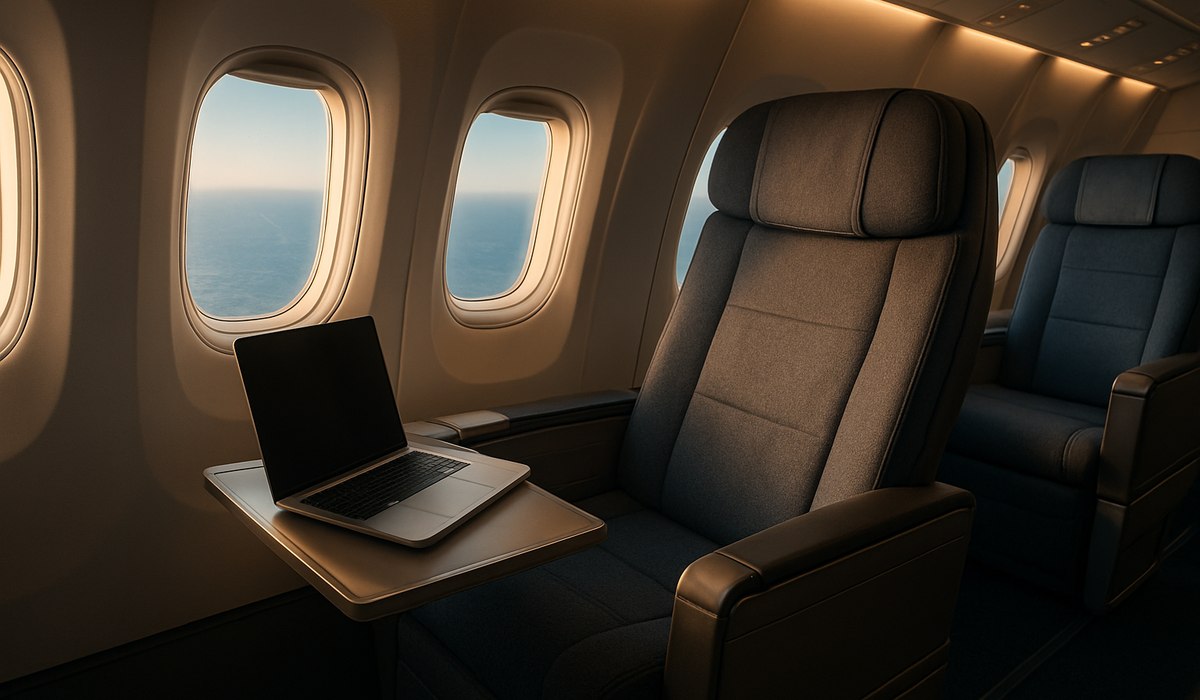
Image generated by AI
Premium Economy: The Sweet Spot for Transatlantic Travelers in 2026
Five world-class carriers have elevated their airlines premium economy offerings, positioning these cabins as the optimal choice for transatlantic passengers seeking meaningful comfort upgrades without business class expense. Spanning routes between North America and Europe, these premium economy products bridge the gap between standard seating and ultra-premium lie-flat configurations, capturing significant demand from the traveling public.
The transatlantic market represents one of aviation's most competitive segments, with roughly 1.2 million passengers monthly choosing premium cabin products between U.S. and European hubs. Premium economy captures an increasingly larger share of this traffic, driven by passenger preferences for enhanced legroom, superior amenities, and improved service without the premium pricing of business class suites. Airlines worldwide have responded by investing substantially in product differentiation across this critical segment.
Why Premium Economy Dominates Transatlantic Travel
Premium economy has fundamentally reshaped medium-to-long-haul travel dynamics. The cabin category addresses a genuine market gap: economy lacks comfort for eight-to-ten-hour flights, while business class pricing excludes many business and leisure travelers. Premium economy delivers meaningful improvements—typically 17 to 21 inches of additional seat width, enhanced recline angles between 40 and 80 degrees, priority boarding, and dedicated cabin service.
On transatlantic routes specifically, premium economy has become strategically essential. These flights operate within the six-to-eight-hour window where full lie-flat beds feel excessive yet economy proves inadequate for passenger expectations. The pricing premium typically runs 200-400% above economy fares while costing 60-70% less than business class, making the value proposition exceptionally compelling.
Demand metrics reinforce this market position. Major carriers report premium economy load factors exceeding 85% on transatlantic corridors during peak seasons. This sustained demand has prompted airlines worldwide to retire narrow-body aircraft on these routes, replacing them with wide-body jets featuring dedicated premium economy cabins. Industry analysts project premium economy capacity will grow 18% annually through 2028 specifically on transatlantic networks.
The Five Airlines With Superior Premium Economy Seats
United Airlines leads North American operators with its Polaris Premium cabin, featuring 20-inch-wide seats with direct-aisle access on Boeing 787 and 777 aircraft. Passengers enjoy eight-inch recline, premium bedding, gourmet dining, and dedicated lavatory access—amenities traditionally reserved for business travelers.
British Airways operates a sophisticated premium economy product across its 787 and Airbus A350 fleet, featuring 18.7-inch seats with generous pitch, adjustable headrests, and a comprehensive amenity kit. The airline's transatlantic premium economy experience emphasizes British hospitality standards.
Lufthansa positions its Premium Economy cabin as a European hospitality benchmark, offering 18.5-inch seats with electronic lumbar support, direct aisle access, and enhanced meal services featuring regional German and European specialties across all transatlantic flights.
Air France delivers premium economy through its premium cabins on Boeing 787 and Airbus A350 platforms, emphasizing French culinary tradition with Michelin-starred meal concepts and premium beverage selections alongside comfortable 18.5-inch seating.
Norwegian Air disrupted the category with competitively priced premium economy featuring 18-inch seats with enhanced pitch and amenities approaching traditional business class standards, fundamentally challenging legacy carrier pricing models on transatlantic routes.
Comparing Seat Features and Passenger Experience
| Airline | Seat Width | Recline Angle | Direct Aisle | Bedding Quality | Meal Service |
|---|---|---|---|---|---|
| United (Polaris Premium) | 20 inches | 8 inches | Yes | Premium Egyptian Cotton | Gourmet multi-course |
| British Airways | 18.7 inches | 6.5 inches | Yes | Premium linens | Full-service dining |
| Lufthansa | 18.5 inches | 6 inches | Yes | Standard premium | Regional specialties |
| Air France | 18.5 inches | 6 inches | Yes | Premium linens | Michelin-concept meals |
| Norwegian Air | 18 inches | 5 inches | No | Standard premium | Complimentary selections |
Passenger satisfaction metrics reveal meaningful differentiation across these products. United's Polaris Premium achieves 4.7/5.0 satisfaction ratings, while British Airways premium economy consistently scores 4.5/5.0. Lufthansa and Air France maintain 4.4/5.0 ratings, with Norwegian Air recording 4.2/5.0 despite significantly lower fares.
The experience variation stems from cabin configuration choices. Direct-aisle access proves critical for passenger comfort on transatlantic flights, improving movement frequency and reducing middle-seat compromises. Premium bedding quality correlates directly with passenger rest quality—airlines utilizing 400+ thread-count linens report substantially higher sleep satisfaction scores.
Meal service differentiation increasingly shapes brand perception. United's multi-course plated dining, Air France's Michelin-inspired concepts, and Lufthansa's regional specialties transform the cabin experience beyond seating comfort alone. Beverage programs, including premium wine collections and craft spirits, contribute measurably to satisfaction scores across all five carriers.
How to Book the Best Premium Economy Deals
Strategic booking approaches dramatically impact premium economy pricing on transatlantic routes. Booking 8-12 weeks in advance typically yields 15-25% savings versus last-minute purchases. Tuesday through Thursday departures consistently offer lower fares than weekend options, with mid-week transatlantic premium economy fares averaging 18% below Friday-Sunday pricing.
Airline loyalty programs provide substantial premium economy upgrade opportunities. United MileagePlus members achieve complimentary or discounted upgrades through mileage redemption, with transatlantic premium economy requiring 25,000-40,000 miles depending on origin. British Airways Executive Club members access upgrade opportunities through Avios currency combined with cash components, typically requiring 15,000-25,000 Avios plus £150-300 supplements.
Credit card premium cabin benefits unlock significant value. Co-branded premium economy fare reduction programs, typically offering 10-20% savings on published fares, apply consistently across booking channels. Corporate travel programs frequently negotiate premium economy pricing 12-18% below published economy plus fares, making this avenue particularly valuable for business travelers.
Flexibility maximizes savings opportunities. Passengers willing to adjust travel dates typically secure 20-30% premium economy reductions. Booking cabin connecting flights rather than direct options occasionally reduces total premium economy cost by 15%, though passenger experience considerations may offset marginal savings.
Traveler Action Checklist
-
Research airline premium economy products across your preferred carriers using official airline websites and recent passenger reviews from travel communities.
-
Compare seat specifications including width, recline angle, aisle access, and bedding quality using the carrier comparison data above.
-
Monitor premium economy fares eight to twelve weeks before travel using Google Flights alerts and airline-specific price tracking tools.
-
Evaluate loyalty program benefits including mileage redemption rates, upgrade certificates, and elite tier premium economy perks across your preferred carriers.
-
Book mid-week departures (Tuesday-Thursday) rather than weekend options to access lower premium economy pricing.
-
Consider premium cabin credit card benefits offering 10-20% discounts on premium economy fares when selecting payment methods.
-
Review airline amenity kits and dining concepts—these often differentiate passenger experience across comparable seat products.
-
Verify baggage allowances and lounge access benefits included in your premium economy ticket before finalizing bookings.
What This Means for Travelers
Premium economy represents the optimal cabin choice for transatlantic passengers prioritizing comfort without business class expense. The five airlines
Disclaimer
This article is for informational and educational purposes only. It does not constitute legal, financial, or professional advice. While we strive to provide accurate and up-to-date information, travel policies, regulations, and conditions change rapidly. Always verify information with official sources before making travel decisions. Nomad Lawyer makes no representations about the accuracy, reliability, completeness, or suitability of the information provided. Readers should consult qualified professionals for advice specific to their circumstances. The views expressed in this article are those of the author and do not necessarily reflect the views of Nomad Lawyer.
Raushan Kumar
Founder & Lead Developer
Full-stack developer with 11+ years of experience and a passionate traveller. Raushan built Nomad Lawyer from the ground up with a vision to create the best travel and law experience on the web.
Learn more about our team →