
United States Air Travel Chaos: 3,876 Delays and 105 Flight Cancellations Hit United, Delta, and Southwest Amid Massive Airport Disruptions in Seattle, Boston, and New York
A massive wave of 3,876 delays and 105 flight cancellations has rocked the United States, with Delta and United leading the disruptions in Seattle and Boston.

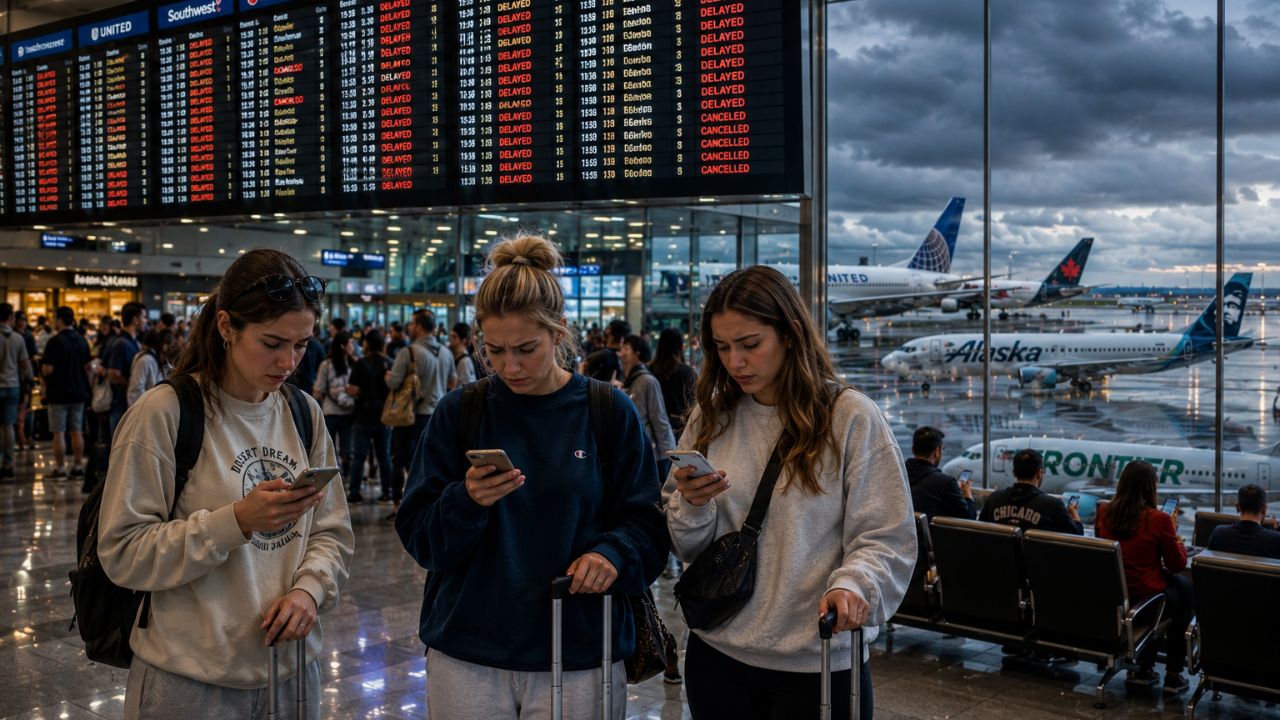
Image generated by AI
In a staggering demonstration of the fragility of the American aviation system, the United States is currently reeling from a massive wave of travel chaos that has seen 3,876 delays and 105 flight cancellations in a single 24-hour period. This major airline news update, occurring across Friday, May 15, and Saturday, May 16, 2026, has paralyzed operations for giants including United, Delta, Southwest, and American Airlines. From the Pacific Northwest to the East Coast, passengers are navigating a landscape of systemic airport disruptions, with Seattle-Tacoma (SEA) and Boston Logan (BOS) emerging as the primary friction points. Driven by a volatile mix of critical staffing shortages, chronic hub congestion, and record-breaking travel volumes, this weekend’s meltdown has left thousands of passengers stranded, triggering an urgent set of aviation updates as carriers scramble to stabilize their transcontinental networks.
Breaking: The 'Friday Blackout' and the Southwest Delay Surge
The disruption reached its zenith on Friday, May 15, as a cascade of operational failures rippled through the nation's busiest hubs. While flight cancellations were kept to a relatively modest 105, the sheer volume of delays—nearly 3,900—indicates a system operating at its absolute breaking point. Southwest Airlines bore the brunt of the schedule erosion, recording a massive 764 delays, the highest in the country, as its domestic network buckled under the load.
Aviation analysts suggest that this is a classic "Staffing Squeeze." Despite aggressive hiring campaigns, major carriers are struggling to maintain the crew reserves necessary to manage peak-demand surges. When combined with the heavy air traffic disruptions in cities like Atlanta and New York, the result is a "Delayed Domino" effect: a single late arrival in the morning leads to a flight cancellation or a six-hour delay by the evening.
Expanded Overview: From Seattle to Boston—The Hub Bottlenecks
The geographical spread of the travel chaos is unprecedented. In the Pacific Northwest, Seattle-Tacoma (SEA) led the nation in outright flight cancellations with 13 grounded flights and 184 delays. Meanwhile, on the East Coast, Boston Logan (BOS) witnessed the most severe delay density, with 338 flights falling behind schedule, effectively turning the terminal into a scene of significant airport disruptions.
The "Southwest Sunbelt" was not immune either. Orlando (MCO) and Fort Lauderdale (FLL) combined for 11 cancellations and nearly 200 delays, impacting both the leisure market and the high-yield business corridor. Even the central mega-hubs like Denver (DEN) and Atlanta (ATL) saw hundreds of displaced passengers as United and Delta fought to keep their widebody operations on track. This widespread failure highlights the "Peak Demand Vulnerability" of the 2026 travel season, where any minor logistical hiccup now leads to massive systemic airport disruptions.
Section-Wise Breakdown: Evaluating the Disrupted Skies
Seattle-Tacoma (SEA): The Pacific Northwest Grounding
Seattle emerged as the "Ground Zero" for flight cancellations this weekend. With 13 flights removed from the board and 184 delays, Alaska Airlines and Delta struggled to maintain their West Coast rotations. This localized meltdown was primarily attributed to ground-handling congestion and a sudden spike in regional travel demand that outpaced terminal capacity.
Boston Logan (BOS): The East Coast Delay Capital
Boston reported the highest delay count in the country at 338. This "Delay Gridlock" affected every major carrier, particularly those operating regional feeder routes into the Northeast. Travelers at BOS faced average wait times of three to five hours, as United and American Airlines prioritized long-haul departures over domestic hops.
Denver (DEN) and Atlanta (ATL): The Central Hub Squeeze
The two busiest transit hubs in the U.S. recorded a combined 12 cancellations and 372 delays. For United in Denver and Delta in Atlanta, the challenge was managing the "Connection Flow." When these hubs fail, it triggers travel chaos across the entire country, as passengers from smaller regional airports like Billings or Lihue find their onward journeys terminated.
New York (JFK) and Florida (MCO/FLL): The East Coast Pressure Cooker
JFK saw 9 cancellations and 112 delays, while Florida’s primary gateways faced 11 cancellations. For the international traveler, the airport disruptions in New York were particularly painful, leading to missed transatlantic connections and a surge in demand for airport hotels.
Flight Details: United States Flight Disruption Index (May 15-16, 2026)
The following table providing the operational specifics of the massive US travel meltdown.
United States Flight Disruption Index (May 15-16, 2026)
| Airline / Airport | Flight Cancellations | Delayed Flights | Primary Disruption Factor |
|---|---|---|---|
| Delta Air Lines | 16 | 308 | Crew Scheduling / ATL Hub |
| United Airlines | 15 | 373 | Hub Congestion (DEN/SEA) |
| Southwest Airlines | 0 | 764 | Domestic Network Overload |
| Alaska Airlines | 11 | 108 | SEA Airport Operations |
| American Airlines | 4 | 458 | East Coast Delay Cascade |
| SkyWest / Regional | 3 | 335 | Regional Connection Lag |
| Hawaiian Airlines | 7 | 34 | Transpacific Logistics |
| Boston Logan (BOS) | N/A | 338 | Northeast Corridor Gridlock |
| Seattle-Tacoma (SEA) | 13 | 184 | Pacific Northwest Grounding |
Passenger Impact: The 'Delayed Domino' and Hidden Costs
For the 2026 traveler, the sheer scale of the travel chaos translates into a significant loss of both time and money.
- Missed Connections: With nearly 4,000 delays, the "Connection Window" has effectively closed for many. A 30-minute delay in Atlanta can lead to a 24-hour stay in a hotel if the final flight of the day is missed.
- Systemic Flight Cancellations: When an airline like Delta or United cancels 15+ flights, it displaces nearly 3,000 passengers instantly, creating a "Rebooking Bottleneck" that can last for days.
- Airport Disruptions Fatigue: Travelers at BOS and SEA faced over-saturated terminals, long queues for customer service, and a lack of available airport seating, turning a standard trip into an endurance test.
- Financial Strain: The cost of last-minute meals, transit hotels, and missed car rentals adds up to a "Hidden Travel Tax" that few passengers are prepared for.
Industry Analysis: The Crisis of Peak Capacity
Aviation specialists believe the U.S. system has reached a "Saturation Point" where growth is now outstripping infrastructure.
- Staffing Resilience: The 2026 cycle has proven that airlines have no "Plan B" for crew shortages. The reliance on regional carriers like SkyWest to maintain the national network is a major point of failure when those carriers also face staffing hurdles.
- Congestion as a Permanent State: Airports like BOS and SEA were not designed for the 2026 volume. The current airport disruptions are the result of "Terminal Saturation," where any minor weather event leads to a total system reset.
- The Hub-and-Spoke Fragility: The "Gulf Aviation Collapse" (reported earlier) has pushed more traffic into U.S. hubs, adding a layer of international transit pressure that these airports are struggling to absorb.
Conclusion: A Weekend of Lessons for the American Traveler
The United States air travel meltdown of May 15-16 is a definitive aviation update that confirms the fragile state of modern flight. While Delta, United, and Southwest are actively working to re-stabilize their networks, the 3,876 delays serve as a grim reminder that travel chaos is no longer the exception—it is the new operational baseline. As the industry battles through staffing shortages and "Peak Capacity" gridlock, the American traveler must become more resilient, flexible, and technologically savvy. For now, the message from the hubs in Seattle and Boston is clear: if you are flying this weekend, prepare for a very long wait.
Key Takeaways
- Impact: 3,876 delays and 105 flight cancellations across the US on May 15-16.
- Worst Hit: Southwest (764 delays), Delta (16 cancellations), United (15 cancellations).
- Bottlenecks: Boston (338 delays) and Seattle (13 cancellations).
- Causes: Staffing shortages, hub congestion, and high passenger volumes.
- Affected Hubs: ATL, JFK, DEN, SEA, BOS, MCO, SAN.
- Advice: Check real-time aviation updates and explore alternative connections immediately.
- Trend: Highlights systemic vulnerabilities in US aviation infrastructure and crew management.
Related Travel Guides
Disclaimer
This article is for informational and educational purposes only. It does not constitute legal, financial, or professional advice. While we strive to provide accurate and up-to-date information, travel policies, regulations, and conditions change rapidly. Always verify information with official sources before making travel decisions. Nomad Lawyer makes no representations about the accuracy, reliability, completeness, or suitability of the information provided. Readers should consult qualified professionals for advice specific to their circumstances. The views expressed in this article are those of the author and do not necessarily reflect the views of Nomad Lawyer.
Kunal K Choudhary
Co-Founder & Contributor
A passionate traveller and tech enthusiast. Kunal contributes to the vision and growth of Nomad Lawyer, bringing fresh perspectives and driving the community forward.
Learn more about our team →