
Airlines American E175 Comes Within 350 Feet of Air Canada at JFK
Federal authorities investigate a dangerous near miss between American Airlines E175 and Air Canada Jazz at New York's JFK Airport on April 22, 2026. Aircraft came within 350 feet during parallel runway approaches.

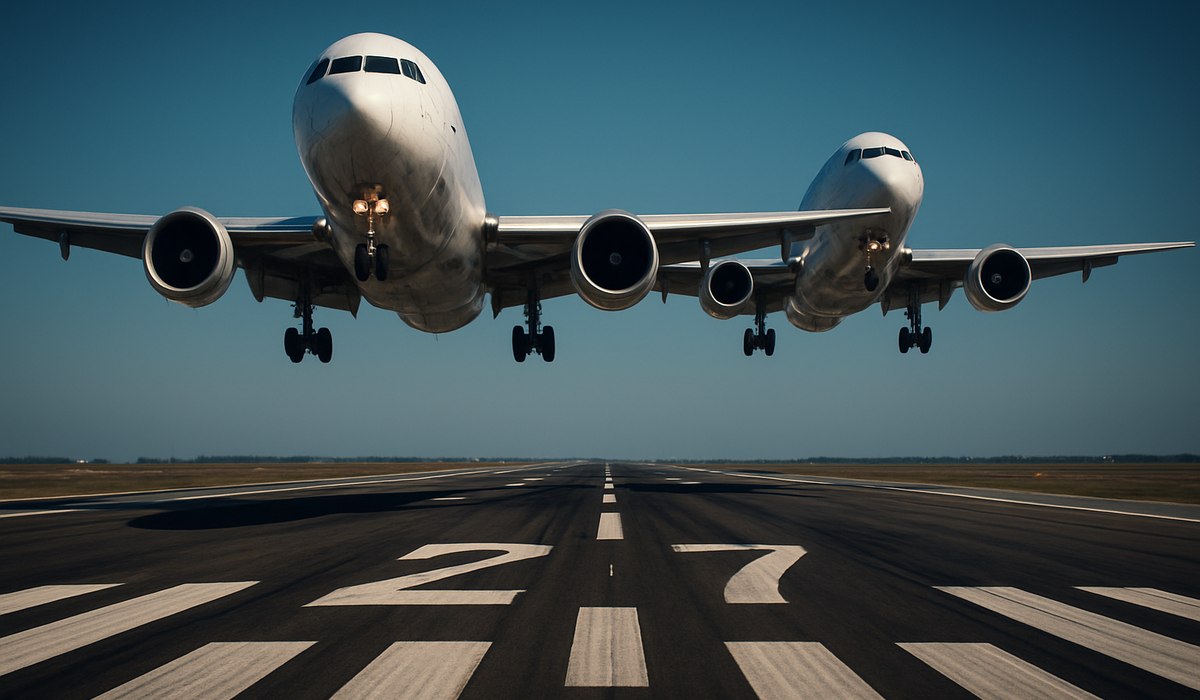
Image generated by AI
Dangerous Mid-Air Near Miss at New York's Busiest Hub
An American Airlines E175 regional jet came within 350 feet of an Air Canada Jazz aircraft while approaching parallel runways at John F. Kennedy International Airport on April 22, 2026. The uncomfortably close encounter triggered terrain awareness warning system alerts on both aircraft, forcing immediate go-around procedures and emergency response protocols. Both regional carriers, operating scheduled service through one of the nation's most congested airports, managed to execute safe landings after the incident. Federal aviation authorities launched an immediate investigation into the separation violation, which has raised questions about air traffic control procedures and regional aircraft operations in high-density terminal areas.
What Happened During the JFK Approach Phase
The incident unfolded during daylight hours when both aircraft were conducting standard instrument approaches to parallel runways at Kennedy International Airport. The American-operated regional jet, an Embraer E175 turboprop configured with regional service capacity, deviated from its assigned approach corridor while descending toward its designated runway. Air Canada Jazz, operating an identical aircraft type on an adjacent parallel approach, maintained its correct flight path when the proximity alert systems activated simultaneously in both cockpits.
Collision avoidance warnings prompted both flight crews to execute immediate corrective maneuvers. The American Airlines crew initiated a go-around, climbing back to a safe altitude and departing the approach sequence. Similarly, the Air Canada Jazz pilots executed evasive action to increase separation. Ground-based radar and automated separation monitoring systems at FlightAware demonstrated the aircraft positions relative to protected airspace. The vertical and lateral separation violation represented a serious breach of standard operating procedures at this high-traffic facility. Controllers cleared both aircraft for new approach attempts minutes later, and each landed without further incident.
Federal Investigation and Safety Protocol Review
The [Federal Aviation Administration (FAA)](https://www.faa.gov) immediately initiated a formal investigation into the separation event. Incident investigators examined controller communications recordings, radar data, weather conditions, and crew performance factors. Preliminary findings indicated the American Airlines E175 strayed from its assigned altitude and lateral position during the descent phase of the approach.
Kennedy International Airport operates under complex airspace management systems designed to handle hundreds of daily operations. Parallel runway procedures depend on precise altitude and lateral separation standards, typically enforced by automated systems and controller monitoring. The near miss prompted a comprehensive review of departure and approach sequencing, particularly for regional jet operations sharing runway corridors. Investigators will examine whether controller workload, aircraft performance limitations, or procedural gaps contributed to the separation violation. The incident underscores challenges in managing parallel approaches during peak traffic periods when multiple carriers operate regional equipment through congested terminal areas.
How Pilots Responded and the Safe Outcome
Both flight crews demonstrated exemplary situational awareness and response protocols when collision warnings activated in their respective cockpits. The American Airlines captain, recognizing the proximity threat, immediately initiated a standard go-around procedure, advancing throttles and establishing a climb attitude to separate from conflicting traffic. Radio communications showed calm, professional crew resource management as pilots coordinated with air traffic control for alternate clearances.
The Air Canada Jazz crew similarly responded with appropriate evasive action, maintaining communication discipline while implementing safety procedures. Terrain awareness and warning systems, installed on all modern commercial aircraft, provided critical situational awareness that triggered coordinated responses. No damage occurred to either aircraft, and passenger injuries were not reported. Both crews filed incident reports as required by FAA regulations. The incident resolution demonstrated that onboard safety systems and well-trained crews can effectively mitigate separation violations, though preventing such situations remains the priority objective of air traffic management systems.
Broader Implications for Regional Air Traffic Management
The JFK near miss raises important questions about managing regional jet operations in high-density airspace. The Embraer E175, utilized extensively by American Airlines and Air Canada Jazz for regional service, operates within specific performance and altitude limitations. As airlines expand regional service on longer routes, separation management becomes increasingly complex in busy terminal areas.
Kennedy International Airport handles approximately 400-500 daily movements across four parallel runways. Parallel approach operations depend on rigid adherence to speed, altitude, and lateral spacing standards. The incident prompted examination of whether current procedures adequately account for regional aircraft performance characteristics or if controller workload during peak periods affects monitoring precision. Industry stakeholders will likely review separation standards, consider procedural modifications, and evaluate training protocols for controllers managing parallel approaches. The incident occurred within U.S. Department of Transportation jurisdiction and may inform future airspace redesign initiatives at major hub airports.
Key Facts and Timeline
| Aspect | Details |
|---|---|
| Date and Time | April 22, 2026, during daylight hours |
| Location | John F. Kennedy International Airport, New York |
| Aircraft Type | Embraer E175 regional jets (both carriers) |
| Closest Separation | Approximately 350 feet vertical and/or lateral distance |
| Airlines Involved | American Airlines and Air Canada Jazz |
| Procedure Type | Parallel runway approach |
| Safety Systems Activated | Terrain awareness warning system on both aircraft |
| Response | Go-around procedures initiated by both crews |
| Landing Outcome | Both aircraft landed safely without incident |
| Injuries Reported | None |
| Investigating Authority | Federal Aviation Administration (FAA) |
| Alert Status | Active investigation and airport procedure review |
What This Means for Travelers
The JFK near miss reinforces how multiple layers of aviation safety systems protect passengers, even when separation violations occur. While unsettling, the incident demonstrates that modern aircraft technology and well-trained crews prevent accidents through coordinated responses. Travelers flying through Kennedy International Airport or any major hub should understand these protection mechanisms.
Traveler Action Checklist:
-
Remain calm during go-around procedures—climbing back to altitude is a safe, standard response to approach conflicts and does not indicate aircraft malfunction.
-
Review your airline's safety information card before departure to understand crew responsibilities and emergency procedures, building confidence in carrier preparedness.
-
Monitor flight status through FlightAware when traveling, which displays real-time aircraft positions and approach patterns for transparency.
-
File complaints or concerns with the U.S. Department of Transportation if you experience suspicious flight operations or unsafe procedures requiring formal documentation.
-
Book flights during off-peak hours (early morning or late evening) if you prefer lower-density airspace operations and potentially fewer approach delays.
-
Choose carriers with strong safety records—both American Airlines and Air Canada maintain rigorous maintenance and training standards despite this isolated incident.
-
Contact your airline immediately if you were aboard either aircraft and experience post-traumatic stress, as carriers provide passenger assistance resources.
Frequently Asked Questions
Q: Is the Embraer E175 aircraft safe for commercial service? A: The E175 is a certified, reliable regional aircraft operated by major carriers globally. One separation incident does not reflect systemic aircraft safety issues. Both manufacturers (Embraer and operators) maintain continuous monitoring and certification standards.
Q: What causes separation violations in busy airspace? A: Multiple factors can contribute, including controller workload, weather conditions affecting navigation accuracy, pilot error, or aircraft performance variations. Investigations examine all potential causes to prevent recurrence.
Q: Will this incident affect flight schedules at JFK? A: While short-term delays may occur during the investigation and procedure review, long-term operational impact depends on FAA findings. Major hub airports have contingency procedures to maintain service.
Q: How do parallel runway approaches work safely? A: Parallel approaches utilize precise altitude separation, lateral spacing standards, and continuous radar monitoring. Automated conflict alert systems trigger warnings if separation standards are violated, enabling crew corrective action before collision risk.
Disclaimer
This article is for informational and educational purposes only. It does not constitute legal, financial, or professional advice. While we strive to provide accurate and up-to-date information, travel policies, regulations, and conditions change rapidly. Always verify information with official sources before making travel decisions. Nomad Lawyer makes no representations about the accuracy, reliability, completeness, or suitability of the information provided. Readers should consult qualified professionals for advice specific to their circumstances. The views expressed in this article are those of the author and do not necessarily reflect the views of Nomad Lawyer.
Raushan Kumar
Founder & Lead Developer
Full-stack developer with 11+ years of experience and a passionate traveller. Raushan built Nomad Lawyer from the ground up with a vision to create the best travel and law experience on the web.
Learn more about our team →