
Airline Cabin Evolution 2000: How Aircraft Interiors Transformed in 26 Years
Airline cabin evolution 2000 marks the most dramatic transformation in commercial aviation history. Aircraft interior design innovations since 2000 have revolutionized passenger comfort through sleep technology and connectivity breakthroughs in 2026.

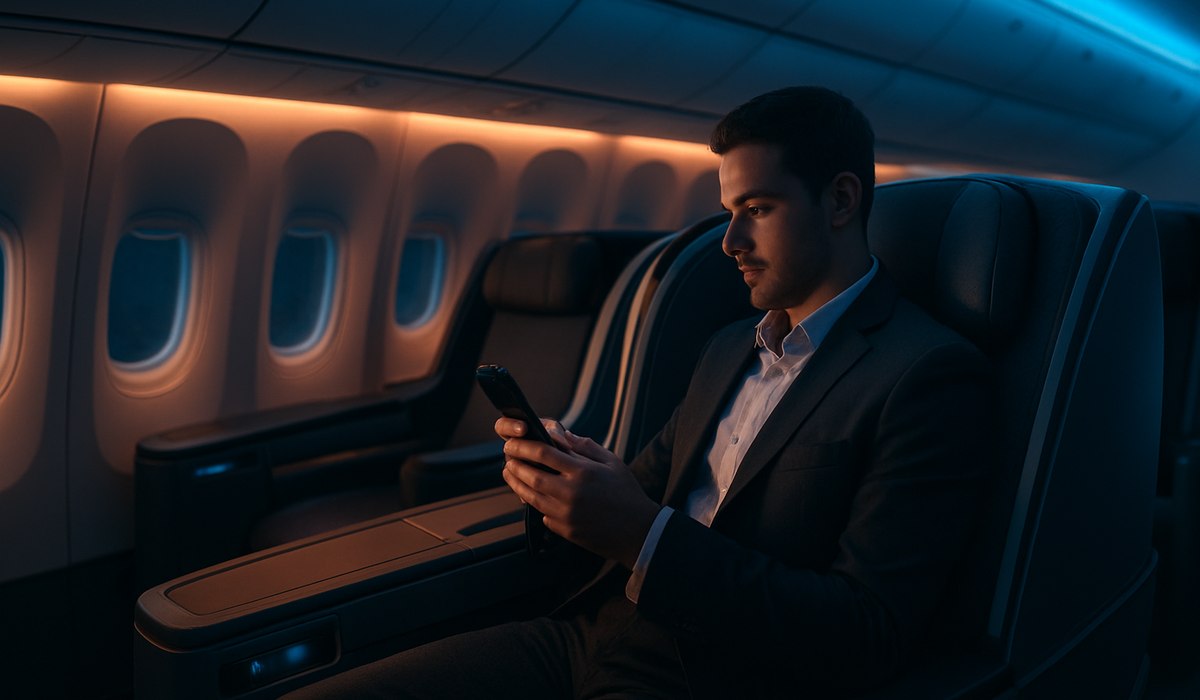
Image generated by AI
The Aircraft Interior Design Revolution Since 2000
The transformation of commercial aircraft cabins between 2000 and 2026 represents the most significant evolution in aviation history. Airlines globally have invested over $80 billion reimagining how passengers experience long-haul flight. What began as incremental seat improvements has become a comprehensive overhaul of cabin ergonomics, passenger comfort technology, and digital connectivity systems. Major carriers including British Airways, Singapore Airlines, Emirates, and Lufthansa have championed this revolution, recognizing that modern travelers demand more than functional transportation. The shift reflects changing passenger expectations and fierce competition for premium market share among global airlines.
This transformation surpasses the previous four decades of aviation combined, driven by technological breakthroughs in materials science, wireless infrastructure, and sleep research. Airlines now view cabin design as a competitive differentiator equivalent to route network and flight frequency.
The Sleep Revolution: How Airlines Reimagined Rest at 35,000 Feet
The pursuit of passenger rest fundamentally altered aircraft interior design starting in the early 2000s. Airlines invested heavily in sleep technology research, partnering with neuroscientists and ergonomic specialists to understand how cabin environments affect sleep quality. Lie-flat business-class seats emerged as the industry standard, transforming a once-theoretical concept into industry-standard luxury. These innovations extended beyond premium cabins, with economy-class seats now incorporating memory foam, adjustable lumbar support, and recline mechanisms unimaginable in 2000.
Lighting technology represents perhaps the most impactful sleep innovation. Circadian-friendly cabin lighting systems now adjust color temperature throughout flights, mimicking natural light cycles to combat jet lag. Air quality management systems actively remove contaminants while maintaining optimal humidity levels. These passenger comfort technology advances stem from scientific research demonstrating that sleep quality directly impacts passenger satisfaction scores and airline loyalty. The investment reflects a fundamental industry recognition that rest quality determines travel experience quality.
Digital Transformation: From Seatback Screens to Wireless Connectivity
In-flight connectivity has evolved from non-existent luxury to expected baseline service across major carriers. The 2000s cabin featured no personal screens; passengers watched communal cabin displays or brought portable entertainment. Modern aircraft now feature high-definition seatback systems integrated with wireless streaming capabilities, allowing passengers to access personal devices seamlessly. Satellite-based and air-to-ground connectivity systems now blanket flight paths, enabling continuous internet access throughout flights.
Wireless systems have fundamentally changed cabin design requirements. Obsolete seatback infrastructure has been replaced with modular power delivery systems offering USB-C, wireless charging, and AC outlets at every seat. Airlines have recognized that connectivity directly influences seat selection and premium cabin upgrades. The digital transformation extends beyond entertainment—real-time flight tracking, baggage monitoring, and crew communication systems now operate seamlessly. This integration represents a shift from viewing cabins as isolated environments toward considering them as extensions of broader travel ecosystems.
Ergonomic Engineering: Redesigning Seats and Personal Space
Aircraft interior design standards have been completely rewritten regarding ergonomic principles and physical space allocation. Seat pitch—the distance between rows—has become a marketing metric, with premium carriers now offering 40+ inches of legroom in economy compared to 31 inches standard in 2000. Seat width innovations have similarly transformed passenger comfort, with contoured designs reducing pressure points during extended flights.
Cabin engineering teams now employ 3D motion analysis to optimize seat geometry for various body types and flight durations. Armrest designs have evolved to provide defined personal space while maintaining accessibility. Materials science advances have reduced seat weight while improving durability and cleaning efficiency. Aisle width optimization ensures sufficient passenger movement without compromising seat count. These ergonomic improvements reflect airline investment in passenger comfort technology as a distinguishing feature. Modern cabin design balances aircraft capacity requirements with demonstrable passenger comfort improvements that justify premium pricing.
The Billion-Dollar Competition: Airlines Racing for Cabin Supremacy
The competitive landscape has accelerated aircraft interior design innovation dramatically since 2015. Airlines recognize that cabin experience significantly influences passenger choice, particularly among business travelers and premium leisure passengers. Major carriers invest continuously in cabin retrofit programs, updating existing aircraft while designing revolutionary interiors for new aircraft deliveries.
Emirates pioneered shower spas and premium lounges in aircraft, fundamentally expanding expectations for ultra-long-haul flights. Singapore Airlines introduced modular premium economy cabins with superior ergonomics and connectivity. Lufthansa's premium economy configurations feature 18-inch seats and 40-inch pitch, representing mid-range optimization. This competitive intensity has created a rising tide effect, where improvements by leading carriers prompt industry-wide adoption. Airlines now budget cabin upgrades equivalent to aircraft maintenance and fuel costs, indicating strategic importance. The competition extends globally, with Asian, Middle Eastern, and European carriers investing aggressively in passenger comfort technology to capture market share.
Key Airline Cabin Evolution Metrics: 2000 vs. 2026
| Metric | 2000 Standard | 2026 Premium | 2026 Economy |
|---|---|---|---|
| Business Class Pitch | 60-70 inches | 76-80 inches | N/A |
| Economy Seat Width | 16.5 inches | 17.5-18 inches | 17-17.5 inches |
| In-Flight Connectivity | None | 100% coverage | 95%+ coverage |
| Seatback Screens | 9-inch monochrome | 15.4-inch HD OLED | 10.1-inch HD LCD |
| Lie-Flat Seating Availability | Business only | First/Business | Premium Economy |
| Cabin Humidity Range | 10-15% | 40-60% maintained | 35-55% maintained |
| USB Charging Points | None | 100% seat coverage | 95%+ coverage |
| Circadian Lighting | None available | Standard feature | Growing adoption |
| Air Quality Updates | 2x per hour | 5-10x per hour | 4-6x per hour |
| Personalized Entertainment | 300 programs | 15,000+ on-demand | 5,000+ on-demand |
What This Means for Travelers: Actionable Takeaways
The airline cabin evolution of 2000-2026 directly improves your travel experience across budget categories. Understanding these advancements helps optimize seat selection, booking strategy, and flight choice based on your comfort priorities.
1. Prioritize carriers investing in cabin upgrades: Research which airlines operate newest aircraft or recently completed cabin retrofits. Carriers like Singapore Airlines, Lufthansa, and American Airlines consistently rank highest for interior design innovation.
2. Book premium economy strategically: Premium economy seats now offer 40+ inches of pitch with superior ergonomics at 30-40% of business-class pricing. For flights exceeding 6 hours, this investment yields significant comfort returns.
3. Confirm connectivity requirements before booking: While in-flight connectivity is now standard, coverage quality varies between satellite and air-to-ground systems. For work-intensive flights, verify provider and contact customer service regarding expected connectivity speeds.
4. Evaluate seat selection using airline cabin maps: Modern seatmap tools show USB locations, aisle access, and recline ranges. Position 6 or 7 in premium economy typically offers optimal conditions combining space, quiet, and functionality.
5. Time long-haul flights strategically: Circadian lighting systems now active on most international carriers provide genuine jet-lag reduction. Booking flights aligned with your destination arrival time maximizes these technological benefits.
Frequently Asked Questions About Modern Airline Cabins
How much has airline cabin comfort actually improved for economy passengers?
Measurably and significantly. Modern economy seats feature superior lumbar support, wider bodies, and superior recline compared to 2000
Disclaimer
This article is for informational and educational purposes only. It does not constitute legal, financial, or professional advice. While we strive to provide accurate and up-to-date information, travel policies, regulations, and conditions change rapidly. Always verify information with official sources before making travel decisions. Nomad Lawyer makes no representations about the accuracy, reliability, completeness, or suitability of the information provided. Readers should consult qualified professionals for advice specific to their circumstances. The views expressed in this article are those of the author and do not necessarily reflect the views of Nomad Lawyer.
Kunal K Choudhary
Co-Founder & Contributor
A passionate traveller and tech enthusiast. Kunal contributes to the vision and growth of Nomad Lawyer, bringing fresh perspectives and driving the community forward.
Learn more about our team →