
Airline Baggage Fee Surge 2026: British Airways, Ryanair, and easyJet Raise Charges Amid Rising Fuel Costs
British Airways, Ryanair, and easyJet have significantly increased oversized baggage fees for the 2026 season, citing rising jet fuel prices and operational inflation.

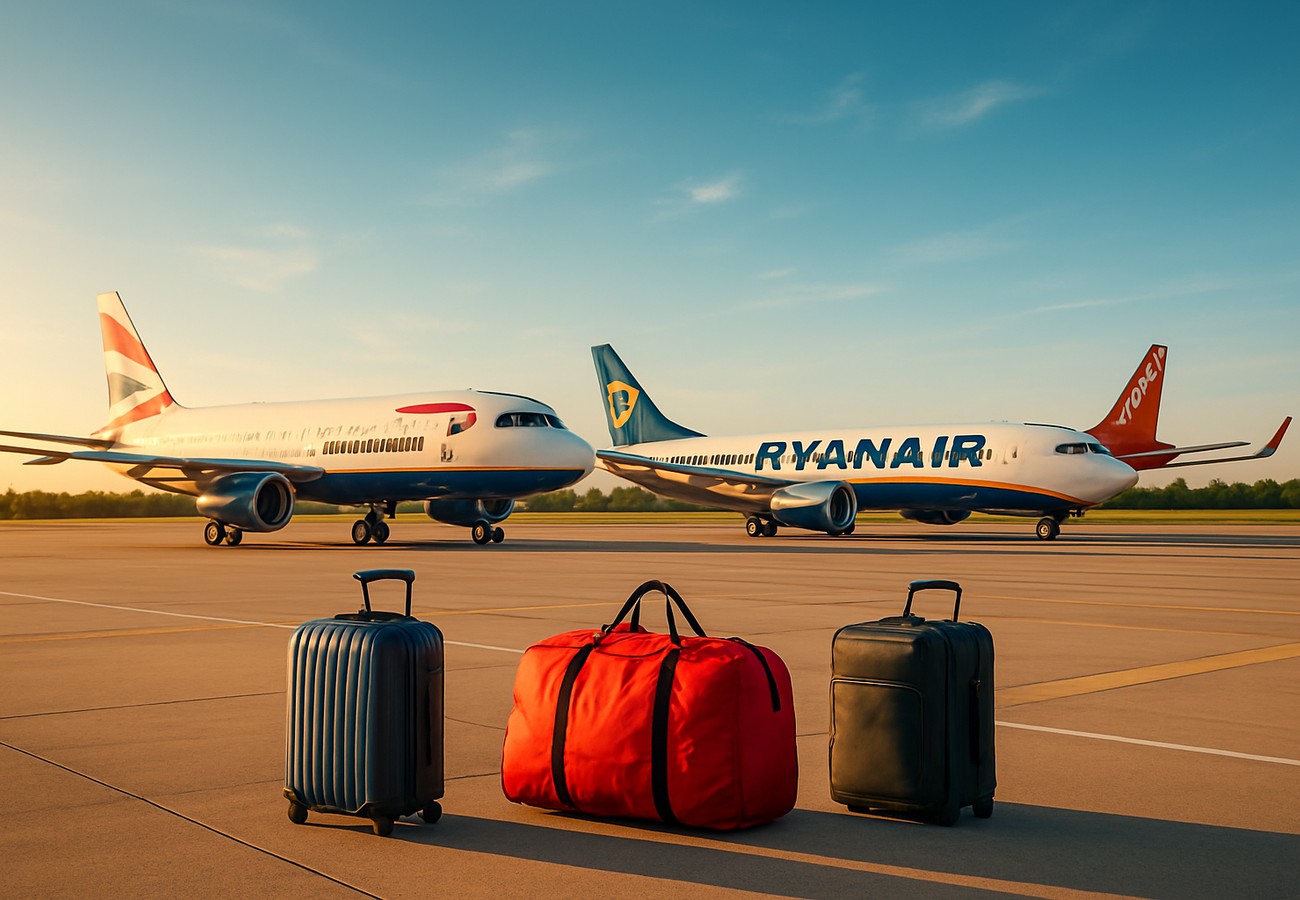
Image generated by AI
Quick Summary
- Industry Trend: British Airways has joined Ryanair and easyJet in implementing major hikes to oversized and excess baggage fees.
- Primary Drivers: Escalating jet fuel prices (Middle East conflict), airport maintenance fees, and labor-intensive handling procedures.
- Pricing Strategy: Airlines are maintaining low "headline" ticket prices while aggressively increasing ancillary revenue from add-ons like baggage.
- Ryanair Protocol: Strict enforcement of bag dimensions at gates; all surcharges must be paid by card only (no cash accepted).
- easyJet Update: New weight-based surcharges for carry-on luggage that exceeds the standard allowance.
- Operational Impact: Excess baggage is cited as a cause for cargo space deficits, check-in delays, and increased fuel burn per flight.
- Future Outlook: Analysts predict further fee increases for seat selection and onboard services as inflation continues to pressure airline margins.
- Source: Airline policy updates and IATA operational cost analysis as of May 7, 2026.
British Airways has officially shifted its pricing strategy to align with low-cost carriers Ryanair and easyJet, announcing a significant increase in oversized baggage charges effective May 7, 2026. This industry-wide move is a direct response to the "triple threat" of record-high jet fuel costs, rising airport maintenance fees, and systemic inflation. By decoupling baggage costs from the base fare, airlines are attempting to protect their "headline" prices while capturing critical ancillary revenue to offset a 30% surge in operational expenses. Travelers are now facing a highly regulated environment where Ryanair has transitioned to card-only gate payments and easyJet is strictly monitoring carry-on weight. As excess luggage is increasingly viewed as an operational liability—consuming valuable cargo space and slowing boarding times—the 2026 summer season marks the end of the traditional all-inclusive economy model for major European carriers.
Airline Baggage Fee Trends 2026: Comparison and Operational Drivers
The following table summarizes the new fee structures and the factors driving these systemic changes.
| Feature / Airline | British Airways | Ryanair | easyJet | Industry Driver |
|---|---|---|---|---|
| Oversized Bag Fee | Increased (Tiered) | High (Gate Surcharge) | Increased (Weight) | Operational Inflation |
| Gate Payment Mode | Mixed | Card Only (No Cash) | Card Preferred | Efficiency & Security |
| Enforcement Level | Strict | Absolute (Dimension) | Absolute (Weight) | Turnaround Time |
| Fuel Burn Impact | Moderate | High | Moderate | Weight Management |
| Add-on Strategy | Emerging | Primary Revenue | Secondary Revenue | Margin Protection |
| Check-in Impact | Delays | High Labor Cost | Moderate Delays | Resource Allocation |
The Ancillary Revenue Shift: Why Airlines are Raising Baggage Fees in 2026
The shift toward higher add-on fees is a calculated response to a volatile economic landscape:
- Headline Price Protection: By keeping the initial ticket price low, airlines remain competitive in search engine rankings while recouping costs through fees.
- Middle East Conflict: The resulting spike in jet fuel prices has added millions to the monthly operational budgets of major carriers.
- Revenue Diversification: Ancillary services—including baggage, seats, and food—now account for a significant percentage of total profits for "budget" and "legacy" carriers alike.
British Airways: Aligning with the Budget Model to Offset Rising Fuel Costs
British Airways' decision to raise baggage fees reflects a broader move away from legacy all-inclusive pricing:
- Competitive Realignment: To compete with LCCs (Low-Cost Carriers) on European routes, BA is adopting the tiered baggage model.
- Cargo Priority: By charging more for oversized bags, BA is freeing up belly space for higher-yield commercial cargo.
- Operational Speed: Reducing the volume of gate-checked bags is seen as essential for maintaining on-time departure records at congested hubs like London Heathrow.
Ryanair and easyJet: Tightening the Grip on Carry-on Dimensions and Weight
The pioneers of add-on revenue are doubling down on enforcement:
- Ryanair Sizers: The airline is utilizing new digital sizers to ensure every bag fits the exact dimensions of the allowance.
- easyJet Weight Check: A focus on carry-on weight is designed to reduce the overall takeoff mass of aircraft, thereby lowering fuel consumption.
- Secondary Fees: Both carriers have warned that passengers attempting to "bypass" the system will face the highest possible surcharges at the departure gate.
Card-Only at the Gate: Ryanair’s New Payment Protocol for Oversized Bags
A significant change in payment logistics has been implemented for May 2026:
- Efficiency Mandate: To speed up the boarding process, Ryanair will no longer accept cash for gate bag charges.
- Digital Integration: Payments must be made via card or contactless mobile systems, catching many unprepared travelers.
- No Exceptions: Travelers unable to pay by card may face being denied boarding or having their luggage removed from the flight.
Operational Strain: The Hidden Cost of Excess Luggage for Global Carriers
Airlines are viewing excess baggage as an operational liability rather than just a service:
- Labor Intensity: Handling oversized items requires extra ground staff and slows down the loading and unloading cycles.
- Fuel Surcharges: Every additional kilogram of weight increases the fuel burn of the aircraft, which is unsustainable at current price levels.
- Delay Risk: Baggage-related delays are one of the primary causes of missed slots at major international airports.
Inflationary Pressures: Beyond Baggage—The Rising Cost of Meals and Seats
Baggage is only the first of several planned fee increases for the 2026 season:
- Onboard Dining: Surcharges for meals and snacks are expected to rise by 15-20% due to supply chain inflation.
- Seat Selection: Premium seat selection fees are being adjusted to reflect the higher demand for "extra legroom" on long-haul routes.
- Future Trajectory: Experts predict that "bundle" pricing will become the standard, where travelers must pay for every individual component of their journey.
Passenger Strategy: Minimizing Costs in a High-Fee Aviation Market
Travelers can take specific steps to avoid these escalating charges:
- Pre-Booking: Always pay for baggage at the time of booking; gate fees are typically 50-70% higher than online rates.
- Strict Measurement: Invest in a lightweight luggage scale and ensure bags fit within the specific dimensions of the carrier.
- Card Preparedness: Ensure you have a functioning contactless payment method available for gate-side emergencies.
- Packing Efficiency: Consider multi-purpose clothing to minimize weight and avoid oversized baggage tiers.
Conclusion: The End of the "All-Inclusive" Economy Fare
The May 7, 2026, announcement from British Airways confirms that the era of the all-inclusive economy fare is effectively over. As the airline industry grapples with the fallout from the Middle East fuel crisis and systemic inflation, baggage fees have become a critical tool for survival. By aligning their fee structures with Ryanair and easyJet, legacy carriers are acknowledging that add-on revenue is no longer optional. For the 2026 traveler, navigating the skies now requires a high degree of vigilance, where understanding the fine print of baggage dimensions and payment protocols is just as important as the destination itself. As airlines continue to prioritize weight management and ancillary income, those who fail to adapt will find the total cost of their "budget" vacation significantly higher than the advertised price.
FAQ: Airline Baggage Fee Surge 2026
Why are British Airways and Ryanair raising baggage fees? Airlines are raising fees to offset rising jet fuel costs, operational inflation, and the higher labor costs associated with handling excess luggage.
Does Ryanair accept cash for baggage fees at the gate? No. As of May 2026, Ryanair has transitioned to a card-only payment policy at departure gates for all baggage surcharges.
How can I avoid oversized baggage charges? Pre-pay for your luggage online during booking, ensure your bag fits the exact dimensions of the airline’s sizer, and use a luggage scale before heading to the airport.
Related Travel Alerts
Disclaimer
This article is for informational and educational purposes only. It does not constitute legal, financial, or professional advice. While we strive to provide accurate and up-to-date information, travel policies, regulations, and conditions change rapidly. Always verify information with official sources before making travel decisions. Nomad Lawyer makes no representations about the accuracy, reliability, completeness, or suitability of the information provided. Readers should consult qualified professionals for advice specific to their circumstances. The views expressed in this article are those of the author and do not necessarily reflect the views of Nomad Lawyer.
Kunal K Choudhary
Co-Founder & Contributor
A passionate traveller and tech enthusiast. Kunal contributes to the vision and growth of Nomad Lawyer, bringing fresh perspectives and driving the community forward.
Learn more about our team →