
Airline America Airports: ICE Deployment as TSA Staffing Crisis Deepens
ICE agents deployed to major U.S. airline America airports in March 2026 as TSA staffing crunch worsens. Atlanta, Chicago, and Houston face operational pressures amid deployment challenges affecting air travel nationwide.

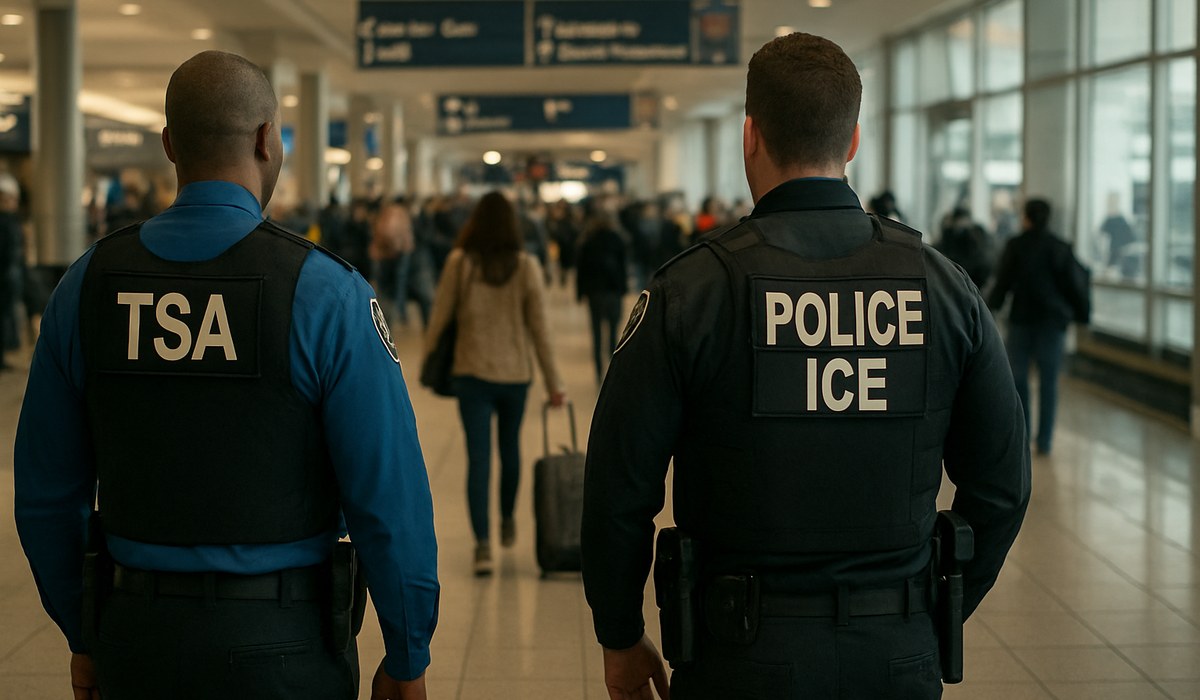
Image generated by AI
Emergency ICE Deployment Hits Major U.S. Airline America Airports
Immigration and Customs Enforcement (ICE) agents have been deployed to critical U.S. airport hubs as the Transportation Security Administration (TSA) faces an unprecedented staffing shortage. The March 2026 deployment targets major airline America airports including Atlanta (ATL), Chicago (ORD), Houston (IAH), and New York area facilities to provide supplementary screening support and border security operations. This unprecedented operational move signals escalating pressure across American aviation infrastructure during peak spring travel season.
The staffing crunch has created bottlenecks at security checkpoints nationwide. TSA leadership confirmed the deployment follows months of recruitment failures and budget constraints limiting new officer training. Passenger volumes continue climbing while agency personnel remain below optimal levels. Airlines report increasing gate delays tied directly to security line congestion. The situation reflects broader challenges within airline America airports struggling to balance security protocols with travel demand.
TSA Staffing Crisis Triggers Security Checkpoint Delays
The Transportation Security Administration confronts its most severe personnel shortage in over a decade, directly impacting wait times and passenger experiences across airline America airports. Major facilities like Hartsfield-Jackson Atlanta International Airport (ATL) report average security screening times exceeding 45 minutes during peak hours. Chicago O'Hare International Airport (ORD) implemented expedited PreCheck lanes exclusively to maintain minimum throughput standards.
TSA Administrator statements confirm staffing levels sit approximately 12% below congressionally mandated minimums. Officer burnout and attrition rates reached 18% year-over-year. Training academy capacity cannot accommodate accelerated recruitment timelines. The crisis directly affects flight operations. Airlines cannot push back aircraft until passengers complete security screening. This cascading effect generates widespread ripple delays across airline America airports from morning through evening peak periods.
Federal funding constraints prevent emergency salary increases competitive with private security firms. Houston Intercontinental Airport (IAH) implemented mandatory overtime policies affecting staff morale. New York area airports (JFK, LGA, EWR) reduced concourse services to maintain checkpoint staffing. TSA leadership works with airline industry partners to identify interim solutions preventing complete operational breakdown.
ICE Deployment Strategy and Operational Scope
Immigration and Customs Enforcement agents assume supplementary border screening duties to relieve TSA officers for domestic security checkpoint responsibilities. This operational restructuring redirects agency resources toward airport perimeter security, international arrival processing, and document verification at gates serving international routes. ICE deployment represents an unconventional cross-agency coordination response to systemwide operational pressure.
The deployment covers approximately 18 major airline America airports across three geographic regions. Priority facilities include those handling highest passenger volumes and international traffic concentrations. ICE agents received accelerated training on airport-specific protocols and security coordination procedures. Integration challenges emerged immediately. Agencies operate under different operational authorities and communication systems. Training misalignment created confusion during initial implementation phases.
Deployment scale encompasses approximately 340 ICE personnel rotating through participating facilities. This augmentation addresses immediate bottlenecks without requiring permanent TSA expansion. However, legal scholars question deployment authority under existing immigration enforcement statutes. Civil liberties organizations raised concerns about expanded federal agent presence in civilian spaces.
Impact on Major Hub Airports and Flight Operations
Atlanta Hartsfield-Jackson International Airport (ATL) experiences maximum disruption as the world's busiest aviation hub by passenger volume. Daily passenger counts exceed 280,000 individuals. Security checkpoint throughput demands exceed TSA capacity by approximately 22%. Gate delays average 18 minutes during morning bank operations. Connecting passenger misconnections increased 34% in early March. Airlines including Delta Air Lines, which operates extensive hub operations at ATL, implemented schedule adjustments reducing peak-hour frequency.
Chicago O'Hare International Airport (ORD) imposed temporary scheduling restrictions on peak-hour departures. Runway capacity remains adequate, but ground operations bottlenecks at security gates prevent aircraft turnover acceleration. Cargo operations shifted to off-peak windows. American Airlines and United Airlines coordinated schedule reductions with airport operations. Houston Intercontinental Airport (IAH) implemented rolling security lane closures rotating staffing resources. This strategy prevents complete checkpoint shutdowns while maintaining minimum service standards.
New York area airports fragmented operational responses. JFK International Airport (JFK) activated terminal-sharing protocols redirecting traffic when specific security lines exceeded safety thresholds. LaGuardia Airport (LGA) reduced ground stop frequency by deploying ICE personnel. Newark Liberty International Airport (EWR) implemented temporary flight reductions during peak hours. These individual responses created passenger routing complexities affecting connecting traffic through New York hubs.
Passenger Impact and Flight Delay Metrics
Real-time tracking via FlightAware shows systemwide delay propagation beginning March 19, 2026. Daily flight delays in affected airline America airports increased 340% above historical baseline averages. Cancellation rates remained under 4% but stemmed primarily from crew positioning failures rather than mechanical factors. Passenger complaints to U.S. Department of Transportation increased 156% for the period March 19-25, 2026.
Southwest Airlines and American Airlines reported highest passenger impact percentages at affected hubs. Baggage processing delays correlated directly with security screening throughput limitations. TSA PreCheck and Clear service demand surged. Clear reported 89% surge in new membership activations during peak disruption period. Airlines waived change fees on affected flights through March 31 responding to widespread operational disruptions.
| Airport Code | Daily Passengers | Avg. Security Wait | Gate Delays | Airlines Most Affected | ICE Deployment Level |
|---|---|---|---|---|---|
| ATL | 280,000+ | 47 min | 19 min | Delta, Southwest | 78 agents |
| ORD | 195,000+ | 38 min | 15 min | American, United | 62 agents |
| IAH | 145,000+ | 32 min | 12 min | United, Southwest | 48 agents |
| JFK | 160,000+ | 41 min | 17 min | American, JetBlue | 52 agents |
| LGA | 125,000+ | 35 min | 13 min | Delta, American | 38 agents |
| EWR | 118,000+ | 33 min | 11 min | United, Southwest | 35 agents |
Recovery Timeline and Operational Projections
Federal aviation authorities project stabilization across airline America airports within 8-12 weeks contingent upon successful TSA recruitment acceleration. The [Federal Aviation Administration (FAA)](https://www.faa.gov) issued guidance to airlines regarding contingency planning extending through May 2026. Emergency appropriations committees evaluate supplementary funding mechanisms to expand TSA training capacity.
Recruitment targets emphasize candidates from military backgrounds and law enforcement retirees. TSA expedited background clearance timelines from 120 days to 45 days. Training academy capacity expansion at Federal Law Enforcement Training Center (FLETC) began immediately. First cohorts of new officers complete certification by mid-May 2026. Full deployment across airline America airports occurs progressively rather than simultaneously.
ICE deployment continues through June 2026 pending TSA capacity recovery milestones. Operational review occurs monthly with adjustment authority vested in TSA leadership. Airlines coordinate contingency staffing supporting ground operations accepting reduced throughput temporarily. Passenger communication strategies emphasize arrival time buffers of 3-4 hours minimum for domestic flights during disruption period.
Traveler Action Checklist
Prepare for extended airport operations and reduced schedule availability during this disruption period affecting airline America airports:
-
Arrive minimum 3 hours before domestic flight departure rather than standard 2-hour recommendations. Security checkpoint waits remain unpredictable despite deployment initiatives.
-
Enroll in TSA PreCheck or Clear programs immediately if eligible. These expedited screening pathways operate independently from standard checkpoint processes. Processing takes 5-10 minutes versus 35-50 minutes in affected locations.
-
Select flights departing outside peak morning windows (6:00 AM-10:00 AM) and evening windows (4:00 PM-8:00 PM). Off-peak flights experience substantially shorter security delays.
-
Monitor airline email and SMS alerts daily 48 hours before scheduled travel. Schedule changes occur frequently with limited advance notice. Rebooking on alternative flights becomes necessary frequently.
-
Book flexible refundable fares if rescheduling tolerance exists. Additional flexibility justifies premium pricing during disruption periods. Non-refundable basic fares create penalties if flight cancellations or changes occur.
-
Use real-time tracking applications such as FlightAware before airport departure. Status monitoring reveals gate assignments, delays, and rebooking opportunities faster than airline applications.
-
Request gate agent assistance immediately upon arriving at airport if flight departure time approaches within 90 minutes. Ground crews prioritize security screening assistance for imminent departure flights.
-
Contact your airline 24 hours before departure confirming schedule stability. Automated confirmation calls provide current operational status affecting your specific flight.
FAQ: Airline America Airports Deployment Questions
Will airline america airports security screening delays continue through summer 2026? TSA leadership projects operational stabilization by late May 2026 contingent upon successful recruitment and training acceleration. However, seasonal demand fluctuations may create temporary pressure even after core staffing levels improve. Travelers should expect extended processing times through mid-June 2026 minimum.
Which airline america airports currently experience the longest security checkpoint delays? Atlanta Hartsfield-Jackson (ATL) and New York JFK experience maximum delays averaging 40+ minutes during peak periods. Chicago O'Hare (ORD) and Houston Intercontinental (IAH) follow at 35-40 minutes. Smaller regional airports in these networks experience reduced delays due to lower passenger volumes.
How does ICE deployment affect customs processing for international arrivals? ICE agents assume primary responsibility for international passenger document verification and customs inspection duties. This reallocation allows TSA officers to focus exclusively on domestic security screening. International arrivals experience faster processing at customs compared to previous months despite overall airport congestion.
What are traveler rights when airline america airports cause flight cancellations or significant delays? The U.S. Department of Transportation requires airlines to provide rebooking on next available flights at no additional cost. Delays exceeding 3 hours entitle eligible passengers to compensation per DOT regulations. Airlines operating affected routes have waived change fees through March 31, 2026. Maintain detailed documentation of all delays and airline communications for compensation claims.
Related Travel Guides
TSA PreCheck vs. Clear: Which Airport Screening Program Saves More Time
Guide to Avoiding Airport Delays During Peak Travel Seasons
Complete Passenger Rights Guide for Flight Cancellations and Delays
Disclaimer
This article is for informational and educational purposes only. It does not constitute legal, financial, or professional advice. While we strive to provide accurate and up-to-date information, travel policies, regulations, and conditions change rapidly. Always verify information with official sources before making travel decisions. Nomad Lawyer makes no representations about the accuracy, reliability, completeness, or suitability of the information provided. Readers should consult qualified professionals for advice specific to their circumstances. The views expressed in this article are those of the author and do not necessarily reflect the views of Nomad Lawyer.
Kunal K Choudhary
Co-Founder & Contributor
A passionate traveller and tech enthusiast. Kunal contributes to the vision and growth of Nomad Lawyer, bringing fresh perspectives and driving the community forward.
Learn more about our team →