
Aircraft Palaces World: How Leader Choices Signal Global Priorities
World leaders' aircraft selections in 2026 reveal competing visions of power, security, and national identity. Presidential plane choices expose geopolitical tensions and priorities from luxury jets to commercial carriers.

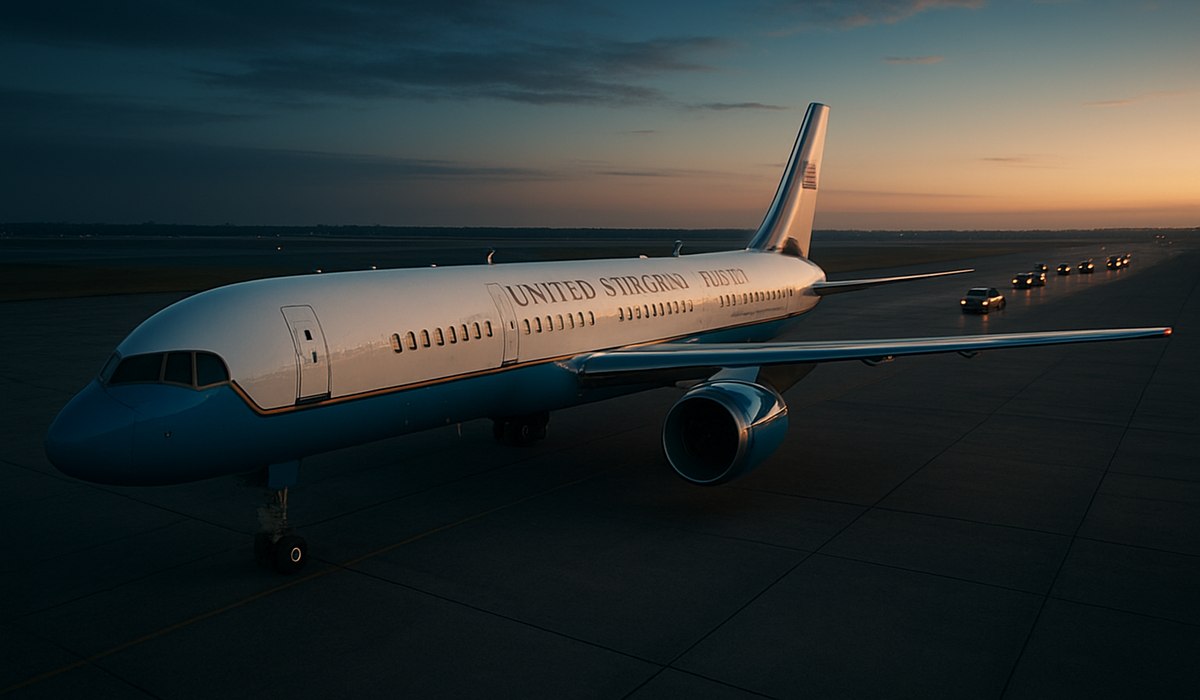
Image generated by AI
When Executive Transport Becomes Geopolitical Theater
Presidential and state aircraft selections have evolved into powerful symbols of national identity and political strategy in 2026. The aircraft carrying heads of state and government leaders serve far beyond transportation functions—they communicate messages about security priorities, economic values, and international standing. From custom-built jumbo jets equipped with advanced defensive systems to modest commercial airliners, these choices reveal fundamental contradictions between projecting power and demonstrating democratic principles. Each nation's decision about executive air transport reflects internal debates about leadership symbolism and the practical demands of modern statecraft.
The global aircraft palaces world continues expanding as nations invest billions in presidential fleets while simultaneously facing public scrutiny over perceived excess. Some governments embrace luxury configurations with onboard medical facilities and state rooms, while others deliberately choose standard commercial aircraft to signal fiscal responsibility. These transportation decisions trigger domestic political conversations about national priorities, economic inequality, and the proper role of government expenditure. The contrast between world leaders' aircraft choices has become increasingly pronounced and strategically significant.
The Politics of Presidential Planes
Presidential aircraft represent far more than transportation infrastructure—they function as floating embassies and secure command centers. Nations deploy aircraft palaces world strategies to project authority during international negotiations, demonstrate technological capability, and ensure continuity of government during crises. The customization levels vary dramatically based on geopolitical circumstances, security threats, and ideological positioning.
Some countries maintain multiple aircraft for different diplomatic occasions, selecting specific planes to communicate distinct messages. A leader might use a larger, more impressive aircraft when visiting allies while employing a smaller plane during domestic tours focused on economic austerity messaging. The aircraft palaces world phenomenon encompasses decisions about aircraft age, manufacturing origin, crew composition, and visible security measures.
Public perception of executive aircraft spending has intensified globally. Citizens increasingly question whether expensive flight operations align with stated government priorities regarding healthcare, education, and infrastructure investment. This tension has prompted several nations to reconsider their aircraft strategies, with some leaders voluntarily reducing fleet sizes or transitioning to commercial alternatives for shorter flights. The political calculus around presidential aviation has become more sophisticated and contested than ever before.
Security vs. Symbolism: Why Aircraft Matter
Executive protection demands drive many aircraft-related decisions that extend far beyond comfort considerations. Modern threats require aircraft equipped with advanced electronic warfare systems, emergency medical facilities, secure communication networks, and rapid-deployment capabilities. These security requirements substantially increase operational costs and complexity while remaining largely invisible to public observers.
The invisible security architecture within presidential aircraft creates ongoing tension with transparency principles. Citizens want assurance that their leaders are adequately protected, yet detailed security specifications require confidential handling. This balance between public accountability and necessary secrecy complicates discussions about aircraft spending legitimacy and appropriateness.
Different nations prioritize security concerns differently based on threat assessments and historical experiences. Countries facing specific security challenges may justify expensive aircraft features that other nations consider unnecessary expenditure. The aircraft palaces world includes considerable variation in risk tolerance and protective measures deemed essential versus merely preferred.
Symbolic considerations often overshadow practical security needs in aircraft selection discussions. Leaders recognize that aircraft choice communicates messages about confidence, stability, and national capability. A state leader boarding an elderly, frequently-repaired aircraft sends different signals than one using a cutting-edge custom-built platform. These symbolic dimensions influence decisions as much as technical security specifications do.
Global Comparisons: Luxury vs. Modesty
The spectrum of presidential aircraft choices reveals fundamentally different approaches to leadership presentation and national values. At the luxury end, some nations operate Boeing 747 or Airbus A380 conversions with presidential suites, entertainment systems, conference facilities, and luxury sleeping quarters. These aircraft palaces world examples represent investments exceeding $500 million for acquisition and customization alone.
Conversely, several prominent democracies deliberately maintain modest aircraft strategies. Some Scandinavian leaders occasionally fly commercial aircraft on domestic routes, while certain European presidents use refurbished military transports from previous decades. These choices deliberately communicate messages about egalitarianism, fiscal responsibility, and connection to ordinary citizens' experiences.
The aircraft palaces world dichotomy often breaks along ideological and economic lines, though exceptions complicate simple categorization. Wealthy democracies sometimes maintain smaller fleets than developing nations with more aggressive projection goals. Economic capability doesn't automatically determine aircraft spending levels—political philosophy and public expectations shape decisions equally.
Emerging economies increasingly compete for status through impressive aircraft acquisitions, viewing presidential fleets as expressions of national achievement and international significance. Meanwhile, established wealthy nations sometimes reduce fleet sophistication as part of broader governance reform movements. The global aircraft palaces world landscape continues shifting as nations recalibrate their symbolic and practical requirements.
Economic and Environmental Implications
Presidential aircraft operations consume substantial national resources while generating minimal direct economic returns. Annual operating costs for executive fleets typically range from $50 million to $200 million per nation, encompassing fuel, crew salaries, maintenance, and security infrastructure. These figures exclude initial acquisition costs and facility requirements for dedicated presidential aviation operations.
Environmental impact from executive air transport has become increasingly scrutinized by climate-conscious publics. Jumbo jet aircraft configured as presidential transports consume fuel at rates substantially exceeding commercial aircraft, though they transport far fewer passengers. Some leaders have faced public criticism for environmental contradictions between stated climate commitments and extensive long-distance travel via fuel-intensive aircraft.
Several governments have implemented sustainability measures within aircraft operations, including carbon offset programs, more efficient flight routing, and gradual fleet modernization toward more efficient aircraft palaces world configurations. These initiatives attempt reconciling security and comfort requirements with environmental responsibility. The cost-benefit analysis of presidential aviation increasingly incorporates environmental factors alongside traditional security and political considerations.
Economic constraints have prompted some nations to explore shared aircraft arrangements or military-to-commercial transitions. These alternatives reduce individual nation costs while creating complexity around scheduling, security protocols, and diplomatic availability. The aircraft palaces world continues adapting to fiscal pressures and environmental awareness that shape modern governance debates.
| Nation/Leader | Primary Aircraft | Capacity | Acquisition Year | Annual Cost Estimate | Symbolic Priority |
|---|---|---|---|---|---|
| United States | Boeing 747-8 (Air Force One) | 570 passengers | 2005 | $180 million | Power projection |
| European Union | Airbus A340-300 | 380 passengers | 2003 | $95 million | Efficiency/unity |
| China | Boeing 747-8F (converted) | 300 passengers | 2007 | $140 million | Modernization signal |
| India | Boeing 787 Dreamliner | 242 passengers | 2016 | $75 million | Technological advancement |
| Russia | Ilyushin Il-96-400M | 262 passengers | 2010 | $110 million | Indigenous capability |
| Norway | Airbus A319 (commercial variant) | 144 passengers | 2014 | $35 million | Sustainability/modesty |
What This Means for Travelers
Understanding aircraft palaces world dynamics provides context for broader aviation trends affecting commercial travelers. Executive aviation investment influences national aviation policy, security protocols, and infrastructure development that cascades throughout civilian air transport systems.
Traveler Action Checklist:
-
Monitor your airline's safety certifications using the FAA database at https://www.faa.gov to verify that security protocols exceed minimum standards established partly through presidential aviation precedents.
-
Check real-time flight tracking via FlightAware to understand typical air traffic patterns, including instances when presidential aircraft create airspace restrictions affecting commercial flights.
-
Review passenger rights information at the US DOT Air Consumer Protection Division before booking flights, particularly on routes frequently affected by executive aviation operations.
-
Research your airline's environmental policies to understand how they compare with sustainability standards increasingly demanded of government aircraft operations.
-
Plan flights with awareness that major hubs hosting government facilities experience periodic congestion related to presidential aircraft operations requiring
Disclaimer
This article is for informational and educational purposes only. It does not constitute legal, financial, or professional advice. While we strive to provide accurate and up-to-date information, travel policies, regulations, and conditions change rapidly. Always verify information with official sources before making travel decisions. Nomad Lawyer makes no representations about the accuracy, reliability, completeness, or suitability of the information provided. Readers should consult qualified professionals for advice specific to their circumstances. The views expressed in this article are those of the author and do not necessarily reflect the views of Nomad Lawyer.
Raushan Kumar
Founder & Lead Developer
Full-stack developer with 11+ years of experience and a passionate traveller. Raushan built Nomad Lawyer from the ground up with a vision to create the best travel and law experience on the web.
Learn more about our team →