
Airbus Airlines Stripping A320neo Jets: GTF Engines Worth More Than Aircraft
Airlines are dismantling nearly-new Airbus A320neo jets in 2026 because Pratt & Whitney GTF engines are worth more than entire aircraft. Supply chain crisis forces industry reckoning.

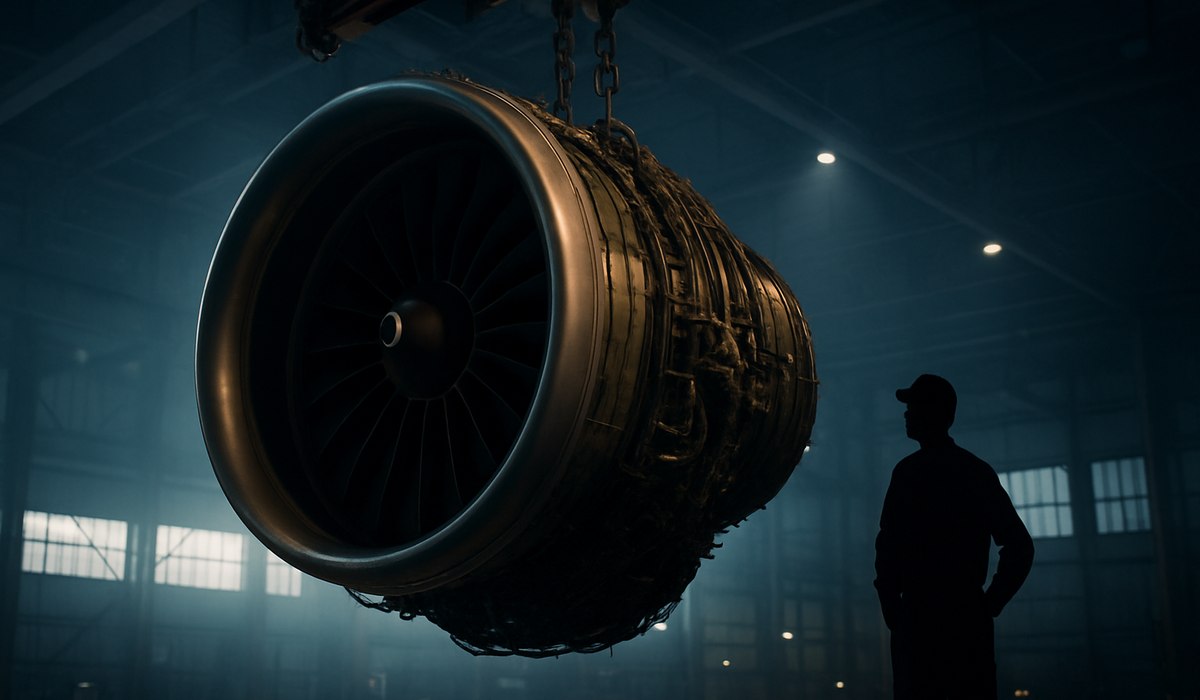
Image generated by AI
The Unprecedented Engine Shortage Reshaping Commercial Aviation
Airlines worldwide are making an extraordinary decision: dismantling nearly-new Airbus A320neo family jets to salvage their Pratt & Whitney GTF engines. In what industry analysts call a watershed moment for aviation supply chains, carriers facing maintenance delays of 250 to 300 days for engine repairs have discovered that working GTF engine pairs now command prices exceeding the value of entire aircraft. The A320neo family, which entered service a decade ago, has become the unintended victim of a critical propulsion shortage affecting roughly half the global fleet. This trend signals deeper systemic problems in aircraft manufacturing, parts distribution, and airline operational viability heading into mid-2026.
The economic calculus is stark: with customers willing to pay premium prices for immediately available engines, keeping marginally profitable aircraft intact no longer makes financial sense. Airlines operating legacy routes or managing excess capacity have begun harvesting components from serviceable jets, effectively converting them into parts inventory. This phenomenon reflects not mere market inefficiency but a structural crisis in the aviation aftermarket that threatens to reshape fleet management practices across the industry.
The GTF Engine Shortage Crisis: What Went Wrong
Pratt & Whitney's Geared Turbofan engines represent cutting-edge propulsion technology, offering superior fuel efficiency and reduced noise compared to traditional turbofans. However, the manufacturer's production challenges, combined with unexpected demand from airline operators seeking to maximize fuel savings, have created a severe supply-demand imbalance. Airlines operating A320neo family aircraft depend almost entirely on these engines for certification and operational compliance.
The shortage began escalating in early 2025 when P&W disclosed extended manufacturing lead times. By late 2025, the backlog had grown so substantial that airlines ordering replacement engines faced wait periods exceeding two years. Simultaneously, the maintenance queue for damaged or deteriorated engines ballooned, with authorized service centers unable to process repairs within the historical 60-90 day windows. This perfect storm has forced operators to ground aircraft or, increasingly, to source engines from alternative channels.
Aircraft sitting idle consume capital without generating revenue. Faced with this reality, several carriers opted for a counterintuitive strategy: sacrifice the airframe to recover the engines. When a relatively low-utilization A320neo could be stripped for parts worth more than its residual value, the decision became economically rational, if operationally distasteful. This trend accelerated dramatically from March through May 2026, affecting dozens of aircraft across Europe, Asia, and North America.
Why Engines Are Worth More Than Aircraft: Economic Breakdown
Understanding why GTF engines command such extraordinary value requires examining the aviation asset market with precision. A used Airbus A320neo aircraft typically depreciates to 45-60% of original purchase price by year ten. Considering acquisition costs around $100-130 million, a ten-year-old A320neo might be valued at $50-75 million in the secondary market, depending on utilization, maintenance history, and market conditions.
A single Pratt & Whitney GTF engine, by contrast, has historically carried a spare-parts replacement cost of $12-15 million. Airlines purchasing new engines for inventory purposes now face asking prices of $18-22 million per engine in the shortage environment. For aircraft requiring two engines, that's $36-44 million in propulsion value alone—representing 50-85% of the entire airframe's worth.
This creates an irresistible arbitrage opportunity. Airlines with spare A320neo airframes—perhaps acquired through fleet consolidation or route cancellations—can now realize more value by selling engines separately than by attempting to keep aircraft operational or selling complete aircraft. Maintenance facilities and engine leasing companies have eagerly purchased these stripped airframes, with some entities specializing exclusively in parts harvesting and redistribution.
The economics become even more compelling when considering that a grounded A320neo generating zero revenue represents pure liability. Insurance, storage, and deterioration costs mount rapidly. Operators can convert that liability into liquid capital by extracting the GTF powerplants and selling them to desperate carriers willing to pay premium prices to restore fleet availability.
Supply Chain Impact on Airlines and Routes Worldwide
The airbus airlines stripping phenomenon has created cascading disruptions across global aviation networks. Airlines dependent on A320neo family aircraft for regional and short-haul routes face unexpected capacity reductions precisely when demand recovery continues post-pandemic. Several carriers operating trans-European routes between major hubs have announced schedule reductions or aircraft substitutions due to unexpected withdrawals from service.
Low-cost carriers operating high-frequency point-to-point services have been hit particularly hard. Budget airlines rely on aircraft utilization rates exceeding 10 hours daily to maintain profitability. When a fleet management crisis forces removal of relatively young A320neo aircraft, the impact propagates through entire networks. Airlines cannot simply shift passengers to older generation aircraft without substantially raising unit costs and reducing competitiveness.
Routes between secondary European cities—such as Krakow to Barcelona, Budapest to Milan, and Prague to Copenhagen—have seen frequency cuts as operators downsize capacity. Similar disruptions have affected Asian carriers serving intra-ASEAN routes and North American airlines operating US regional networks. The combined effect represents the largest unplanned capacity reduction in commercial aviation since early pandemic-driven retirements.
Leasing companies, which own or finance roughly 85% of the global commercial fleet, have discovered that aircraft in their portfolios are unexpectedly depreciating as engines become the valuable commodity rather than complete aircraft units. This has prompted several lessors to modify lease terms, creating contractual disputes with airline operators regarding engine removal rights and residual value calculations.
Long-Term Industry Implications: Toward Systemic Reform
The airbus airlines stripping crisis exposes fundamental vulnerabilities in how the aerospace industry manages supply chains and product lifecycles. Pratt & Whitney's decision to extend engine production timelines without adequately communicating constraints to customers created information asymmetries that allowed the shortage to compound. Regulatory bodies including the FAA have begun inquiring whether P&W deliberately underestimated production capacity or faced unexpected technical challenges.
Beyond immediate supply shortages, this situation suggests that the aviation aftermarket may require structural reorganization. Airlines traditionally relied on manufacturers providing proportional spare-parts support throughout an aircraft's 25-30 year service life. However, if engine manufacturers cannot meet demand at historically expected pricing levels, carriers will increasingly view entire aircraft units as disposable once their most valuable components can be recovered and resold.
This shift threatens to accelerate aircraft retirement cycles, complicating environmental sustainability goals that presume aircraft operating for 20+ years. Younger airframes retired early contribute to landfill waste and represent embodied carbon losses. Simultaneously, the trend incentivizes manufacturers to integrate engines more inseparably into airframe design, potentially reducing flexibility and increasing costs for future operators.
Regulators are likely to impose new requirements governing engine support obligations and spare-parts availability guarantees. The International Air Transport Association has called for standardized contracts ensuring manufacturers maintain minimum inventory levels and maximum lead times. Such reforms could reduce future instances of airbus airlines stripping but may increase aircraft acquisition costs across the industry.
Traveler Action Checklist: Navigating Disruptions in Your Travel Plans
If you're planning flights on A320neo family aircraft during this crisis period, consider these steps to protect your travel experience:
-
Check aircraft type at booking: Use your airline's website or third-party tools to confirm which aircraft operates your specific flight. Avoid routes where GTF engine shortages have caused known scheduling disruptions.
-
Monitor schedule changes actively: Sign up for flight alerts on FlightAware to receive notifications if your scheduled aircraft changes or your flight is cancelled. Don't rely solely on airline notifications.
-
Know your passenger rights: The US DOT and EU regulations guarantee compensation for certain cancellations and significant delays. Review [US Department of Transportation consumer protections](https://www
Disclaimer
This article is for informational and educational purposes only. It does not constitute legal, financial, or professional advice. While we strive to provide accurate and up-to-date information, travel policies, regulations, and conditions change rapidly. Always verify information with official sources before making travel decisions. Nomad Lawyer makes no representations about the accuracy, reliability, completeness, or suitability of the information provided. Readers should consult qualified professionals for advice specific to their circumstances. The views expressed in this article are those of the author and do not necessarily reflect the views of Nomad Lawyer.
Kunal K Choudhary
Co-Founder & Contributor
A passionate traveller and tech enthusiast. Kunal contributes to the vision and growth of Nomad Lawyer, bringing fresh perspectives and driving the community forward.
Learn more about our team →