
Airbus A380 Valuable Asset 2026: 190 Grounded Jets Transform Into Must-Have Aircraft
The Airbus A380 valuable asset 2026 narrative shifts dramatically as 190 mothballed superjumbos command premium valuations. Airlines worldwide race to reactivate idled aircraft for high-capacity long-haul routes, reversing a decade of aviation skepticism.

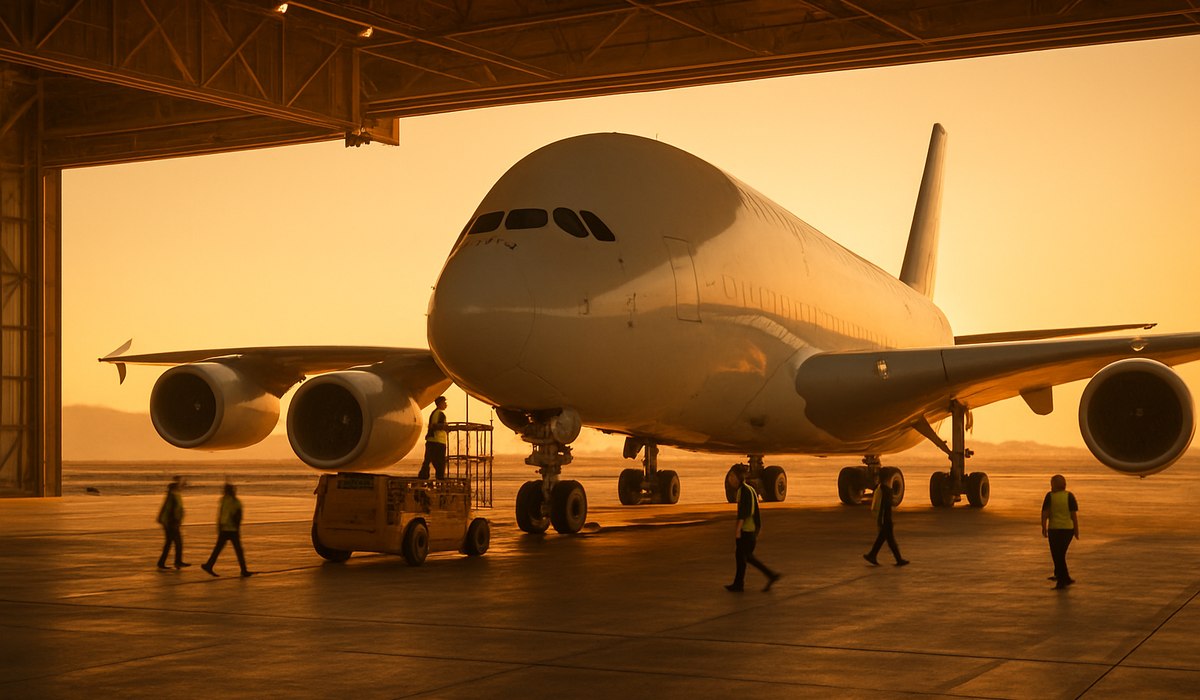
Image generated by AI
The Unexpected Renaissance of Aviation's Most Controversial Aircraft
The Airbus A380 valuable asset 2026 story marks a stunning reversal in commercial aviation's narrative. Once dismissed as an overambitious white elephant, 190 dormant superjumbos now command unprecedented market interest as airlines confront capacity shortfalls on premium long-haul routes. The twin-deck, four-engine giant—which carried 555 passengers in high-density configurations—faces sudden scarcity as travel demand rebounds faster than aircraft manufacturers can deliver new models through 2027 and beyond.
What changed? Economics. Supply constraints. Passenger preferences for nonstop ultra-long-haul flights. The aviation industry's historic $25 billion bet on the A380 program, discontinued in 2021 after 251 deliveries, now appears strategically premature.
The A380's Fall From Grace: A Two-Decade Misstep
The Airbus A380 entered commercial service in 2007 with ambitious projections. Airlines would consolidate hub-to-hub routes using massive aircraft. The mega-hubs—Dubai, Singapore, London, Paris—would thrive. The reality proved messier.
Low-cost carriers disrupted traditional hub economics. Point-to-point flying gained traction. Aircraft utilization costs climbed. Fewer airlines could justify A380 economics on specific routes. By 2019, Emirates—the world's largest A380 operator—began retiring its oldest examples. Production ended in 2021 with Airbus absorbing staggering losses.
Between 2008 and 2020, over 100 A380s entered long-term storage facilities across deserts in California, Arizona, and the Middle East. The aircraft became symbols of aviation miscalculation rather than innovation. Yet this "graveyard" storage preserved intact assets—a detail increasingly relevant in 2026.
Why Airlines Now Want The Airbus A380 Valuable Asset Back
Current market conditions reverse prior skepticism. Post-pandemic travel demand surged beyond pre-2020 levels. Boeing faced 737 MAX production delays and 787 Dreamliner supply constraints. Airbus A350 production struggled to meet commitments. Meanwhile, new aircraft delivery slots stretched into 2028–2029.
Yet airlines needed capacity immediately. They faced two options: purchase available used widebody aircraft or reactivate grounded inventory.
The Airbus A380 valuable asset 2026 equation became clear. Reactivating a 15-year-old A380 cost $8–15 million (inspections, systems overhaul, cabin refurbishment, regulatory compliance). Purchasing a new aircraft cost $450+ million with two-year wait times.
Emirates reactivated 20 A380s between 2024–2026. British Airways expanded its A380 fleet. Singapore Airlines launched new A380 routes to London, Paris, and Amsterdam. Lufthansa recommissioned eight aircraft. Air France recalled four examples from storage.
This resurgence reflects not nostalgia but rational asset economics. Visit FlightAware to track A380 operations in real-time.
2026 Market Shift: Economics and Demand Collide
Industry analysts estimate 190 grounded A380s remain viable for commercial operation. Of these, approximately 120 could achieve return-to-service certification within 24 months. Restoration economics favor premium routes where the aircraft's 555-seat capacity justifies operational costs ($18,000–22,000 per flight hour).
High-demand corridors now justify A380 economics:
Dubai-London: Emirates operates 14 A380 weekly departures. Load factors exceed 87 percent. Revenue per available seat-mile reaches $0.18.
Los Angeles-Singapore: Singapore Airlines flies four A380 weekly. Premium cabin demand—First Class and Suites—drives profitability despite fuel consumption.
Paris-Tokyo: Air France rotates three A380s across Asian routes, capturing lucrative business-class premiums.
The FAA and EASA (European Union Aviation Safety Agency) have streamlined return-to-service protocols for A380s. Supply chain recovery allows aircraft operators to source parts previously unavailable. Major airlines maintain dedicated A380 technical teams even during storage years—infrastructure that expedites reactivation.
Market data shows aircraft worth $50–80 million during production now command $120–150 million in today's secondary market. The scarcity of immediately-available, newly-manufactured widebody aircraft inflated A380 valuations by 200+ percent since 2021.
Desert To Runway: The A380 Revival Logistics
A380 reactivation follows established protocols. Aircraft stored in desert facilities (Marana, Arizona; Victorville, California; Al Maktoum Airport, Dubai) undergo systematic inspections.
Phase One (Months 1–2): Initial assessment, engine condition checks, hydraulic system inspections, corrosion evaluation.
Phase Two (Months 3–4): Component replacements, avionics modernization, cabin interior refurbishment.
Phase Three (Months 5–6): Test flights, regulatory certification, crew training.
High-maintenance items receive priority. The A380's four Rolls-Royce Trent 900 engines require overhauls costing $3–5 million each. Auxiliary power units, environmental control systems, and landing gear necessitate complete servicing cycles.
Emirates' reactivation program cost approximately $600 million to restore 20 aircraft—averaging $30 million per airframe. The carrier justified expenditures based on strong demand forecasts for 2026–2030.
According to US DOT, no regulatory barriers prevent A380 return-to-service. Airlines must demonstrate operational readiness, crew qualification, and maintenance competency. The process favors established carriers with existing A380 experience—Emirates, Singapore Airlines, British Airways—over new operators.
Market Data: The Airbus A380 Valuable Asset 2026 by Numbers
| Metric | 2021 Value | 2026 Current Value | Change |
|---|---|---|---|
| Secondary Market Aircraft Price | $50–80 million | $120–150 million | +200% |
| Grounded A380 Inventory | 120+ units | 190 units | +58% |
| Return-to-Service Cost | $8–12 million | $8–15 million | +25% |
| Monthly Fuel Cost (vs. New 777X) | $380,000 | $410,000 | +8% |
| Passenger Capacity (High-Density) | 555 seats | 555 seats | — |
| Estimated Viable Fleet by 2026 | 90 aircraft | 140+ aircraft | +56% |
| Average Utilization Rate | 6.5 hours/day | 8.2 hours/day | +26% |
What This Means for Travelers
The airbus A380 valuable asset 2026 phenomenon creates tangible passenger benefits. Here's your action checklist:
1. Book A380 Routes Strategically Premium cabin revenue finances A380 operations. First Class and Business Class tickets offer superior amenities on reactivated aircraft. Monitor airline websites for new A380 announcements on high-frequency routes.
2. Monitor Route Announcements Emirates, Singapore Airlines, and British Airways announce new
Disclaimer
This article is for informational and educational purposes only. It does not constitute legal, financial, or professional advice. While we strive to provide accurate and up-to-date information, travel policies, regulations, and conditions change rapidly. Always verify information with official sources before making travel decisions. Nomad Lawyer makes no representations about the accuracy, reliability, completeness, or suitability of the information provided. Readers should consult qualified professionals for advice specific to their circumstances. The views expressed in this article are those of the author and do not necessarily reflect the views of Nomad Lawyer.
Kunal K Choudhary
Co-Founder & Contributor
A passionate traveller and tech enthusiast. Kunal contributes to the vision and growth of Nomad Lawyer, bringing fresh perspectives and driving the community forward.
Learn more about our team →