
Airbus A380 Comeback: UK Startup's Superjumbo Gamble in 2026
A bold UK startup is launching with the Airbus A380 superjumbo in 2026, a high-risk strategy that legacy carriers are only adopting due to aircraft shortages and airport constraints.

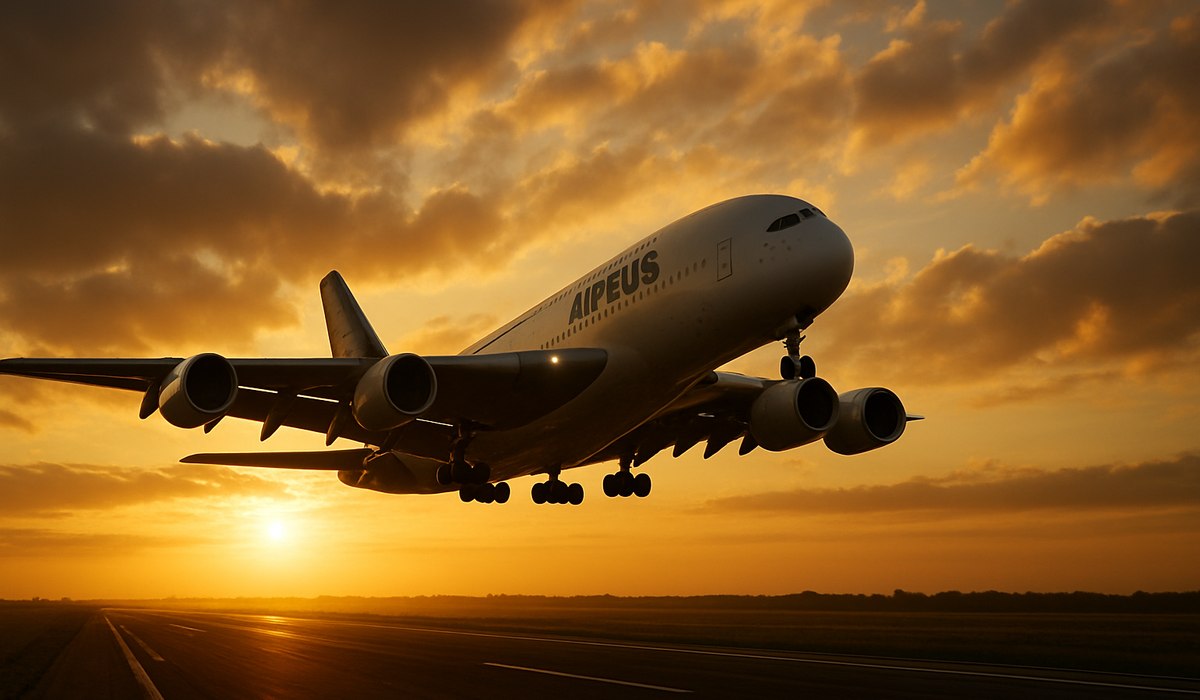
Image generated by AI
UK Startup Bets Its Future on Airbus A380 Superjumbo
A daring UK-based startup airline is making aviation history by launching operations with the world's largest passenger aircraft—the Airbus A380 superjumbo. This audacious move stands in sharp contrast to how established carriers are approaching the superjumbo's resurgence. While legacy airlines are reactivating A380s out of operational desperation, facing severe airport slot limitations and prolonged Boeing 777X delivery delays, the new entrant is voluntarily embracing the double-deck giant as its cornerstone fleet. This strategic divergence raises fundamental questions about whether the superjumbo's economics can actually work for an airline without legacy infrastructure, established route networks, or pre-existing passenger bases.
The airbus a380 comeback represents one of aviation's most fascinating paradoxes: a aircraft industry consensus that the mega-jet was commercially doomed, now reversed by market pressures nobody anticipated just three years ago.
Why Legacy Carriers Are Resurrecting the A380
Established international airlines face unprecedented constraints that have forced the A380 back into active service. The primary driver is airport capacity scarcity. Major hubs including London Heathrow, Dubai, Singapore, and Frankfurt operate at near-maximum gates and landing slots. These facilities cannot easily expand, making the A380's 500+ passenger capacity an attractive solution for consolidating multiple daily frequencies into fewer flights while maintaining revenue.
The secondary factor involves Boeing's troubled 777X program. Delivery delays stretching into 2027 have left carriers without next-generation widebody options. Airlines originally planning to retire older A380s instead opted to refurbish and redeploy them, extending profitable careers by five to ten years. Singapore Airlines, Emirates, and Malaysia Airlines all recently announced A380 fleet revivals specifically citing aircraft supply chain disruptions.
Operating economics have also shifted. Fuel efficiency improvements through engine upgrades and maintenance innovations have reduced per-seat operating costs on the superjumbo. Additionally, post-pandemic demand for premium cabin products—business class and first class—has recovered dramatically on long-haul routes, and the A380's spacious cabin allows profitable configuration of these high-margin seats.
However, these advantages assume legacy carriers' existing advantages: established brand reputation, extensive frequent flyer programs, codeshare partnerships, and balanced route networks. Whether a startup can replicate these conditions remains the critical unknown.
The UK Startup's Audacious Superjumbo Bet
The emerging carrier has committed to a fleet strategy centered entirely on the A380, departing fundamentally from startup airline playbooks. Conventional new airline strategy involves launching with efficient, versatile narrowbody aircraft like the Boeing 737 MAX or Airbus A320 family. These aircraft operate profitably on high-frequency, point-to-point routes where volume compensates for lower per-flight revenue.
This UK venture instead is targeting premium long-haul routes where the superjumbo's 500-seat capacity and lavish seating configurations create maximum revenue per flight. The strategy assumes significant demand exists for new premium airline options on transatlantic and Asia-Pacific routes currently dominated by legacy carriers offering aging cabin products.
The startup has articulated a differentiation strategy: positioning the A380 as a "new airline experience" with fully lie-flat business class seats, premium economy seating, and enhanced onboard amenities. Route selection targets leisure-heavy city pairs (London-Orlando, London-Sydney, London-Singapore) where passengers represent a mix of tourists and business travelers less dependent on airline loyalty than corporate contracts.
This approach theoretically maximizes revenue per available seat mile (RASM) by capturing pricing power in premium cabins. However, it requires flawless operational execution, rapid brand development, and sustained passenger demand. Any disruption—aircraft delays, market downturns, or competitive response from established carriers—could prove catastrophic.
The Economics Question: Can New Airlines Make A380s Profitable?
The superjumbo aircraft presents a brutal economic reality: fixed costs scale with aircraft size, but revenue density does not increase proportionally. An A380 costs approximately $445 million new (though this startup likely acquired used airframes at $50-150 million). Annual operating costs—crew, fuel, maintenance, airport fees—approximate $25-30 million per aircraft regardless of load factor.
To break even, an A380 requires approximately 380-400 daily passengers across all classes. Industry analysis suggests profitable operations demand consistent 80-85% load factors on premium long-haul routes where ticket prices justify the infrastructure investment.
Legacy carriers achieve these load factors through:
- Established passenger loyalty and corporate contracts
- Hub-and-spoke networks that consolidate passengers from feeder routes
- Revenue management systems refined across decades
- Codeshare partnerships that distribute seats across global airline networks
- Brand recognition enabling premium pricing
The startup possesses none of these advantages. It must build market share in markets where passengers have established preferences, often developed through decades of flying established carriers.
Historical precedent is sobering. Laker Airways attempted premium positioning in the 1970s-80s using large aircraft and failed. Virgin America required seventeen years to achieve profitability. More recently, numerous long-haul startups have collapsed within 3-5 years, including XL Airways (2008), Silverjet (2008), Eos Airlines (2008), and most recently Norse Atlantic Airways (2023).
However, post-pandemic dynamics differ from previous eras. Business travel demand has proven more resilient than expected, premium cabin premiums have expanded dramatically, and younger passengers show openness to new airline brands offering better onboard experiences than legacy carriers' aging fleets.
Industry Implications and Future Outlook
The airbus a380 comeback reshapes several industry dynamics. First, it validates aircraft manufacturers' decisions to continue A380 production despite years of speculation about discontinuation. Airbus may extend production runs if additional customers emerge beyond current orders.
Second, it demonstrates that established airline strategy orthodoxy—minimize aircraft size, maximize frequency, dominate network effects—may not represent the only path to profitability. Point-of-sale premium positioning could create viable niches even in consolidated markets.
Third, it pressures legacy carriers to consider fleet modernization more aggressively. If new entrants successfully capture premium market share with newer aircraft configurations, established carriers may face accelerated retirement timelines for aging widebodies currently lacking competitive cabin products.
Fourth, it highlights persistent Boeing 777X supply disruption consequences. Had new aircraft supply remained normal, legacy carriers would likely have retired additional A380s, and this startup would have based its strategy on newer aircraft platforms.
The superjumbo aircraft market will likely bifurcate. Capacity-constrained legacy carriers at congested hubs will continue operating A380s profitably. New entrants targeting premium leisure markets face higher execution risk but potentially higher reward if they successfully differentiate. Mid-size carriers operating moderate-capacity routes will likely gravitate toward Boeing 787 and Airbus A350 aircraft offering superior economics.
Key Data Table: A380 Economics and Strategic Positioning
| Metric | Unit | Value | Significance |
|---|---|---|---|
| Airbus A380 List Price | USD Millions | $445 | New aircraft cost; used acquisitions 90% cheaper |
| Annual Operating Cost (Estimate) | USD Millions | 25-30 | Fixed regardless of load factor |
| Typical Seating Capacity | Passengers | 500+ | Highest among commercial aircraft |
| Required Load Factor (Break-even) | Percentage | 80-85 | On long-haul premium routes |
| Business Class Premium (vs Economy) | Markup | 400-600% | Revenue driver justifying large aircraft |
| Fuel Efficiency Improvement (Recent Upgrades) | Percentage | 15-20 | Enhanced |
Disclaimer
This article is for informational and educational purposes only. It does not constitute legal, financial, or professional advice. While we strive to provide accurate and up-to-date information, travel policies, regulations, and conditions change rapidly. Always verify information with official sources before making travel decisions. Nomad Lawyer makes no representations about the accuracy, reliability, completeness, or suitability of the information provided. Readers should consult qualified professionals for advice specific to their circumstances. The views expressed in this article are those of the author and do not necessarily reflect the views of Nomad Lawyer.
Preeti Gunjan
Contributor & Community Manager
A passionate traveller and community builder. Preeti helps grow the Nomad Lawyer community, fostering engagement and bringing the reader experience to life.
Learn more about our team →