
Airbus A320neo Airlines Strip New Jets as Engine Shortage Peaks
Airlines are dismantling nearly new Airbus A320neo aircraft to salvage scarce Pratt & Whitney GTF engines in 2026, as powerplants become more valuable than complete jets.

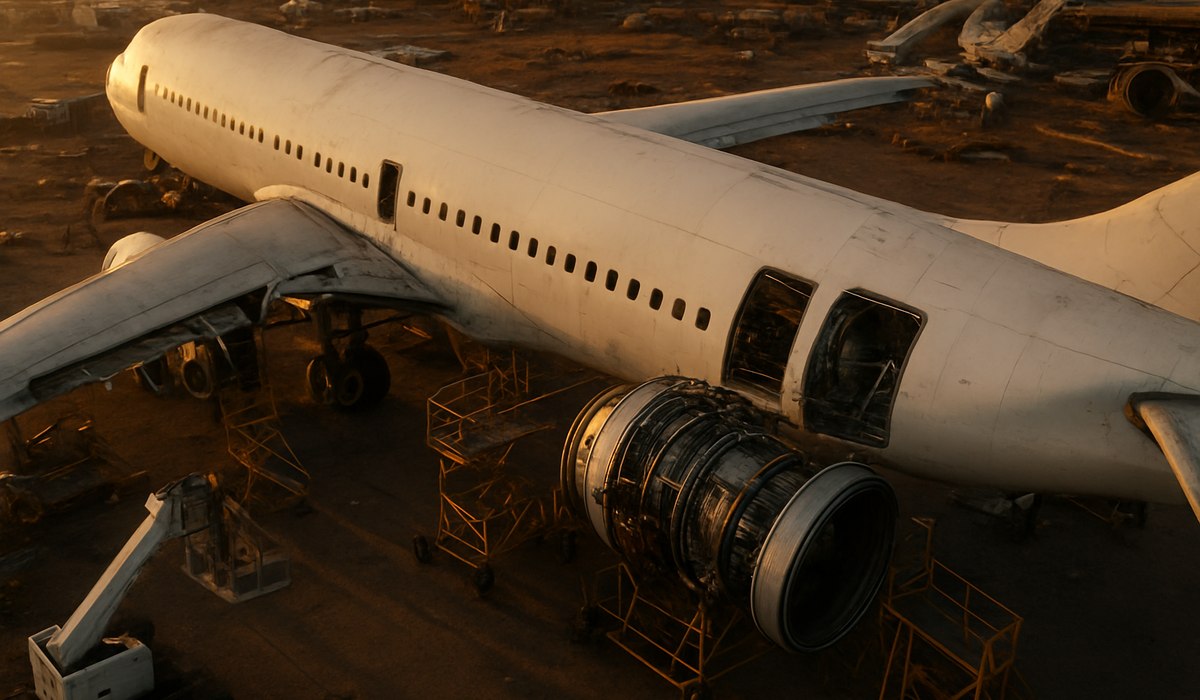
Image generated by AI
Airlines Cannibalizing Nearly New Airbus A320neo Family Jets for Engine Salvage
Major carriers worldwide are dismantling practically new Airbus A320neo aircraft to extract Pratt & Whitney GTF engines, a dramatic shift reflecting unprecedented supply chain constraints hitting the aviation sector in 2026. The Airbus A320neo family jets, worth tens of millions of dollars when whole, are now being sacrificed piecemeal as individual powerplants command premiums exceeding the resale value of complete airframes. This stark reversal illustrates how critical component shortages can fundamentally reshape airline economics and fleet management strategies globally.
The practice has accelerated across North America, Europe, and Asia-Pacific regions where carriers face multi-year delays obtaining replacement engines through traditional procurement channels. Instead of parking surplus aircraft or awaiting new deliveries, operators have discovered financial logic in harvesting high-value components from relatively young narrowbody jets. This trend raises serious questions about aircraft utilization, spare parts availability, and long-term supply chain vulnerability within commercial aviation.
Why Airlines Are Harvesting Nearly New Jets
The economics driving this decision stem from a perfect storm of manufacturing delays, maintenance demand, and component valuation shifts. Pratt & Whitney geared turbofan engines, which power the Airbus A320neo family across passenger and cargo operations, face extended production backlogs stretching into 2027 and beyond. Each GTF powerplant carries a replacement cost between $15 million and $25 million depending on configuration and thrust rating.
Airlines operating aging A320ceo aircraft (the previous generation) increasingly need engine support to maintain fleet reliability. Rather than order new engines on uncertain delivery schedules, carriers can acquire used powerplants from aircraft destined for scrap or long-term storage. The mathematics become irresistible: a marginal A320neo airframe worth $25-35 million as a whole jet yields two GTF engines collectively valued near $40-50 million on the secondary market.
Carriers including Southwest Airlines, Ryanair, and European legacy operators have reportedly evaluated or executed teardown programs. The practice reflects desperation within the sector rather than preference, driven by regulatory maintenance requirements and operational necessity rather than strategic choice. Some airlines have established internal parts-harvesting operations at designated maintenance facilities rather than rely on third-party dismantlers.
The Pratt & Whitney GTF Engine Shortage Crisis
Pratt & Whitney's supply challenges originated with design defects requiring mandatory inspections and repairs across the installed fleet. The company halted new engine production in 2024 to address manufacturing quality issues, creating a cascading shortage affecting aircraft delivery schedules and fleet operations. By May 2026, the backlog for new engines exceeded 1,500 units across all customer airlines and lessors combined.
The GTF engine powers over 11,000 ordered A320neo family aircraft globally, making it one of aviation's most critical components. Unplanned supply disruptions ripple through leasing companies, airlines, and aircraft manufacturers simultaneously. Lessors—companies that own and lease aircraft to operators—face particular pressure because maintenance shortfalls directly impact asset value and lease profitability.
Recovery projections estimate Pratt & Whitney will return to full-rate production during Q3 2026, with monthly delivery rates climbing progressively through 2027. However, this timeline remains subject to additional quality issues and supply chain dependencies for raw materials and subassemblies. Until production normalizes, component scarcity will likely persist, perpetuating incentives for parts harvesting from young airframes.
Financial Implications for Airbus and Operators
Airbus faces paradoxical consequences from this shortage. While aircraft delivery delays reduce current-year revenues, the company benefits indirectly because airlines cannot retire older A320ceo variants without engine replacement parts. This extends operational life for earlier generation models, reducing pressure on Airbus to discount A320neo family pricing or offer aggressive financing terms.
Lessors and investors holding A320neo inventory experience acute financial stress. Aircraft sitting in storage or undergoing teardown generate zero revenue while accruing maintenance costs and storage fees. Several lessors have written down A320neo asset values by 10-15% since 2024, reflecting uncertainty about near-term utilization and resale prospects. Insurance carriers have adjusted coverage terms and premiums for aviation leasing portfolios.
Airlines operating A320neo family fleets benefit from access to spare engines without lengthy procurement delays, though at significant capital cost. The practice accelerates depreciation for marginal aircraft that might have generated revenue for another 5-10 years under normal circumstances. Some carriers strategically retire lower-utilization aircraft, reducing fleet complexity and maintenance obligations while maximizing spare parts recovery value.
Regional carriers dependent on Airbus A320neo family aircraft for core operations face heightened financial pressure. Limited access to replacement engines forces operational trade-offs: reduce flight frequency, extend maintenance intervals at safety limits, or cannibalize aircraft earlier than planned. These decisions cascade through route networks, affecting scheduling reliability and passenger experience.
What This Means for Aviation Supply Chains
This episode exposes fragility in commercial aircraft manufacturing and component distribution networks. The industry traditionally relied on manufacturer goodwill and contractual guarantees for long-term parts availability. Concentrated suppliers like Pratt & Whitney hold disproportionate influence over airlines' operational decisions and investment timelines.
Supply chain diversification has become strategic priority for aircraft operators and lessors. Some carriers are evaluating engine options from competing manufacturers for future aircraft orders, even accepting performance or compatibility trade-offs to reduce dependence on single suppliers. Airbus and Boeing have accelerated development of engine selection flexibility on future aircraft variants.
Government regulators and industry bodies are examining policy frameworks to prevent future shortages from cascading as severely. Proposals include mandatory inventory requirements for critical components, supplier financial solvency regulations, and accelerated certification pathways for alternative powerplants. International aviation authorities are coordinating standards to improve supply chain resilience.
The parts harvesting phenomenon underscores how supply disruptions can force economically irrational decisions across the industry. When component shortages make powerplants worth more than aircraft, the entire procurement model breaks down. Recovery will require sustained manufacturing discipline from engine makers and diversification of sourcing options across the aviation ecosystem.
Key Data Points: Airbus A320neo Airlines and Engine Shortage Impact
| Metric | Value | Impact |
|---|---|---|
| Estimated aircraft dismantled for GTF engines (2024-2026) | 85-120 airframes | $3-4 billion in asset value removed from service |
| GTF engine replacement cost | $15-25 million per unit | Makes 2-engine aircraft economically viable teardown candidates |
| Pratt & Whitney GTF installed fleet | 11,000+ aircraft orders | Shortage affects airlines across all regions and carrier types |
| Production backlog (May 2026) | 1,500+ engines | Expected 18-24 month delays for new orders |
| A320neo family new aircraft value | $95-130 million | Scrap value of parts ($40-60M) now approaches residual aircraft value |
| Pratt & Whitney production restart timeline | Q3 2026+ | Full rate recovery expected 2027-2028 |
What This Means for Travelers
Passengers may experience indirect effects from engine shortages and aircraft teardowns, though impacts vary by airline and route frequency.
-
Route Adjustments: Check your preferred airline's schedule regularly using FlightAware. Airlines may reduce frequency on lower-demand routes as fleet utilization pressures increase. Booking confirmation a week ahead reduces disruption risk.
-
Aircraft Type Verification: Request specific aircraft type during booking if you have cabin comfort preferences. A320ceo and A320neo aircraft differ substantially in cabin design, seat pitch, and onboard amenities. Older aircraft substitutions may occur due to inventory constraints.
-
Maintenance Delays: Monitor airline reliability statistics through [FlightAware](https
Disclaimer
This article is for informational and educational purposes only. It does not constitute legal, financial, or professional advice. While we strive to provide accurate and up-to-date information, travel policies, regulations, and conditions change rapidly. Always verify information with official sources before making travel decisions. Nomad Lawyer makes no representations about the accuracy, reliability, completeness, or suitability of the information provided. Readers should consult qualified professionals for advice specific to their circumstances. The views expressed in this article are those of the author and do not necessarily reflect the views of Nomad Lawyer.
Raushan Kumar
Founder & Lead Developer
Full-stack developer with 11+ years of experience and a passionate traveller. Raushan built Nomad Lawyer from the ground up with a vision to create the best travel and law experience on the web.
Learn more about our team →