
airBaltic Secures 257 Million Euro Financing Package with 180 Million Initial Tranche Ahead of September 11 Bondholder Vote
airBaltic negotiates a EUR 257M financing package to boost liquidity, featuring an initial EUR 180M tranche subject to a Sept 11 vote.

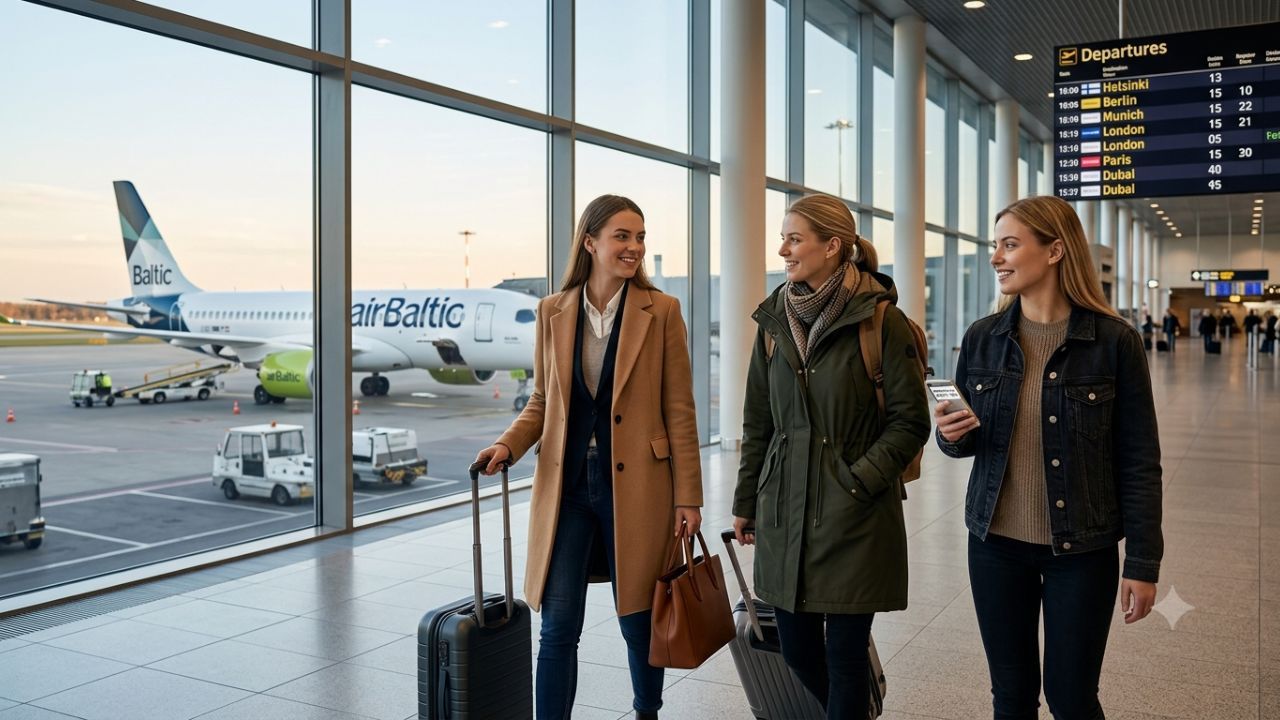
Image generated by AI
Latvian national carrier airBaltic has negotiated a comprehensive financing agreement worth up to EUR 257 million with existing bondholders and institutional financial service providers. The capital package is designed to bolster operational liquidity and fund the airline's updated business plan, with an initial EUR 180 million tranche expected to be released following a formal bondholder vote scheduled for September 11, 2026.
[RIGA, Latvia, Sept. 3, 2026] — Flag carrier airBaltic has finalized terms on a major financial restructuring package capable of injecting up to EUR 257 million into the Riga-headquartered airline. Official market disclosures released on September 3, 2026, confirm that the funding agreement involves existing bondholders and third-party financial service providers, providing the carrier with essential capital flexibility to execute its long-term network and fleet growth strategies.
The transaction remains subject to formal approval from airBaltic's bondholders and shareholders. A key milestone in the transaction is a bondholder meeting convened for September 11, 2026, where investors will review and vote on the financing terms.
Capital Tranche Distribution and Governance Milestones
The proposed EUR 257 million capital facility is structured into two distinct execution tranches linked to specific governance and regulatory conditions:
- First Tranche (EUR 180 Million): Expected to become available immediately following positive bondholder approval at the September 11, 2026 meeting and the completion of standard closing conditions.
- Second Tranche (EUR 77 Million): Accessible once secondary operational and financial performance conditions specified in the agreement are fulfilled by the carrier.
The capital injection is designed to stabilize airBaltic's balance sheet, maintain financial flexibility during seasonal demand shifts, and support ongoing fleet commitments centered around its all-Airbus A220-300 operation across the Baltic region.
Structure of the EUR 257 Million Liquidity Package
| Financing Component | Financial Capital Volume | Execution Conditions & Status | Operational Purpose |
|---|---|---|---|
| Initial Capital Tranche | EUR 180 Million | Pending Sept 11, 2026 bondholder vote | Immediate liquidity & short-term debt management |
| Secondary Capital Tranche | EUR 77 Million | Conditional upon secondary milestones | Long-term business plan & network funding |
| Total Financing Package | Up to EUR 257 Million | Subject to bondholder & shareholder approval | Balance sheet stabilization & strategic development |
Timeline of Key Financial and Governance Milestones
| Target Date | Operational & Financial Milestone | Governance Requirement |
|---|---|---|
| September 3, 2026 | Announcement of EUR 257M financing deal | Terms finalized with bondholders & lenders |
| September 11, 2026 | Formal Bondholder Meeting | Bondholders review and vote on financing proposal |
| Post-Approval 2026 | EUR 180M First Tranche Release | Disbursed shortly after vote approval & closing |
| Secondary Phase 2026–2027 | EUR 77M Second Tranche Release | Accessible upon fulfilling secondary covenants |
Fleet Strategy and Baltic Regional Connectivity
The liquidity package comes as airBaltic continues to serve as the dominant air carrier across the Baltic states of Latvia, Estonia, and Lithuania. Operating an exclusive fleet of single-class Airbus A220-300 aircraft, the airline operates primary bases at Riga International Airport (RIX), Tallinn Airport (TLL), and Vilnius Airport (VNO), alongside seasonal bases in Tampere (TMP) and Gran Canaria (LPA).
Maintaining a strong capital position is vital for airBaltic's business model, which combines point-to-point European leisure routes with network transit through its primary hub at Riga. In addition, the carrier derives significant ancillary revenue from wet-lease operations (ACMI contracts) for major European airline groups during peak traffic seasons.
airBaltic Operational & Hub Specifications
| Operational Parameter | Hub & Fleet Specification | Strategic Significance |
|---|---|---|
| Primary Aviation Hub | Riga International Airport (RIX - Latvia) | Central connecting hub for Baltic transit flights |
| Secondary Operating Bases | Tallinn (TLL), Vilnius (VNO), Tampere (TMP) | Direct point-to-point regional European links |
| Single Aircraft Type Fleet | Airbus A220-300 (145-seat configuration) | Fuel-efficient narrowbody for regional & long-haul |
| Commercial Strategy | Hybrid Network Carrier & ACMI Provider | Combines scheduled flights with ACMI wet-leasing |
Traveler Logistics & Baltic Transit Guide (Information Gain)
For passengers traveling with airBaltic or connecting through its primary hub at Riga International Airport (RIX) in 2026, understanding airport navigation and flight transfer logistics ensures a smooth journey.
Connecting at Riga International Airport (RIX)
- Schengen-to-Schengen Transfers: Passengers flying between European Schengen destinations via Riga can complete transfers without passing through border control. The minimum connection time (MCT) at RIX for Schengen-to-Schengen flights is just 25 to 30 minutes.
- Schengen-to-Non-Schengen Transfers: Connections heading to non-Schengen destinations (such as the UK or Middle East) require passing through passport control at RIX. Travelers should allow a minimum layover window of 45 to 60 minutes.
- Baggage Interline Logistics: On single-ticket bookings, checked luggage is automatically transferred to the final destination at RIX, TLL, and VNO.
Passenger Class & Amenities
- Airbus A220-300 Cabin Features: All airBaltic flights feature wider 18.5-inch Economy Class seats, overhead 2x3 seating layouts, and high-speed inflight Wi-Fi connectivity across select aircraft. Business Class passengers receive dedicated front-row seating with blocked middle seats, hot meal service, and priority boarding.
Infrastructure and Regional Aviation Impact Assessment
Securing the EUR 257 million financing agreement provides essential stability for the broader Baltic aviation sector. As Latvia's flag carrier, airBaltic accounts for a major portion of passenger traffic and air freight passing through Riga International Airport, driving trade, tourism, and diplomatic connections across Northern Europe.
By stabilizing its financial position ahead of the September 11 bondholder vote, airBaltic protects its operational network, preserves regional employment, and maintains vital air corridors connecting the Baltic region to Western Europe, Scandinavia, and the Middle East.
Frequently Asked Questions
What is the total value of airBaltic's new financing deal?
airBaltic has negotiated a financing package worth up to EUR 257 million to improve liquidity and fund its updated business plan.
How is the EUR 257 million financing structured?
The package is divided into two tranches: an initial EUR 180 million release following bondholder approval, and a secondary EUR 77 million tranche accessible once additional agreement conditions are met.
When will bondholders vote on the airBaltic financing proposal?
A formal bondholder meeting is scheduled for September 11, 2026, where bondholders will review and vote on the financing terms.
Where is airBaltic's primary flight hub located?
airBaltic's primary hub is located at Riga International Airport (RIX) in Latvia, with secondary bases in Tallinn (TLL), Vilnius (VNO), and Tampere (TMP).
Related Travel Guides
- Nordic Terminal Gridlock: Finnair Suffers 51 Severe Delays and Abrupt Flight Cancellations at Helsinki-Vantaa Airport Triggering Global Travel Chaos
- JetBlue and United Airlines Unleash Game Changing Blue Sky Partnership with Massive New Reciprocal Loyalty Benefits for Travelers
- Travel Emirates Alert: April 2026 Disruptions Force Passenger Action
Disclaimer
This article is for informational and educational purposes only. It does not constitute legal, financial, or professional advice. While we strive to provide accurate and up-to-date information, travel policies, regulations, and conditions change rapidly. Always verify information with official sources before making travel decisions. Nomad Lawyer makes no representations about the accuracy, reliability, completeness, or suitability of the information provided. Readers should consult qualified professionals for advice specific to their circumstances. The views expressed in this article are those of the author and do not necessarily reflect the views of Nomad Lawyer.
Raushan Kumar
Founder & Lead Developer
Full-stack developer with 11+ years of experience and a passionate traveller. Raushan built Nomad Lawyer from the ground up with a vision to create the best travel and law experience on the web.
Learn more about our team →