
AirAsia Jakarta Flight Payment Dispute Exposes Inflight Card Security and Passport ID Protocol Gaps Across Southeast Asia 2026
An AirAsia contactless payment dispute mid-flight to Jakarta reveals critical gaps in inflight payment verification protocols and passenger identity procedures across Asian carriers in 2026.

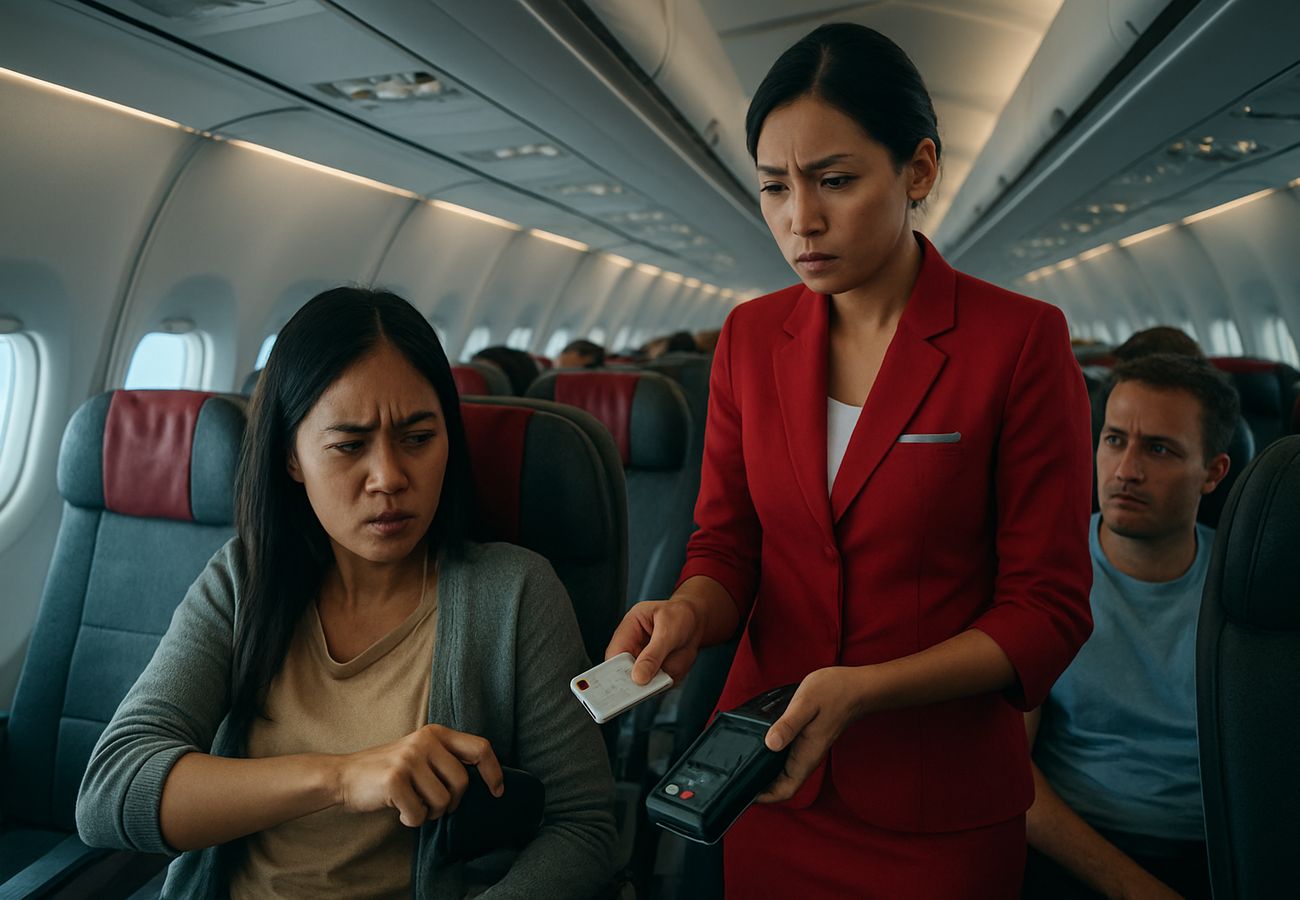
Image generated by AI
Midair Tension: When a Failed Card Transaction Becomes an Identity Dispute
A routine beverage purchase aboard an AirAsia flight bound for Jakarta in June 2026 escalated into something far more troubling: a heated exchange over payment verification, personal identification, and the murky procedural gaps that exist 35,000 feet above the ground.
The passenger pulled out a contactless credit card. The cabin crew member held it. The transaction failed. Then came the passport request—and everything unraveled from there.
This wasn't an isolated customer service hiccup. It exposed a systemic problem that affects millions of frequent flyers across the Asia-Pacific region: airlines are shifting toward cashless inflight commerce without clear, transparent protocols governing how far payment verification can stretch, or when passenger identification becomes mandatory.
The Incident: Card Inspection, Declined Transaction, Escalated Tension
Here's what happened, according to the passenger's account.
After takeoff, the traveler ordered an additional beverage using a contactless credit card—standard practice on most modern carriers. The cabin crew member took the card, held it longer than expected, and attempted to process the transaction through a portable payment terminal.
The payment declined.
What followed wasn't a simple "card declined, would you like to try another method?" Instead, the crew explained they were "assessing the card type" before processing. The passenger wasn't provided clear documentation of what triggered the extended inspection or why the transaction failed.
Reddit: "I've flown AirAsia dozens of times. Never had a crew member hold my card that long. Made me genuinely uncomfortable about whether my card data was being exposed." — r/travel
The interaction left the passenger with legitimate concerns:
- Why was manual card inspection necessary for a contactless transaction?
- What specific data or card characteristics triggered extended handling?
- Were proper data protection protocols being followed onboard?
- Why wasn't the decline explained immediately?
These questions didn't get clear answers. Instead, they festered.
The Escalation: When Payment Disputes Trigger Identity Verification Requests
The real controversy emerged after landing.
The passenger indicated they intended to formally report the interaction to AirAsia and relevant consumer protection bodies. At that moment—while still aboard the aircraft—cabin crew requested the passenger's passport.
The passenger refused. Multiple times.
The passenger's logic was straightforward: a failed payment dispute has nothing to do with identity verification. The airline already possessed all necessary booking information, seat assignment data, and passenger records via its reservation system. Why would additional identification documentation be relevant to reporting a payment handling concern?
Crew explained that passport details were needed for "incident documentation." Ground staff in Jakarta, when consulted, expressed uncertainty about whether this request was even justified.
This ambiguity matters. A lot.
The Gray Zone: Where Operational Authority Meets Passenger Rights
What few travel writers get right about incidents like this is understanding the structural confusion embedded in aviation operations.
Airlines operate under a specific operational hierarchy:
- Booking systems contain passenger identity and travel details
- Cabin crew function as both service providers and frontline financial processors
- Ground staff handle post-flight incident documentation
- National civil aviation authorities (like the DGCA in India or equivalent ASEAN regulators) provide overarching frameworks
But nowhere in this chain is there a universally standardized protocol governing when identity verification becomes mandatory during payment disputes.
According to IATA guidance on commercial practices, airlines are granted operational discretion in service management. However, that same guidance does not clearly define thresholds for identity verification escalation during routine inflight disputes.
This creates a procedural black hole. Crew members may feel empowered to request identification based on internal protocols passengers never see. Passengers assume their booking data is sufficient. Ground staff aren't trained on whether the request was legitimate.
Nobody wins. Everyone feels frustrated.
Contactless Payments in Aviation: Technology Outpacing Policy
The friction intensifies when you understand what AirAsia and similar carriers are actually trying to accomplish.
Low-cost carriers across Asia depend heavily on inflight retail revenue. Moving from cash to contactless payments accelerates transactions, reduces crew handling time, and improves transaction security. The International Civil Aviation Organization (ICAO) has endorsed digital payment integration as part of modernizing airline operations.
But inflight environments create unique constraints:
Offline processing systems. At cruising altitude, connectivity is limited. Payment terminals often operate in offline mode, meaning fraud detection must rely on manual verification rather than real-time database checks.
Card authentication burden shifts to crew. Without instant online validation, cabin crew become the frontline defense against fraudulent transactions. They're trained to identify authenticity indicators, payment type differences, and transaction anomalies.
No standardized inspection protocols. There's no global rulebook defining how long a card may be physically inspected, what data points crew should verify, or when manual checks cross into invasive territory.
The AirAsia incident suggests that crew training focused on fraud prevention may have bypassed equally important training on data privacy and passenger communication during verification steps.
What Airlines (and Passengers) Misunderstand About Inflight Payment Rights
Here's the critical gap most travel commentary misses: passengers expect ground-level consumer protections to apply at altitude. They don't, not entirely.
Modern travelers assume:
- Instant contactless approvals with minimal handling
- Strong data privacy protections (like ground-based PCI-DSS compliance)
- Clear dispute resolution processes
- Transparent communication about verification procedures
Airlines, however, operate under different constraints. They have:
- Limited connectivity requiring offline processing
- Crew reliance on manual fraud detection
- Operational authority to manage security risks
- Discretion in incident documentation requirements
The problem isn't that airlines are overstepping. It's that passengers are rarely informed about these operational realities. No pre-flight briefing explains inflight payment security procedures. No onboard signage discloses when identity verification might be requested. No receipt documents the reason a transaction was declined or manually inspected.
Reddit: "The worst part wasn't the declined card. It was the complete lack of transparency about why it happened or what the crew was checking." — r/digitalnomad
AirAsia's Broader Challenge: Balancing Efficiency With Trust
AirAsia is one of Asia's largest low-cost carriers, operating thousands of flights across the region. For carriers at this operational scale, inflight revenue margins matter enormously. Every beverage, snack, and ancillary purchase contributes to profitability.
Shifting to digital payments was the logical move. But the execution—particularly around transparency and passenger communication—appears to have lagged behind the technology adoption.
The Jakarta incident isn't unique to AirAsia. Similar payment disputes have surfaced across regional carriers. What distinguishes this case is how clearly it illustrates the gap between operational necessity and passenger communication.
Airlines need fraud prevention. Passengers need transparency. Right now, neither requirement is being met with equal priority.
The Systemic Fix Airlines Must Implement Now
The aviation industry is at an inflection point. Digital convenience is expanding faster than procedural clarity. This creates a dangerous trust erosion cycle.
Airlines need to act on three fronts immediately:
1. Publish clear inflight payment protocols. Define exactly what verification steps crew may take, how long cards may be physically held, what data points justify extended inspection, and when manual checks are permissible. Make this information available to passengers pre-flight.
2. Standardize identity verification triggers. Establish explicit thresholds for when passport or additional ID becomes relevant to payment disputes. Create clear escalation procedures that distinguish between security concerns and routine transaction declines.
3. Train crews on communication, not just fraud detection. Cabin crew need dual competency: fraud prevention skills plus clear communication about why verification steps are being taken. Every declined transaction should include a brief, professional explanation.
Without these changes, minor payment disputes will continue escalating into larger trust issues. Passengers will become increasingly uncomfortable with digital payment systems onboard. Carriers will lose ancillary revenue opportunities.
The Broader Implication: When Systems Evolve Faster Than Rules
The real story here isn't about one passenger, one card, and one flight to Jakarta.
It's about an entire industry operating at the edge of procedural clarity. Airlines have adopted payment technology, security practices, and operational procedures that exceed the regulatory and communication frameworks designed to support them.
Passengers are caught in the middle—expected to embrace digital payment systems while navigating undefined protocols and unclear passenger rights.
The solution requires collaborative action. Carriers must prioritize transparency. Regulators must clarify identity verification standards. Industry bodies like IATA must publish standardized protocols. Passengers must advocate for clearer rights disclosures.
Until then, expect more incidents like the one that unfolded aboard that AirAsia flight. Not because airlines are acting unethically, but because the system itself lacks the clarity necessary to prevent friction at scale.
The future of frictionless inflight commerce depends on transparency today.
Related Travel Guides
Disclaimer
This article is for informational and educational purposes only. It does not constitute legal, financial, or professional advice. While we strive to provide accurate and up-to-date information, travel policies, regulations, and conditions change rapidly. Always verify information with official sources before making travel decisions. Nomad Lawyer makes no representations about the accuracy, reliability, completeness, or suitability of the information provided. Readers should consult qualified professionals for advice specific to their circumstances. The views expressed in this article are those of the author and do not necessarily reflect the views of Nomad Lawyer.
Preeti Gunjan
Contributor & Community Manager
A passionate traveller and community builder. Preeti helps grow the Nomad Lawyer community, fostering engagement and bringing the reader experience to life.
Learn more about our team →