
Air Traffic Control Error Triggers Emergency Avoidance at Nashville as Two Southwest Aircraft Nearly Collide
Breaking airline news and aviation industry updates for 2026.

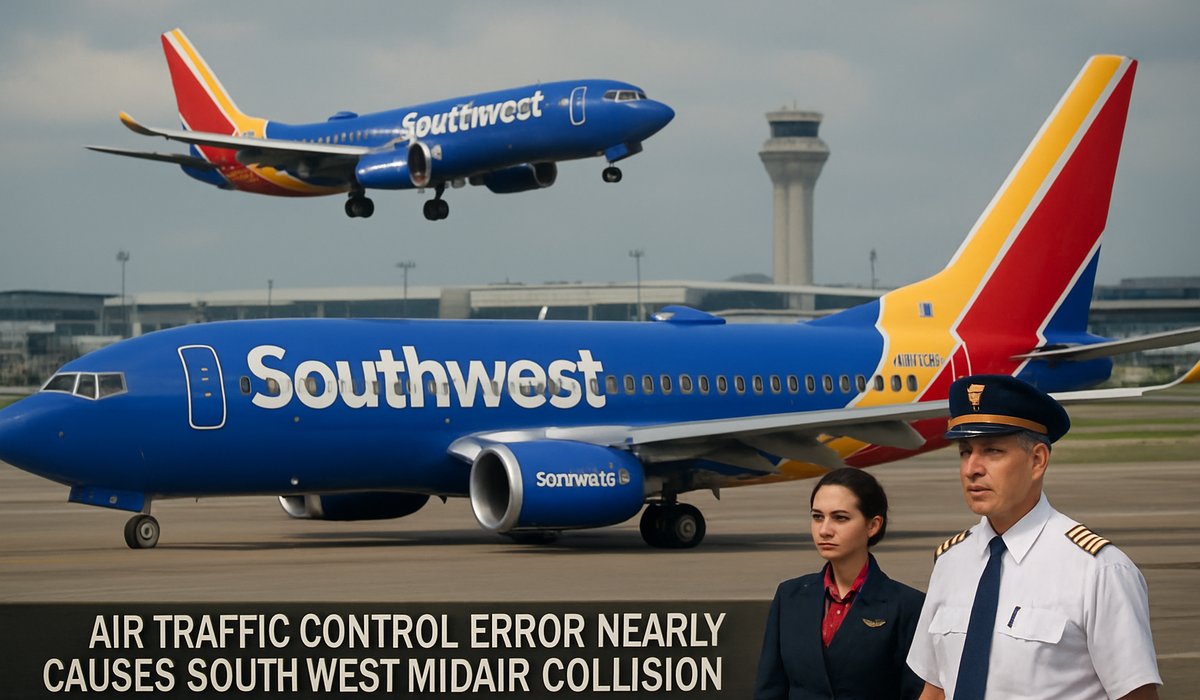
Image generated by AI
Air Traffic Control Error Triggers Emergency Avoidance at Nashville as Two Southwest Aircraft Nearly Collide
Federal investigation launched into critical ATC directive that forced both jets into evasive action
Critical Safety Incident at Major Hub
A potentially catastrophic collision was narrowly averted at Nashville International Airport when air traffic control issued conflicting instructions to two Southwest Airlines aircraft, forcing both planes to execute emergency maneuvers in rapid succession. The incident has triggered immediate scrutiny from federal aviation authorities and reignited concerns about staffing pressures within the nation's busiest airspace corridors.
Flight WN507, which had initiated a go-around procedure, received clearance to turn directly into the flight path of departing Flight WN1152, according to preliminary incident reports. Both aircraft, operated by the Dallas-based carrier, were forced to take immediate evasive action to maintain safe separation—a situation that underscores growing tensions between capacity demands and controller workload at major metropolitan airports.
The Sequence of Events
The incident unfolded during peak operational hours at Nashville's increasingly congested airfield. After WN507 aborted its initial landing approach, air traffic control vectored the aircraft on a rightward heading that placed it on a direct collision course with WN1152, which was simultaneously being cleared for departure from the runway.
Neither aircraft made contact, and both landed safely following their respective evasive maneuvers. However, the incident has alarmed aviation safety experts, who warn that such near-miss scenarios represent a growing pattern at understaffed regional control facilities.
Federal Investigation Underway
The Federal Aviation Administration (FAA) has launched a comprehensive investigation into the Nashville incident as part of its mandatory reporting system for operational errors. The agency is examining whether controller fatigue, staffing shortages, or systemic procedural failures contributed to the dangerous clearance.
Southwest Airlines declined to comment on specific operational details but confirmed in a statement that safety protocols functioned as designed during the encounter.
Broader Implications for Aviation Safety
The Nashville incident arrives amid heightened concerns about controller burnout and facilities operating below authorized staffing levels. The FAA has acknowledged staffing challenges at multiple major airports, a situation exacerbated by retirement waves and training pipeline delays.
Industry observers note that such near-misses—while statistically rare relative to overall flight operations—carry significant implications for public confidence and regulatory policy. Each incident prompts renewed debates about funding for air traffic modernization and controller recruitment initiatives.
FAQ: Air Traffic Safety and Nashville Incident
What exactly happened between the two Southwest flights at Nashville? Air traffic control issued a turn directive to Flight WN507 that placed it directly into the departure path of Flight WN1152. Both aircraft executed emergency evasive maneuvers to prevent collision.
How serious was this near-miss incident? While neither aircraft made contact, the incident represents a critical operational error that violated fundamental separation standards. Both flights landed safely after executing their respective avoidance procedures.
Is Nashville's air traffic control facility understaffed? The FAA has acknowledged staffing challenges at multiple major facilities nationwide. Nashville's growing passenger traffic may have contributed to controller workload pressures at the time of the incident.
What happens after an air traffic control error is reported? The FAA initiates a mandatory investigation examining controller actions, facility procedures, and systemic factors. Findings inform recommendations for operational improvements and policy adjustments.
Are U.S. airspace safety standards being compromised? The aviation system maintains multiple redundant safety layers. While individual errors occur, modern aircraft separation systems and pilot training continue to prevent accidents. However, industry experts call for increased investment in controller staffing and air traffic modernization.
Related Travel Guides
Flight Delay Compensation Guide 2026
Understanding Airline Route Changes
Airport Security Process Updated (2026)
External Resources
Disclaimer
This article is for informational and educational purposes only. It does not constitute legal, financial, or professional advice. While we strive to provide accurate and up-to-date information, travel policies, regulations, and conditions change rapidly. Always verify information with official sources before making travel decisions. Nomad Lawyer makes no representations about the accuracy, reliability, completeness, or suitability of the information provided. Readers should consult qualified professionals for advice specific to their circumstances. The views expressed in this article are those of the author and do not necessarily reflect the views of Nomad Lawyer.
Kunal K Choudhary
Co-Founder & Contributor
A passionate traveller and tech enthusiast. Kunal contributes to the vision and growth of Nomad Lawyer, bringing fresh perspectives and driving the community forward.
Learn more about our team →