
Air Peace Expands Boeing Fleet with Rare 737-900ER: Nigeria Carrier Boosts West African Capacity
Nigeria's Air Peace expands its Boeing 737 Next Generation fleet with a rare 737-900/900ER aircraft via Lithuania's Friendly Avia Support, boosting seat capacity.

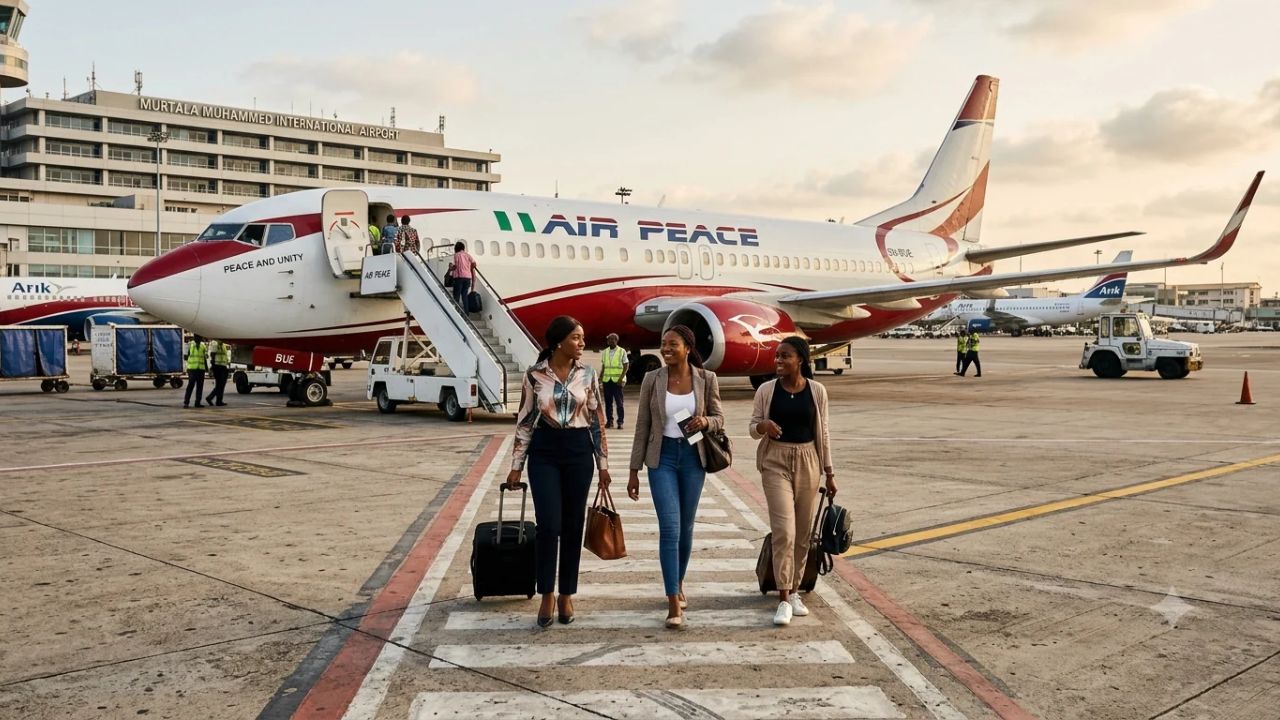
Image generated by AI
Nigeria's largest private carrier Air Peace is expanding its narrowbody operating fleet with the acquisition of a rare Boeing 737-900 series aircraft, delivering a substantial capacity boost across high-demand domestic trunk routes and regional West African sectors.
The transaction, structured through Vilnius-based aviation advisory firm Friendly Avia Support, introduces a higher-capacity single-aisle variant that is uncommon among African scheduled operators. Representing a significant commercial scale-up for the Lagos-headquartered carrier, the aircraft acquisition supports Air Peace in meeting rising passenger volumes across West Africa without requiring the higher capital and fuel expenses associated with twin-aisle widebody jets.
Following maintenance overhauls, avionics inspections, and livery application in Kaunas, Lithuania, the aircraft is undergoing induction reviews with the Nigerian Civil Aviation Authority (NCAA) ahead of its formal commercial line deployment.
                  AIR PEACE NARROWBODY FLEET EXPANSION (2026)
                  ============================================

         [ SELLER / LESSOR ] ──► [ FRIENDLY AVIA SUPPORT (VILNIUS) ]
                                            │
                                            ▼
                          [ HEAVY MAINTENANCE & REPAINT ]
                              Kaunas Airport (KUN), Lithuania
                                            │
                                            ▼
                           [ COMMERCIAL INDUCTION FLIGHTS ]
                     Murtala Muhammed Int'l Airport (LOS), Lagos
                                            │
                 ┌──────────────────────────┴──────────────────────────┐
                 │                                                     │
                 ▼                                                     ▼
    [ BOEING 737-900 / 900ER ]                             [ BOEING 737-700 ]
    • MSN: 41534                                           • MSN: 35086
    • Capacity: Up to 215 Seats (High Density)             • Capacity: ~128–144 Seats
    • Target: Lagos–Abuja, Lagos–Accra                     • Target: Regional & Secondary
    • Powerplant: CFM56-7B26/27                            • Powerplant: CFM56-7B20/22
Secondary Aircraft Sourcing: Friendly Avia Support Structures Baltic Transaction
The latest fleet addition was facilitated through international secondary aircraft markets rather than direct manufacturer assembly line order backlogs. Vilnius-based aviation consultancy Friendly Avia Support served as the transaction arranger and exclusive adviser to the aircraft seller.
Industry fleet audits confirmed two Boeing 737 Next Generation airframes included in the portfolio agreement:
- Boeing 737-900 Series (Manufacturer Serial Number 41534): A stretched narrowbody airframe configured for high-density medium-range operations. Industry analysts note that if confirmed and certified in its extended-range 737-900ER configuration, Air Peace could stand as a pioneering operator of this specific variant in Sub-Saharan Africa.
- Boeing 737-700 Series (Manufacturer Serial Number 35086): A shorter-fuselage Next Generation variant designed for flexible short-haul routes, thin regional sectors, and airfields with shorter landing strips.
Both aircraft completed scheduled C-check maintenance overhauls, structural airworthiness renewals, and full exterior repainting into Air Peace's signature red, blue, and white livery at specialized maintenance facilities in Kaunas, Lithuania, before ferry clearances to West Africa.
Navigating secondary market acquisitions provides African carriers with critical operational agility. With global commercial delivery queues at Boeing Commercial Airplanes extending into the late 2020s due to post-pandemic aerospace supply-chain backlogs, procuring pre-owned Next Generation airframes enables Air Peace to inject immediate seat capacity into underserved markets without waiting multi-year production lead times.
Boeing 737-900ER Engineering: Capacity, Aerodynamics, and Extended Range
The Boeing 737-900ER (Extended Range) was engineered as the ultimate evolution of the Next Generation single-aisle family, bridging the capacity gap between standard narrowbodies and twin-aisle jets like the Boeing 757 and 767.
Compared to the baseline 737-900—which shared identical emergency exit configurations with the smaller 737-800 and was legally limited by aviation regulators to 189 passenger seats—the 737-900ER incorporates structural innovations that dramatically expand commercial payload capabilities:
- Type II Emergency Exit Doors: The airframe incorporates an additional pair of exit doors positioned aft of the wings, raising maximum FAA and EASA certified emergency evacuation limits to 215 passengers in a high-density single-class cabin.
- Aerodynamic and Fuel Capacity Improvements: The -900ER features aerodynamic winglets, a flat rear pressure bulkhead that creates extra cabin floor space, strengthened wing boxes, and structural provisions for up to two auxiliary cargo-hold fuel tanks.
- Elevated Maximum Takeoff Weight (MTOW): Heavy-duty landing gear, dual-position tail-skid protection against runway tail strikes, and uprated CFM56-7B engines push maximum takeoff weight up to 85,139 kg (187,700 lb), unlocking non-stop ranges exceeding 5,900 kilometres (3,200 nautical miles).
| Technical Parameter | Boeing 737-700 | Boeing 737-800 | Boeing 737-900ER | Commercial Value for Air Peace |
|---|---|---|---|---|
| Fuselage Overall Length | 33.6 metres (110 ft 4 in) | 39.5 metres (129 ft 6 in) | 42.1 metres (138 ft 2 in) | Maximum floor area in single-aisle class |
| Wingspan (with Winglets) | 35.8 metres (117 ft 5 in) | 35.8 metres (117 ft 5 in) | 35.8 metres (117 ft 5 in) | Standard ICAO Code C gate compatibility |
| Max Certified Passenger Limit | 149 Passengers | 189 Passengers | 215 Passengers | +26 seats per flight over 737-800 |
| Typical Two-Class Seating | 126–128 Passengers | 160–162 Passengers | 177–180 Passengers | High-density Business & Economy mix |
| Maximum Design Range | ~6,230 km (3,365 NM) | ~5,765 km (3,115 NM) | ~5,925 km (3,200 NM) | Full trans-West African operating radius |
| Engine Model | CFM56-7B20 / B22 | CFM56-7B24 / B26 | CFM56-7B26 / B27 | Fleet-wide commonality in spares & tooling |
For Air Peace, the primary commercial advantage is seat-mile efficiency. On high-volume domestic sectors like Lagos to Abuja, deploying a 737-900ER carrying 180 to 200 passengers delivers a significantly lower seat-cost per kilometre than operating two smaller flights, conserving airport turnaround slots and reducing crew allocation strain.
Air Peace Multi-Tier Fleet Strategy: From Turboprops to Long-Haul Widebodies
The addition of the Boeing 737-900 series reinforces Air Peace's carefully segmented, multi-tier aircraft portfolio. Rather than relying on a single uniform airframe type, the Nigerian airline operates four distinct operational layers tailored to regional demand density:
                      AIR PEACE MULTI-TIER OPERATIONAL ARCHITECTURE
                      ==============================================

    [ LONG-HAUL INTERCONTINENTAL LAYER ]
    • Aircraft: Boeing 777-200ER / 777-300
    • Roles: Lagos to London Gatwick (LGW), Jeddah, Guangzhou
    • Focus: Premium Business, Premium Economy, Long-range freight
                           ▲
                           │ Long-Haul Feed
                           ▼
    [ HIGH-DENSITY DOMESTIC & TRUNK REGIONAL LAYER ]
    • Aircraft: Boeing 737-800 & Boeing 737-900 / 900ER
    • Roles: Lagos (LOS) – Abuja (ABV), Accra (ACC), Port Harcourt (PHC)
    • Focus: High-volume business corridors, heavy holiday passenger surges
                           ▲
                           │ Intercity Distribution
                           ▼
    [ MID-CAPACITY REGIONAL NARROWBODY LAYER ]
    • Aircraft: Boeing 737-700
    • Roles: Secondary domestic links, Freetown, Monrovia, Banjul
    • Focus: Balanced capacity for moderate commercial demand
                           ▲
                           │ Regional Feeder Links
                           ▼
    [ RIGHT-SIZED REGIONAL FEEDER LAYER ]
    • Aircraft: Embraer E195-E2 & Embraer E175 (Introduced 2026)
    • Roles: Thin domestic sectors, off-peak frequencies, Asaba, Kano
    • Focus: Fuel-efficient regional connectivity without overcapacity
This multi-tiered deployment solves a historic weakness in West African aviation: operating aircraft that are either too small to handle morning business rushes or too large to operate profitably during off-peak midday hours.
By deploying brand-new fuel-efficient Embraer E195-E2 and E175 jets alongside rugged Boeing 737 Next Generation airframes, Air Peace can match seat supply to dynamic booking patterns:
- Embraer E175 / E195-E2: Deployed on routes requiring high frequency with lower seat demand, providing superior fuel burn efficiency and passenger comfort.
- Boeing 737 Next Generation: Utilized as the heavy-lift workhorse on commercial corridors where passenger volume consistently fills 140 to 200 seats per departure.
- Boeing 777 Fleet: Operating international long-haul routes such as its flagship Lagos to London Gatwick service, while providing widebody capacity for seasonal religious charters.
Regional Deployment Opportunities Across West Africa's Busiest Air Corridors
While Air Peace has not formally gazetted specific route allocations for MSN 41534, aviation operational planners identify clear commercial deployment opportunities across the carrier's domestic and ECOWAS regional route networks.
| City Pair Corridor | Typical Flight Duration | Peak Demand Characteristics | Strategic Value of 737-900ER Deployment |
|---|---|---|---|
| Lagos (LOS) – Abuja (ABV) | 1 Hour 10 Minutes | High-yield corporate, government, and legal commuters | Relieves chronic seat shortages on morning and evening departures |
| Lagos (LOS) – Port Harcourt (PHC) | 1 Hour 05 Minutes | Oil, gas, and energy sector executive movements | High average yields justify high-density single-aisle deployment |
| Lagos (LOS) – Accra (ACC) | 1 Hour 00 Minutes | Cross-border trade, regional conferences, education | Provides high-capacity shuttle between West Africa's financial capitals |
| Abuja (ABV) – Kano (KAN) | 55 Minutes | Commercial trade, northern logistics, seasonal transit | Accommodates family and merchant groups with high baggage volumes |
| Lagos (LOS) – Douala (DLA) | 1 Hour 30 Minutes | Central/West African trade integration | Expands cargo and passenger capacity into Francophone markets |
In particular, the domestic shuttle between Lagos Murtala Muhammed Airport and Abuja Nnamdi Azikiwe Airport represents one of the busiest air routes in Africa. Operating aircraft with over 180 seats enables Air Peace to capture peak government and corporate traffic while optimizing gate turnaround times in congested terminal environments.
Economic and Operational Headwinds in Nigerian Commercial Aviation
While expanding fleet capacity offers clear commercial upside, operating large narrowbody aircraft in Nigeria involves navigating complex macroeconomic and regulatory realities.
Commercial airlines based in Nigeria operate under unique financial pressures:
- Foreign Exchange Liquidity and Currency Fluctuations: Commercial revenue in Nigeria is earned predominantly in Nigerian Naira (NGN), while major operational obligations—including aircraft lease payments, spare parts procurement, overseas C-checks, and international insurance underwriting—must be settled in US Dollars (USD). Managing foreign exchange reserves remains a central treasury priority.
- Aviation Turbine Kerosene (Jet A-1) Price Volatility: Jet fuel represents upwards of 40 to 55 percent of an African carrier's operating expenses. Fluctuations in domestic refining output and import shipping logistics frequently drive regional fuel prices higher than global averages.
- Airport Infrastructure and Ground Support: Operating longer aircraft like the 737-900ER requires specialized ground support equipment, including high-capacity pushback tugs, ground power units (GPU), and efficient dual-door passenger boarding stairs to maintain tight 45-minute turnaround schedules.
- Maintenance Infrastructure Development: To reduce reliance on expensive overseas maintenance, Air Peace has steadily invested in expanding local line and base maintenance capabilities in Lagos, working closely with regulatory inspectors to secure certified in-house hangar maintenance approvals.
Commercial Opportunities for West African Travel Agencies and Tour Operators
The introduction of larger single-aisle capacity brings immediate operational benefits for corporate travel planners, wholesale consolidators, and regional travel agencies:
- Expanded Seat Inventory on Peak Departures: Travel agents arranging time-sensitive corporate bookings between Lagos, Abuja, and Accra frequently face sold-out inventory during Monday morning and Friday evening rush hours. Additional aircraft capacity helps stabilize seat availability.
- Corporate Group and Conference Bookings: High-capacity aircraft allow travel management companies (TMCs) to secure block reservations for large conference delegations, sports teams, and oil-sector crew rotations on single flights without splitting passengers across multiple departures.
- Improved Feeder Reliability for International Services: Increased narrowbody capacity on domestic feeder routes ensures smoother passenger transfers into Air Peace's long-haul international flights out of Lagos, reducing missed connections caused by overbooked regional flights.
- Pricing Dynamics: While higher capacity does not automatically guarantee discounted fares—owing to underlying fuel and airport handling costs—it mitigates extreme last-minute fare surges driven by capacity shortages during peak holiday travel seasons.
Air Peace's ongoing fleet investment underscores the growing maturity of West Africa's commercial aviation sector, demonstrating how strategic secondary-market acquisitions can strengthen domestic transit and cross-border African connectivity.
Frequently Asked Questions: Air Peace Boeing 737-900ER Expansion
What aircraft did Air Peace acquire in its latest fleet expansion?
Air Peace acquired two Boeing 737 Next Generation aircraft: a stretched Boeing 737-900/900ER (MSN 41534) and a Boeing 737-700 (MSN 35086), arranged through Lithuania-based Friendly Avia Support.
How many passengers can the Boeing 737-900ER carry?
The Boeing 737-900ER has a maximum certified high-density exit limit of 215 passengers. In a typical two-class Business and Economy cabin layout, it accommodates approximately 177 to 180 passengers.
Is Air Peace the first airline in Africa to operate the Boeing 737-900ER?
If certified and deployed in its extended-range 737-900ER configuration, Air Peace could stand as a pioneering operator of this specific variant in Sub-Saharan Africa, where standard 737-800 and 737-700 variants predominate.
Where were the aircraft prepared before delivery to Nigeria?
Both Boeing aircraft underwent comprehensive C-check maintenance inspections, systems overhauls, and full exterior repainting into Air Peace livery at aviation facilities in Kaunas, Lithuania.
Related Travel Guides
- Jambojet Explores South Sudan Expansion: Kenya Low-Cost Carrier Eyes Nairobi–Juba Route Amid East African Aviation Push
- Amtrak Doubles Pennsylvanian Train Service: New York, Philadelphia, Harrisburg, and Pittsburgh Gain Second Daily Round Trip in November 2026
- Austria Advances Car-Free Tourism Across Salzburg with Free Visitor Transit Pass for All Buses and Trains
Disclaimer
This article is for informational and educational purposes only. It does not constitute legal, financial, or professional advice. While we strive to provide accurate and up-to-date information, travel policies, regulations, and conditions change rapidly. Always verify information with official sources before making travel decisions. Nomad Lawyer makes no representations about the accuracy, reliability, completeness, or suitability of the information provided. Readers should consult qualified professionals for advice specific to their circumstances. The views expressed in this article are those of the author and do not necessarily reflect the views of Nomad Lawyer.
Preeti Gunjan
Contributor & Community Manager
A passionate traveller and community builder. Preeti helps grow the Nomad Lawyer community, fostering engagement and bringing the reader experience to life.
Learn more about our team →