
Air New Zealand and Air India Unleash Massive 16-Route Codeshare Armada, Eradicating Hub Chaos to Launch Direct Auckland to Delhi Nonstop Flights by 2028: Latest Airline News
Air New Zealand is aggressively weaponizing its 115-aircraft fleet to bypass congested Asian transit hubs, forging a massive long-haul bridge directly connecting Auckland to New Delhi.

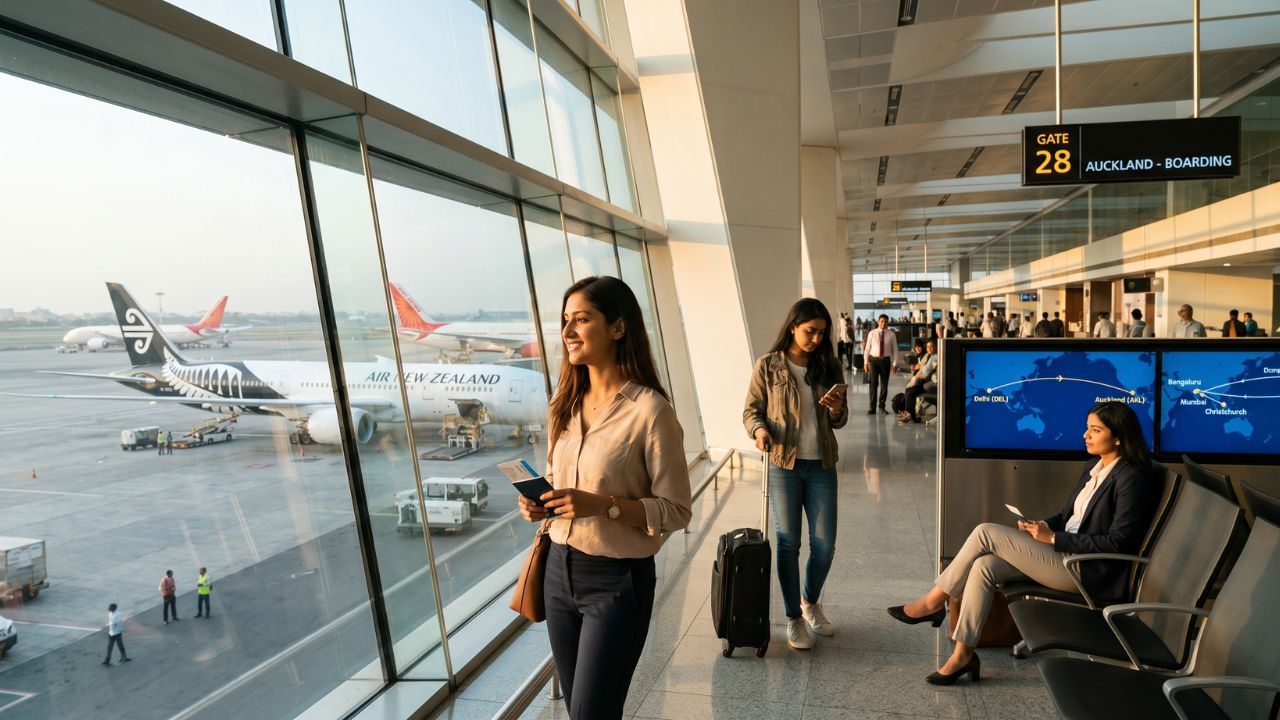
Image generated by AI
In a massive strategic pivot designed to permanently eradicate the grueling travel chaos associated with multi-leg trans-Pacific transit, Air New Zealand is aggressively preparing to launch a direct, nonstop aviation bridge connecting Auckland to New Delhi by late 2028. Driven by surging South Asian passenger demand and a heavily expanded 2025 Memorandum of Understanding (MoU) with Air India, the two aviation titans are actively integrating a massive 16-route codeshare network. By weaponizing a highly capable fleet of 115 aircraft, including advanced Boeing 777 and 787 widebodies, Air New Zealand intends to physically shield passengers from the brutal airport disruptions and routine flight cancellations that plague legacy transit hubs like Singapore and Sydney. This spectacular realignment of the South Asia–Oceania travel corridor represents the premier headline in today's breaking airline news and global aviation updates.
By introducing direct passenger coordination and dynamic scheduling backups, the regional aviation hubs target growing passenger demand across vital commerce sectors. The choice to coordinate flight departures in phases helps to manage gate capacity, supporting the country's broader regional transportation network.
Context: The Eradication of the Multi-Hub Nightmare
For decades, the South Asia to Oceania transit corridor has been highly lucrative but completely fragmented.
Currently, passengers attempting to travel from Mumbai or Delhi to Auckland are forced into exhausting, multi-ticket layovers across intermediate mega-hubs like Singapore Changi, Sydney, or Melbourne. This highly inefficient model exposes travelers to immense friction: lost baggage, missed connections, and crippling transit fatigue. However, driven by a newly inked free trade agreement and explosive outbound Indian tourism, the calculus has fundamentally shifted. The Indian diaspora is now the third-largest ethnic group in New Zealand, creating an incredibly stable, year-round baseline of Visiting Friends and Relatives (VFR) traffic. By combining this demographic force with surging student migration, Air New Zealand has identified the Auckland-Delhi route as a high-yield goldmine ready for immediate, nonstop exploitation.
To view live flight schedules, real-time terminal maps, or check-in rules at the New Zealand mega-hub, travelers can consult the official Auckland Airport (AKL) directory. For direct booking access, specific baggage rules, and codeshare itinerary planning, passengers can check the official Air New Zealand or Air India portals. To explore live flight tracking, check delay maps, or monitor exact Boeing 787 fleet routing, passengers can consult the official FlightAware tracking service.
Section-Wise Breakdown of the Nonstop Aviation Strategy
The 16-Route Data-Mining Partnership
The expanded MoU signed between Air New Zealand and Air India is not merely a codeshare; it is a highly sophisticated data-mining operation. The two carriers have currently linked 16 major routes connecting Indian megacities (Delhi, Mumbai, Bengaluru, Chennai) to New Zealand hubs (Auckland, Christchurch, Wellington, Queenstown) via existing transit points (Singapore, Sydney, Melbourne). By tracking exactly how thousands of passengers flow through these indirect routes on single tickets, Air New Zealand is capturing the precise seasonal data required to guarantee the profitability of the future direct 2028 flight.
Unleashing the 115-Aircraft Fleet
To execute an ultra-long-haul mission across the Indian Ocean, a carrier requires absolute hardware superiority. Air New Zealand’s massive operational fleet of 115 aircraft is anchored by highly advanced Boeing 777 and Boeing 787 Dreamliner widebodies. These specific airframes provide the exact fuel efficiency and extended-range capabilities necessary to execute the grueling 14-hour jump from Auckland to Delhi without sacrificing premium payload capacity or triggering restrictive weight limits.
Triangulating the South Pacific
By forging this massive partnership with Air India—while simultaneously maintaining strong historical ties with Singapore Airlines—Air New Zealand is strategically triangulating the entire South Pacific. This aggressive network maneuver forces legacy Southeast Asian transit hubs to recognize that their historical monopoly over connecting Indian traffic is rapidly coming to an end.
Technical Roster: The Air New Zealand – Air India Codeshare Network
To ensure absolute factual accuracy regarding the massive scale of this aviation integration leading up to the 2028 nonstop launch, the following table details the specific metropolitan hubs currently linked within the 16-route codeshare ecosystem:
| Network Segment | Specific Cities & Mega-Hubs Integrated |
|---|---|
| Indian Megacities (Origins) | Delhi, Mumbai, Bengaluru, Chennai |
| New Zealand Destinations | Auckland, Christchurch, Wellington, Queenstown |
| Current Strategic Transit Hubs | Singapore, Sydney, Melbourne |
| Deployed Widebody Fleet | Boeing 777 and Boeing 787 Dreamliners |
Passenger Impact: The End of Travel Fatigue
For the Indian diaspora, international students, and corporate travelers, the introduction of a direct Auckland-Delhi route in 2028 will fundamentally transform the physical and psychological toll of the journey.
Currently, a one-way trip from Bengaluru to Wellington easily consumes 24 to 30 grueling hours of transit, navigating multiple security checkpoints, aggressive border controls in Australia or Singapore, and the constant threat of missed connections. A direct flight eradicates this friction entirely. Passengers will check their baggage once in Delhi and retrieve it in Auckland, effectively reclaiming up to 10 hours of lost travel time. This structural shift guarantees massive improvements in scheduling reliability and practically eliminates the threat of terminal-induced travel chaos.
Industry Analysis: Building Ecosystem-Driven Connectivity
Aviation industry analysts view Air New Zealand's methodical march toward a 2028 nonstop launch as a masterclass in modern aviation strategy.
Instead of speculatively launching a $200 million long-haul route based on outdated demographic assumptions, Air New Zealand is using its 16-route codeshare with Air India to "pre-build" the corridor. Mr. Anup Kumar Keshan, Founder and Editor-in-Chief of Travel And Tour World (TTW), explicitly identified this structural shift, noting that the initiative reflects a deeper transformation in global aviation logic. "Airlines are no longer simply expanding routes—they are building ecosystem-driven connectivity powered by trade, education, and diaspora flows," Keshan observed. If successfully executed, this strategy transforms India and New Zealand from indirect travel endpoints into dominant, fully integrated long-haul aviation partners.
Actionable Advice for South Asia-Oceania Travelers in 2026
While waiting for the direct 2028 flights to launch, travelers utilizing the current Air New Zealand and Air India codeshare network should execute this tactical survival checklist:
- Demand a Single-Ticket Itinerary: Never purchase separate, 'hacked' tickets to cross the Pacific. Always book your entire journey from Mumbai to Auckland on a single codeshare ticket. If your Air India flight is delayed arriving in Singapore, the single ticket legally forces Air New Zealand to rebook you for free.
- Exploit Singapore Changi Over Australia: When selecting your transit hub for the codeshare, always prioritize Singapore over Sydney or Melbourne. Australia maintains highly aggressive transit visa requirements for Indian passport holders, whereas Changi allows for seamless, frictionless international connections.
- Pre-Select Premium Economy: Because you are currently forced to endure a multi-leg, 20+ hour journey, standard Economy Class induces massive physical fatigue. Aggressively target Air New Zealand's highly rated Premium Economy cabin on the Boeing 787 for the massive over-water segment.
- Monitor the 2028 Launch Dates: Aviation regulators generally approve new ultra-long-haul routes 12 months in advance. Set industry alerts for late 2027 to aggressively secure the inaugural, highly discounted direct fares between Auckland and Delhi.
FAQ: Air New Zealand's India Expansion Strategy
When is Air New Zealand planning to launch direct flights to India?
Air New Zealand is aggressively evaluating passenger data with the strategic goal of launching a direct, nonstop aviation bridge between Auckland and New Delhi by late 2028.
How are passengers currently traveling between the two countries?
Travelers are currently utilizing a massive 16-route codeshare partnership between Air New Zealand and Air India, transiting primarily through mega-hubs like Singapore, Sydney, and Melbourne.
What aircraft will fly the nonstop route?
Air New Zealand will utilize its highly advanced widebody fleet, deploying extended-range Boeing 777 and Boeing 787 Dreamliner aircraft capable of executing the grueling ultra-long-haul mission.
Redefining the South Pacific
The massive aviation push by Air New Zealand and Air India to connect Auckland and Delhi directly by 2028 proves that the era of Southeast Asian transit hub dominance is rapidly ending. By weaponizing a 115-aircraft fleet and exploiting the explosive demand of trade, students, and a massive diaspora, these two legacy carriers are building a high-speed, frictionless bridge across the Indian Ocean. When the first Boeing Dreamliner touches down in Delhi, it will instantly eradicate decades of grueling travel chaos, permanently cementing a new, hyper-efficient era of global intercontinental transit.
Key Takeaways
- Nonstop Launch by 2028: Air New Zealand is actively preparing to launch direct, nonstop flights linking Auckland to New Delhi by late 2028.
- Massive Codeshare Network: A 2025 MoU with Air India has successfully integrated 16 major routes across India, New Zealand, and strategic transit hubs.
- Data-Driven Strategy: The current indirect codeshare network serves as a massive data-mining operation to absolutely guarantee the profitability of the future direct route.
- Widebody Superiority: The nonstop route will be executed utilizing Air New Zealand's highly capable Boeing 777 and Boeing 787 Dreamliner fleet.
- Eradicating Transit Friction: The direct flight will completely bypass congested Asian and Australian mega-hubs, saving travelers up to 10 hours of grueling transit time.
Related Travel Guides
Los Angeles Labor Crisis Triggers Massive Flight Disruptions for Global Airlines
Asia Plunged Into Travel Chaos as 61 Flights Cancelled Across Major Hubs
Air New Zealand Auckland to Delhi Route Launch Discussion on Reddit
Disclaimer
This article is for informational and educational purposes only. It does not constitute legal, financial, or professional advice. While we strive to provide accurate and up-to-date information, travel policies, regulations, and conditions change rapidly. Always verify information with official sources before making travel decisions. Nomad Lawyer makes no representations about the accuracy, reliability, completeness, or suitability of the information provided. Readers should consult qualified professionals for advice specific to their circumstances. The views expressed in this article are those of the author and do not necessarily reflect the views of Nomad Lawyer.
Kunal K Choudhary
Co-Founder & Contributor
A passionate traveller and tech enthusiast. Kunal contributes to the vision and growth of Nomad Lawyer, bringing fresh perspectives and driving the community forward.
Learn more about our team →