
Air India, IndiGo Crippled as Mumbai IMD Red Alert Sparks High Tide Flood, Travel Chaos 2026
Air India and IndiGo operations crippled as Mumbai monsoon IMD Red Alert triggers 4.26-metre high tide flood threat, causing total urban travel breakdown across airport, rail, and road networks.

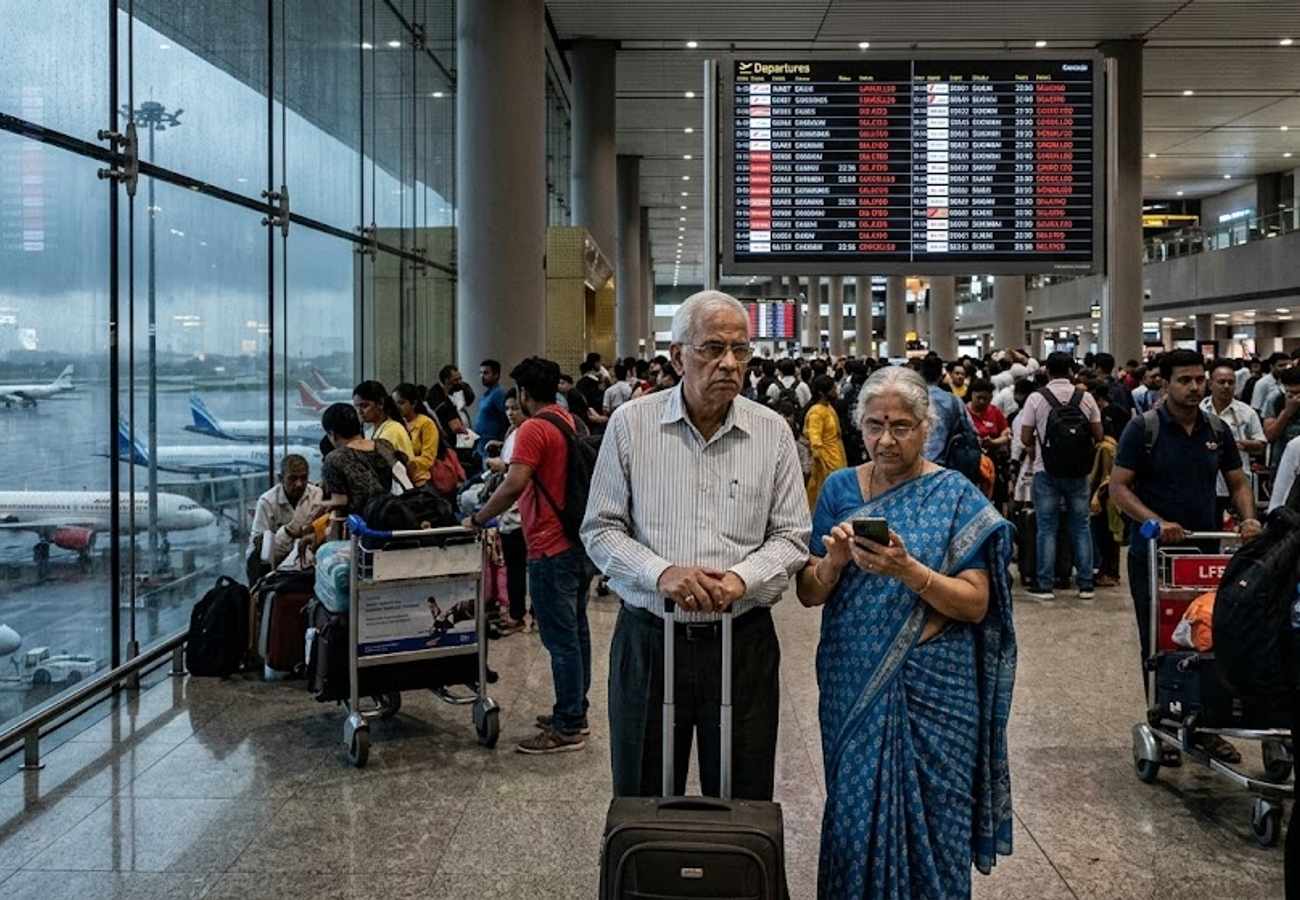
Image generated by AI
Mumbai's aviation and urban transport infrastructure collapsed on July 4, 2026, as an extended IMD Red Alert paralyzed the Mumbai Metropolitan Region. Air India and IndiGo flights at Chhatrapati Shivaji Maharaj International Airport faced cascading delays, while wind speeds of 60 kmph and a 4.26-metre high tide triggered total urban travel breakdown across the city.
The Red Alert covers Mumbai, Thane, Palghar, Raigad, Ratnagiri, and Sindhudurg, with Palghar district under extended warning through July 5. The Brihanmumbai Municipal Corporation has issued strict coastal advisories as tidal surges threaten to push seawater into low-lying zones, compounding already severe flooding from relentless monsoon downpours.
IMD Red Alert: Coastal Maharashtra Under Sustained Weather Assault
The India Meteorological Department has maintained its Red Alert across the Mumbai Metropolitan Region as active monsoon systems continue to pound the western coastline. Moisture-laden winds from the Arabian Sea are feeding storm systems over coastal Maharashtra, creating conditions that authorities describe as highly dynamic and potentially dangerous.
Weather monitoring stations have recorded low visibility, sudden bursts of intense rainfall, and strong wind gusts that have created repeated flooding cycles in vulnerable pockets of the city. Areas with limited drainage capacity are particularly at risk, with rapid water accumulation possible during peak rainfall intervals.
Palghar district remains under extended alert through July 5, reflecting continued atmospheric instability across the broader region. The IMD has cautioned that conditions remain highly volatile, with rapid intensification possible at short notice. Travelers can monitor real-time updates through the IMD's official weather portal.
4.26-Metre High Tide Triggers Coastal Flood Emergency
A significant 4.26-metre high tide has added another critical layer of risk to Mumbai's already stressed drainage infrastructure. The Brihanmumbai Municipal Corporation has issued strict coastal advisories as tidal surges threaten to push seawater into low-lying urban zones, including residential neighborhoods and commercial districts.
Beaches, sea-facing roads, and promenade areas have been flagged as high-risk zones due to the combined impact of tidal rise and heavy rainfall runoff. The city's stormwater drainage system is under severe pressure, with backflow risks increasing in several coastal and creek-adjacent regions.
Low-lying neighborhoods face heightened vulnerability as water accumulation continues to outpace natural drainage capacity. Authorities are closely tracking tide cycles to prevent further inundation of residential and commercial areas along the coastline. The BMC has activated its emergency monsoon response portal for real-time flood monitoring and citizen complaints.
Air India and IndiGo Operations Hit at Mumbai Airport
Air traffic movement at Chhatrapati Shivaji Maharaj International Airport has been heavily disrupted as both Air India and IndiGo operate under continuous weather-related constraints. Poor visibility conditions combined with gusty winds have led to widespread delays and schedule adjustments across domestic and international routes.
While flight operations remain technically active, turnaround times have increased significantly due to congestion and weather-related constraints. Multiple arrivals and departures are experiencing cascading delays, affecting connectivity through Mumbai's aviation hub to destinations across India and beyond.
Airport ground teams are actively managing passenger flow, but congestion levels have surged as travelers continue arriving without real-time updates. Airlines have reinforced advisories urging passengers to check flight status before heading to the airport. Live flight status can be checked at the CSMIA official portal.
"Stuck at Mumbai airport T2 for 7 hours. IndiGo rebooking queue is insane — must be 300+ people. Air India says next available Delhi slot is tomorrow 6am. No hotel vouchers. Terminal is packed with stranded passengers." — r/india
Mumbai Suburban Rail Network Under Waterlogging Siege
The Mumbai suburban railway system, one of the busiest commuter networks in the world, is under severe strain due to widespread waterlogging across key stretches. The Western Railway line has been particularly impacted, with disruptions reported between Nalasopara and Virar.
Train movement across Western, Central, and Harbour lines continues but at significantly reduced speeds, resulting in delays of 20 minutes or more across multiple routes. Commuters are facing overcrowding and extended waiting times as services struggle to maintain frequency under adverse conditions.
Water accumulation on tracks has forced precautionary speed restrictions to ensure passenger safety. The cascading effect of delays has led to congestion at major stations, with passenger flow increasingly difficult to manage during peak commuting hours.
Road Transport Paralyzed Across Key Mumbai Corridors
Road connectivity across Mumbai has been severely affected, with multiple arterial routes experiencing heavy waterlogging. Areas including Mahim, Andheri, Kurla, Sakinaka, Chembur, and stretches of Navi Mumbai such as Turbhe and the Thane–Belapur corridor are facing near-paralyzed traffic conditions.
Vehicle movement has slowed dramatically as submerged roads and reduced visibility create hazardous driving conditions. Emergency crews have been deployed to manage stalled vehicles and clear blocked routes, but continuous rainfall is limiting restoration speed.
The situation has been further complicated by infrastructure incidents, including over 90 reported tree falls, multiple short circuits, and localized structural damage cases. These disruptions have compounded travel delays and increased pressure on emergency response systems across the metropolitan region.
Government Issues Emergency Advisory as Disaster Teams Deploy
Maharashtra state authorities, led by the Chief Minister, have issued strong advisories urging residents across the Mumbai Metropolitan Region and adjoining areas to avoid non-essential travel. The advisory aims to reduce pressure on transport systems already operating under severe weather constraints.
Emergency response units, including the National Disaster Response Force (NDRF) and State Disaster Response Force (SDRF), have been deployed across critical flood-prone locations. Their operations include monitoring high-risk zones, assisting in emergency situations, and supporting municipal recovery efforts.
Public alert systems have been activated to deliver frequent weather updates, ensuring continuous communication with residents. Disaster management teams remain on high alert as rainfall patterns continue to fluctuate across the region.
What to Do Next: Actionable Advice for Affected Travelers
If you are currently in Mumbai or have travel plans through the city in the next 48 hours, take the following steps:
- Check flight status before leaving for the airport. Both Air India and IndiGo are issuing real-time updates via their respective apps and websites. Do not proceed to the terminal without confirming your departure time.
- Avoid non-essential road travel across Mahim, Andheri, Kurla, Sakinaka, Chembur, and the Thane-Belapur corridor. Submerged roads and reduced visibility are creating hazardous driving conditions.
- Expect rail delays of 20 minutes or more across Western, Central, and Harbour lines. The Western Railway stretch between Nalasopara and Virar is particularly affected by waterlogging.
- Stay away from coastal areas, beaches, and sea-facing promenades. The 4.26-metre high tide combined with rainfall runoff creates significant flood risk in these zones.
- Keep emergency contact numbers accessible. The NDRF and SDRF are deployed across flood-prone locations. Contact municipal emergency services for assistance with waterlogging or structural damage.
- Rebook flexible tickets immediately. Airlines are experiencing high rebooking volumes, and available slots for the next 24-48 hours are filling rapidly across both carriers.
- Carry essential supplies if you must travel, including charged power banks, bottled water, and medications. Transport disruptions may strand you for extended periods at stations or terminals.
Travel Outlook: Next 24-48 Hours Remain Highly Unstable
The overall travel environment across Mumbai remains severely disrupted, with aviation, rail, and road networks operating under sustained pressure. Continued rainfall activity and tidal influence are expected to maintain challenging conditions for the next 24 to 48 hours.
Transport operations are prioritizing safety over schedule normalization, resulting in ongoing delays and unpredictable travel patterns across all major transit systems. The combined impact of flooding, infrastructure strain, and weather volatility has created one of the most significant urban travel disruptions in recent monsoon cycles across western India.
Travelers with plans routing through Mumbai through July 6 should maintain flexible itineraries and monitor official channels for rapid weather updates. The IMD Red Alert remains active, and authorities have indicated that conditions could worsen before any meaningful improvement.
Mumbai's monsoon has turned the city into a no-go zone for travelers — if your journey isn't essential, stay put until the Red Alert lifts.
Related Travel Guides
Disclaimer
This article is for informational and educational purposes only. It does not constitute legal, financial, or professional advice. While we strive to provide accurate and up-to-date information, travel policies, regulations, and conditions change rapidly. Always verify information with official sources before making travel decisions. Nomad Lawyer makes no representations about the accuracy, reliability, completeness, or suitability of the information provided. Readers should consult qualified professionals for advice specific to their circumstances. The views expressed in this article are those of the author and do not necessarily reflect the views of Nomad Lawyer.
Preeti Gunjan
Contributor & Community Manager
A passionate traveller and community builder. Preeti helps grow the Nomad Lawyer community, fostering engagement and bringing the reader experience to life.
Learn more about our team →