
Air Europa, Iberia, Air Canada Ground 6 Flights at Madrid–Barajas Airport, Disrupting Routes Across Spain, Europe, US, UAE in June 2026
Six flights grounded at Madrid–Barajas Airport as Air Europa, Iberia, and Air Canada report cancellations and delays affecting travelers across 50+ international destinations spanning Europe, North America, and the Middle East.

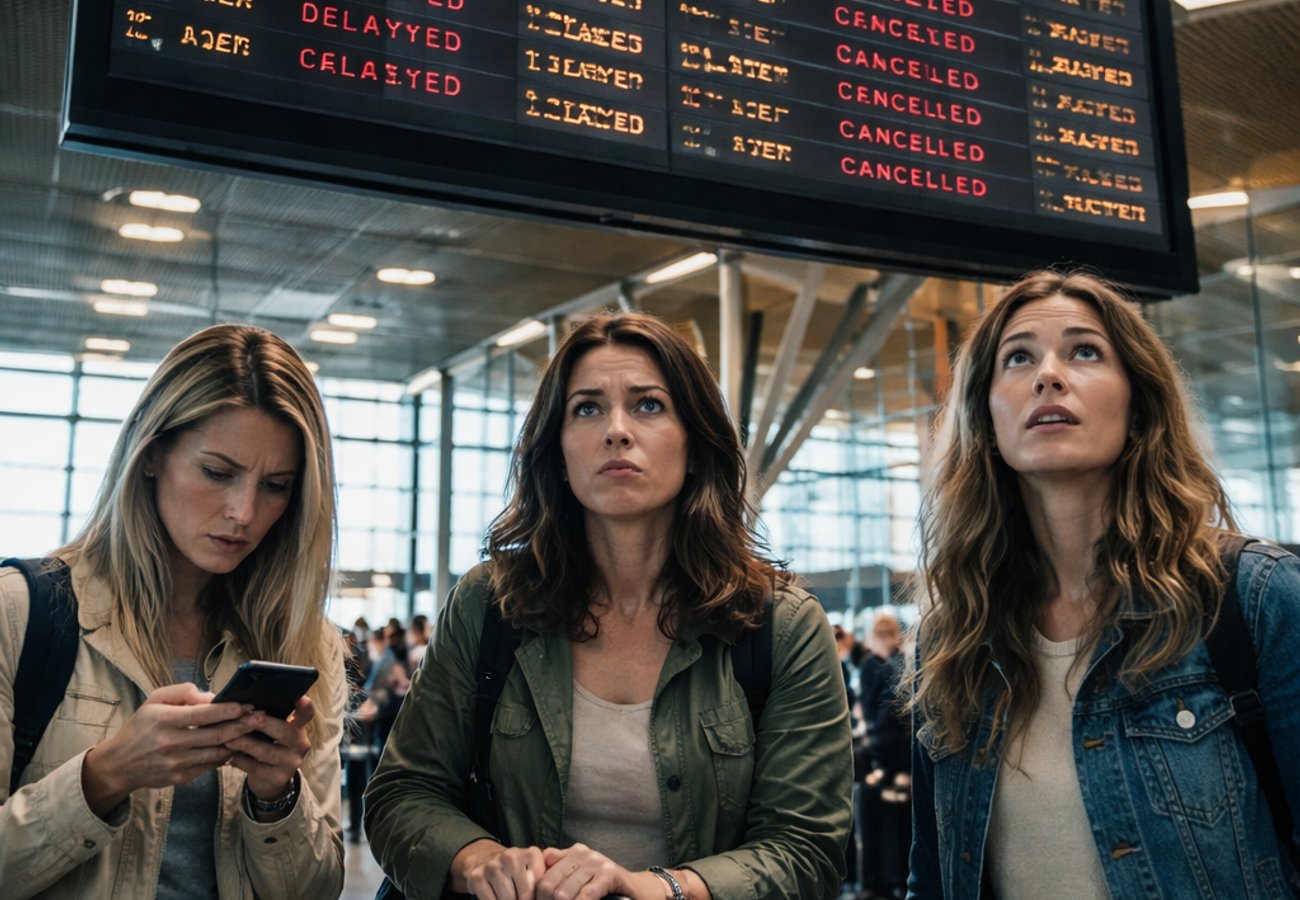
Image generated by AI
Chaos Unfolds at Madrid's Busiest Hub
Adolfo Suárez Madrid–Barajas Airport descended into operational turmoil on June 6, 2026, as three major carriers—Air Europa, Iberia, and Air Canada—grounded a combined six flights while reporting cascading delays that rippled across their entire European and intercontinental networks. Passengers heading to destinations spanning Spain, Germany, the UK, the UAE, the US, and beyond found themselves stranded, rebooked, or facing significant schedule disruptions.
The operational crisis illustrated a harsh reality of modern hub aviation: even a handful of grounded aircraft at a major transit point can trigger widespread chaos across an interconnected web of routes. Reddit users tracking the disruption captured the sentiment accurately.
Reddit: "Lost 8 hours because of one cancelled flight at MAD. Three airlines all affected at once? This is ridiculous." — r/travel
The Numbers Behind the Disruption
The scale of the incident became immediately apparent when FlightAware's real-time tracking data was released. Air Europa recorded the highest toll with three cancelled flights and 26 delayed departures or arrivals. Iberia, Spain's national carrier, grounded two aircraft while managing 29 delays across its schedule. Air Canada cancelled one flight—a particularly significant impact given that single cancellation represented 25% of the airline's scheduled operations at Madrid–Barajas that day.
Combined, these six cancellations triggered a domino effect across 55+ cities worldwide.
Which Cities Felt the Pain?
The disruption created a sprawling geographic footprint that extended well beyond Spain's borders. Major European hubs like Frankfurt, Paris, London, Amsterdam, and Brussels reported significant delays. Business travelers heading to New York City, Boston, Chicago, Dallas, and Newark encountered extended delays. Middle Eastern connections to Abu Dhabi and Doha faced complications, while Latin American services to Buenos Aires, São Paulo, Mexico City, and Panama City experienced cascading delays.
Within Spain itself, secondary hubs suffered intensified pressure: Barcelona, Málaga, Palma de Mallorca, Bilbao, Valencia, Seville, and Alicante all reported congestion as inbound and outbound flights from Madrid were rerouted or delayed.
Madrid remained the epicenter of disruption, with operations strained throughout the day as ground crews worked to accommodate rebooking demands and expedite delayed aircraft.
Air Europa Bears the Heaviest Load
Air Europa, the second-largest airline operating at Madrid–Barajas, absorbed the most significant operational impact. Three cancelled flights and 26 delays represented a substantial portion of the carrier's daily schedule at Spain's busiest airport. Although these three cancellations accounted for only 2% of Air Europa's scheduled operations, the volume of delays (26) suggested systemic cascading effects rather than isolated incidents.
Iberia, despite its massive operational footprint at the airport, recorded two cancellations and 29 delays—numbers that, while smaller in percentage terms, affected thousands of passengers given the airline's larger fleet and schedule density.
Air Canada, with a more limited presence at Madrid–Barajas, suffered proportionally the most severe impact: a single cancellation represented a quarter of its planned operations that day, signaling that international carriers routing through Madrid faced particular vulnerability.
What Passengers Can Actually Do
If your flight gets cancelled or severely delayed, action beats panic. Here's the practical playbook:
Stay Connected and Informed
The moment you receive cancellation notification—whether via email, SMS, or airline app—check the airline's website and your account for rebooking options. Most carriers now offer self-service rebooking through mobile apps or online portals. Don't rely solely on announcements at the airport.
Understand Your Legal Rights
Under EU Regulation 261/2004, passengers booked on flights departing from EU airports are entitled to compensation for cancellations and long delays in certain circumstances. This applies regardless of the airline's nationality. Compensation ranges from EUR 250 to EUR 600 depending on flight distance and circumstances. EU-AECA provides detailed guidance on passenger rights.
Contact the Airline Directly
Use the airline's customer service channels—phone, online chat, or airport service desk. Phone queues are notoriously long during disruptions, so try the app or chat first. Be specific about your booking reference and desired alternative flight. Some passengers secure better rebooking options by being polite but firm about their needs.
Explore Alternative Transportation
If rebooking on the same airline takes longer than acceptable, ask about "care and assistance" provisions. Depending on flight distance and departure time, airlines may provide hotel accommodation, meals, and ground transportation. If airline-sponsored alternatives are insufficient, consider booking alternative flights on competing carriers—you may pursue reimbursement later.
Document Everything
Take screenshots of cancellation notifications, your booking confirmation, and any communications with airline staff. This documentation becomes essential if you later file compensation claims through services like AirHelp or pursue legal remedies.
The Broader Lesson
The June 6, 2026 disruption at Madrid–Barajas exposed the fragility of hub-and-spoke network architecture. A relatively modest number of cancellations—six flights—cascaded into delays affecting 55+ cities across four continents. This pattern repeats regularly at major European aviation hubs where dozens of airlines depend on tight connection windows and limited airport capacity.
For frequent travelers, this reality demands flexibility and contingency planning. Building buffer time into connections, purchasing travel insurance that covers disruptions, and maintaining status with multiple airlines provides practical protection. For nomadic professionals and location-independent workers relying on tight flight schedules, the stakes are even higher.
The incident also highlighted disparities in impact severity: while Iberia's two cancellations represented minimal percentage disruption, Air Canada's single cancellation crushed a quarter of its day's Madrid operations. Network density and schedule concentration directly determine vulnerability to localized disruptions.
The Spanish hub remains resilient, but passengers must remain perpetually prepared.
Related Travel Guides
ITC Hotels Record Revenue Hits INR 4,139 Crore in FY26 Amid Global Uncertainty
Passengers Stuck Columbia Metro: 7 Flight Delays, 2 Cancellations Disrupt Delta, American
Disclaimer
This article is for informational and educational purposes only. It does not constitute legal, financial, or professional advice. While we strive to provide accurate and up-to-date information, travel policies, regulations, and conditions change rapidly. Always verify information with official sources before making travel decisions. Nomad Lawyer makes no representations about the accuracy, reliability, completeness, or suitability of the information provided. Readers should consult qualified professionals for advice specific to their circumstances. The views expressed in this article are those of the author and do not necessarily reflect the views of Nomad Lawyer.
Raushan Kumar
Founder & Lead Developer
Full-stack developer with 11+ years of experience and a passionate traveller. Raushan built Nomad Lawyer from the ground up with a vision to create the best travel and law experience on the web.
Learn more about our team →