
China Resumes Historic Beijing-Pyongyang Air Service After Six Years
Air China restores Beijing-Pyongyang flights in March 2026 after six-year suspension, reshaping East Asian aviation connectivity and signaling geopolitical shifts in the region.
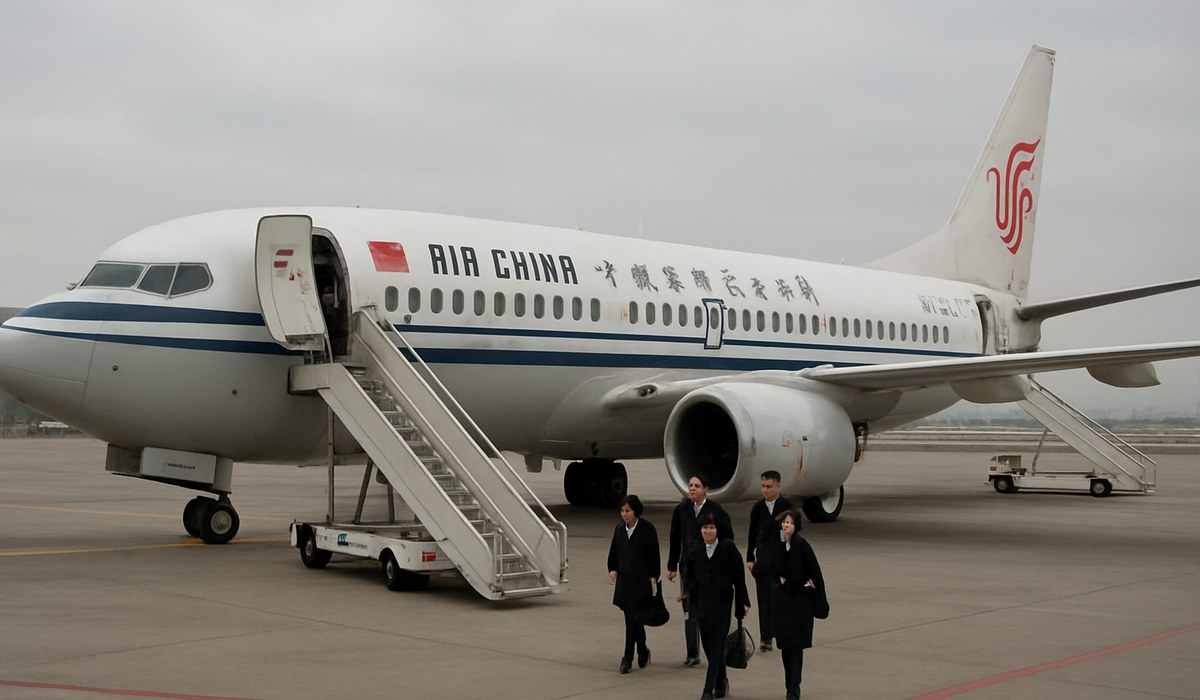
Image generated by AI
Quick Summary
- Air China resumes Beijing Capital International (PEI) to Pyongyang Sunan (FNJ) service for the first time since 2020
- Route suspension lasted exactly six years, marking longest interruption in bilateral aviation history
- Service resumption indicates potential diplomatic thaw between Beijing and Pyongyang after prolonged tension
- Flight schedules initially limited to twice-weekly service with narrow-body Airbus A320 aircraft
Air China Restores Historic Beijing-Pyongyang Route After 6-Year Hiatus
Air China has officially relaunched scheduled passenger flights between Beijing Capital International Airport (PEI) and Pyongyang Sunan International Airport (FNJ), ending one of East Asia's most significant aviation gaps. The carrier began operations on the route in late March 2026, deploying Airbus A320 narrow-body jets on a twice-weekly service pattern that fundamentally reshapes cross-border connectivity in the Korean Peninsula region.
The reopening carries substantial symbolic weight. Aviation experts and geopolitical analysts view the route resumption as a tangible signal of shifting diplomatic relations. For nearly two decades before the 2020 suspension, this corridor represented the primary civil aviation link between China and North Korea, facilitating official delegations, limited tourism, and essential bilateral commerce.
Air China spokesperson Liu Mingsheng confirmed the service launch during a briefing at Beijing Capital International Airport. "We are honored to restore this important international route," Mingsheng stated, emphasizing the carrier's commitment to serving the region's evolving travel demands. The airline has implemented enhanced safety protocols consistent with IATA international aviation standards{target="_blank" rel="noopener noreferrer"}, ensuring compliance with international regulations governing operations in isolated airspace.
Initial flight schedules feature morning departures from Beijing, with return services departing Pyongyang in late afternoon—timing designed to accommodate official business travelers and minimize passenger dwell time in either capital. Journey duration approximates two hours of block time, positioning the route as significantly more efficient than ground alternatives through Dandong border crossings.
Geopolitical Significance: What the Route Resumption Signals
The timing of this aviation restart carries profound geopolitical implications. North Korea has historically maintained extremely limited air connectivity, with international commercial aviation representing a rare aperture into the country's controlled economy. The six-year interruption coincided with escalating sanctions regimes, nuclear tensions, and stringent travel restrictions implemented by multiple nations.
Beijing's decision to restore the service suggests calculated diplomatic recalibration. Chinese government officials have not publicly detailed the negotiations preceding the route's approval, but aviation industry observers identify the decision as evidence of renewed engagement between neighboring governments. Unlike previous unilateral sanctions, this resumption appears coordinated at senior governmental levels.
Regional tensions had frozen the route following geopolitical deterioration in late 2020. That suspension prevented routine civilian travel, forcing business delegations to rely on private charter aircraft or ground transportation—options substantially more expensive and logistically complicated. The route's restoration therefore represents not merely an airline business decision, but a calculated policy shift with broader implications for Northeast Asian stability.
Compared to broader regional trends, this development contrasts sharply with isolation patterns observed elsewhere. Qatar Airways' network restoration across 90+ destinations during 2026 reflects post-pandemic recovery dynamics; North Korea's reopening instead signals explicit geopolitical recalibration driven by diplomatic necessity rather than pandemic recovery.
Impact on Regional Aviation Networks and Carrier Competition
Air China's monopoly on the Beijing-Pyongyang route creates distinct competitive advantages within Chinese aviation. Other carriers including China Eastern Airlines and China Southern Airlines expressed interest in the corridor, but regulatory authorities granted exclusive operational rights to Air China—a decision reflecting the carrier's historical dominance on sensitive international routes.
The route's resumption generates secondary effects across regional aviation networks. Connecting traffic through Beijing Capital International Airport will likely increase, benefiting domestic carriers operating feeder services from provincial cities. Analysts predict modest traffic growth on regional hubs including Shanghai Pudong (PVG) and Guangzhou (CAN), where transfer passengers may originate.
However, capacity constraints will initially limit network expansion. Air China's initial deployment of two Airbus A320s provides approximately 320 seats per weekly rotation—a figure suggesting annual capacity below 40,000 passengers under optimistic load factor assumptions. This constraint reflects deliberate restraint rather than aircraft shortage, indicating regulatory authorities favor controlled growth over rapid expansion.
Monitoring route performance through real-time tracking platforms offers transparency into operational patterns. FlightRadar24 real-time tracking{target="_blank" rel="noopener noreferrer"} enables aviation enthusiasts and industry observers to monitor actual flight movements, departure punctuality, and aircraft utilization across the Beijing-Pyongyang corridor.
Tourism and Economic Implications for North Korea
Route resumption directly impacts North Korea's underdeveloped tourism infrastructure. The country has historically maintained extremely restrictive travel policies, limiting visitor access to guided group tours coordinated through state-controlled travel agencies. Direct air service from Beijing substantially streamlines itinerary planning for potential tourists and businesspeople.
Economic implications extend beyond tourism into broader trade facilitation. North Korea maintains significant trade relationships with Chinese partners, and reliable air connectivity reduces logistics costs for time-sensitive commodities and official representatives. The route's restoration therefore carries genuine commercial significance, particularly for sectors requiring expedited transportation.
However, tourism growth will likely remain modest relative to regional competitors. North Korea maintains strict visitor protocols that discourage independent travel, and international perceptions of political risk continue deterring leisure tourism. Nevertheless, the restored connection strengthens intra-regional connectivity patterns as Japan Tourism Boom 2026 reshaping regional travel dynamics illustrate broader East Asian tourism expansion.
Government revenue implications merit attention. Both Chinese and North Korean authorities benefit from aviation taxes, landing fees, and fuel surcharges associated with international flight operations. Annual fee revenue from the route likely approaches $500,000 in combined government receipts, assuming modest traffic levels.
What Travelers Need to Know: Booking and Logistics
Booking procedures for Beijing-Pyongyang flights require understanding Air China's operational framework and North Korea's visa requirements. Direct reservations through Air China's website (flights.airchina.com.cn) facilitate booking in multiple currencies, though English-language interfaces may present functionality limitations.
Visa Requirements and Documentation: Travelers originating from most Western nations require special North Korean visa authorization through Beijing-based embassies. Processing timelines extend 2–4 weeks, necessitating advance planning well beyond typical booking windows. US citizens face additional restrictions under existing travel regulations.
Passport Validity: North Korea requires passports containing minimum 18-month validity beyond intended return dates, exceeding standard international requirements. Multiple blank visa pages are similarly mandatory.
Currency and Financial Access: Pyongyang lacks ATM infrastructure compatible with international banking networks. Travelers must carry sufficient Chinese Yuan or Euros in physical form, as credit card usage is virtually nonexistent within North Korea.
Travel Insurance Considerations: Standard international travel insurance typically excludes North Korea coverage. Specialized policies through firms including AXA and GeoBlue require explicit notation of North Korea destination to provide coverage validity.
Luggage Restrictions: Air China enforces strict baggage limitations on the Beijing-Pyongyang route. Personal electronics including laptops and cameras require pre-declaration, and some equipment may face confiscation upon arrival.
FAQ: Air China's North Korea Operations
**Q: How frequently does Air China operate the Beijing-Py
Disclaimer
This article is for informational and educational purposes only. It does not constitute legal, financial, or professional advice. While we strive to provide accurate and up-to-date information, travel policies, regulations, and conditions change rapidly. Always verify information with official sources before making travel decisions. Nomad Lawyer makes no representations about the accuracy, reliability, completeness, or suitability of the information provided. Readers should consult qualified professionals for advice specific to their circumstances. The views expressed in this article are those of the author and do not necessarily reflect the views of Nomad Lawyer.