
Air Canada Pivots Global Strategy: Expanding Asia, Europe, and Latin America Routes in 2026
Air Canada is reallocating capacity from U.S. transborder routes toward high-yield long-haul markets in Asia, Europe, and Latin America to diversify revenue and capture sixth-freedom traffic.

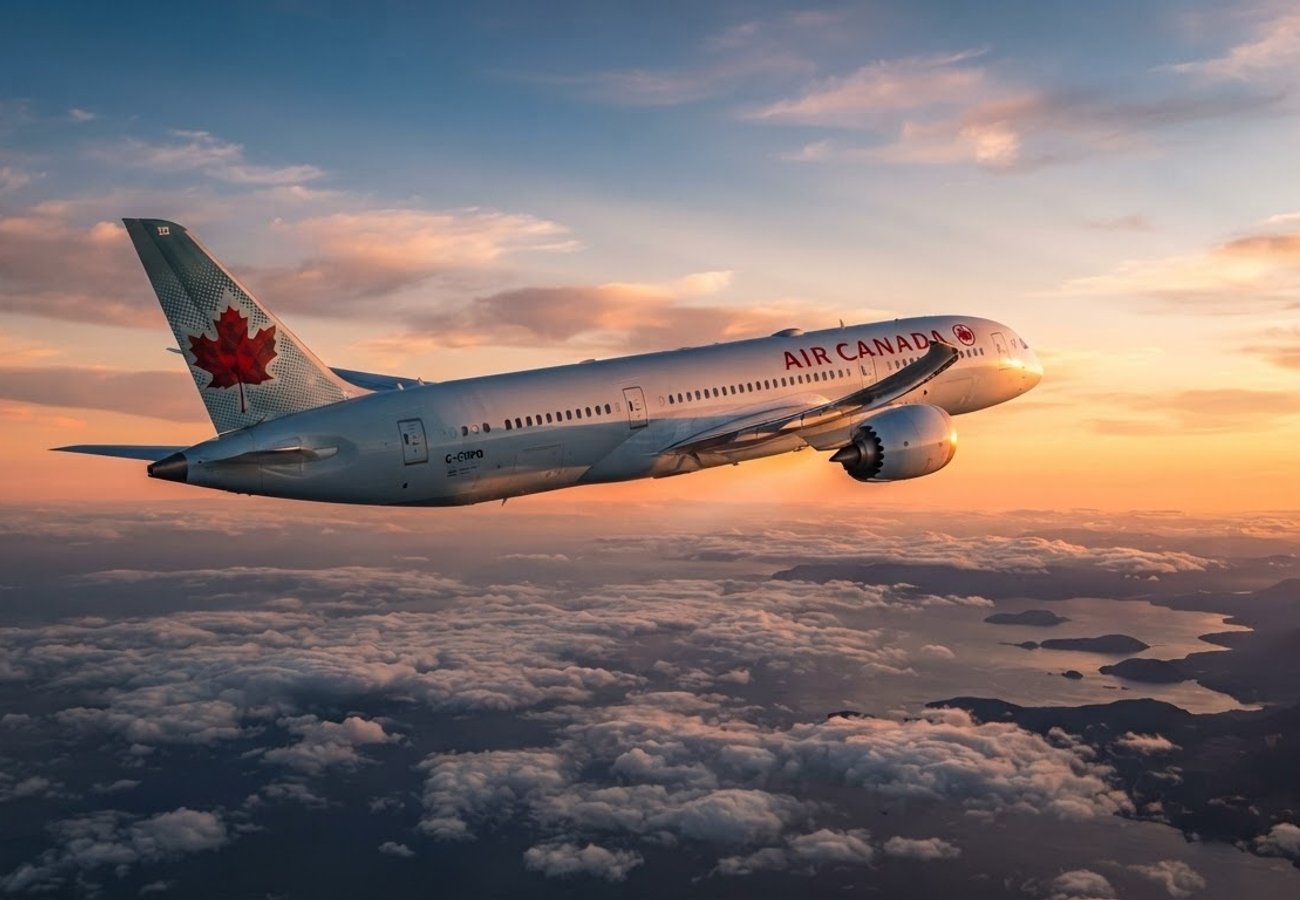
Image generated by AI
Air Canada is aggressively shifting its capacity away from the saturated U.S. transborder market to prioritize high-yield growth in Asia-Pacific, Europe, and Latin America.
The carrier is repositioning its Toronto, Montreal, and Vancouver hubs to function as primary gateways for "sixth-freedom" traffic—connecting passengers from the United States to overseas destinations via Canada—rather than relying on the lower-margin Canada-U.S. corridor.
Strategic Reallocation of Global Capacity
Air Canada's current network strategy reflects a move toward diversification. With a portfolio of over 80 international destinations, the airline is mitigating the risks associated with the highly competitive North American marketplace. Management data from 2024 indicates that while U.S. passenger revenues have seen modest growth, the margins on transborder routes have tightened significantly compared to long-haul international sectors.
By steering incremental widebody capacity toward intercontinental markets, Air Canada is targeting the surge in leisure and "visiting-friends-and-relatives" (VFR) traffic. This shift is designed to insulate the carrier from regional cyclical swings by diversifying revenue streams across three primary global pillars.
Regional Expansion and Route Specifications
The pivot is most evident in the Asia-Pacific and European sectors, where the airline has implemented significant capacity increases and intermodal partnerships.
Asia-Pacific and Southeast Asia
Capacity in the Asia-Pacific region has climbed by approximately 30% compared to previous years. The strategy leverages Vancouver's geographic advantage to facilitate one-stop connections between Asia and North America.
| Destination/Market | Strategic Update | Key Focus |
|---|---|---|
| Singapore | New route launched from Vancouver | Southeast Asian market penetration |
| Bangkok | Increased seat capacity | High-growth leisure demand |
| Osaka & Seoul | Increased frequencies & larger aircraft | Regional hub connectivity |
| China | Revived and expanded services | Recovery of historical long-haul markets |
| South Korea | Air-to-rail integration via KORAIL | Intermodal catchment expansion |
European Network Growth
The European theater has seen a transition toward a mix of traditional business hubs and high-volume leisure destinations. By the 2025 season, the European offering expanded to 49 routes and approximately 5.85 million seats, up from 45 routes and 5.5 million seats the previous year.
- Capacity Surge: Capacity to Southern European leisure destinations increased by roughly 25%.
- New Destinations: Nonstop services launched to Madrid and Stockholm.
- Intermodal Links: Expanded rail collaborations in Italy (Trenitalia), Spain (Renfe), and the United Kingdom.
- Strategic Partnerships: A codeshare agreement with airBaltic has extended Air Canada's reach into Northern Europe via Riga, Copenhagen, Amsterdam, and Stockholm.
Latin America and the Caribbean
Utilizing the Toronto hub, Air Canada is increasing depth in South America and Mexico. This includes targeting emerging business and cargo flows in Brazil, Colombia, and Ecuador. The airline employs a dual-brand approach, using Air Canada Rouge for Caribbean and Central American leisure routes, while reserving mainline widebody aircraft for high-yield South American corridors.
Traveler Logistics Guide: Navigating the New Network
From a ground-level perspective, the best way to navigate Air Canada’s shifting network is to leverage their new intermodal and hub-and-spoke configurations.
Optimizing Connections in Vancouver (YVR) and Toronto (YYZ) For U.S.-based travelers using Canada as a gateway to Asia or Europe, ensure a minimum layover of 3 hours. While "sixth-freedom" flows are streamlined, customs and security transitions at YVR and YYZ can vary based on peak seasonal traffic.
Utilizing Air-to-Rail Integration The integration with KORAIL (South Korea), Trenitalia (Italy), and Renfe (Spain) allows for single-ticket bookings. To maximize efficiency:
- Book as a Single PNR: Ensure the rail segment is on the same booking reference as the flight to protect your connection in case of flight delays.
- Digital Documentation: Carry digital copies of both flight and rail vouchers, as some European rail operators require specific QR codes for boarding.
Customs and Digital Transit Travelers transiting through Canada should verify their eTA (Electronic Travel Authorization) or visa requirements. For those moving toward Europe, be mindful of the evolving ETIAS requirements to avoid boarding delays.
Infrastructure Impact Assessment
This strategic pivot fundamentally alters regional connectivity. By reducing its reliance on the U.S. market, Air Canada is transforming its hubs from domestic transit points into global intersections. The emphasis on air-to-rail connectivity suggests a long-term move toward "seamless mobility," reducing the reliance on short-haul regional flights which are often prone to delays and higher carbon footprints.
Furthermore, the aggressive expansion into Southeast Asia and Southern Europe positions Air Canada as a primary competitor to U.S. legacy carriers for the lucrative transpacific and transatlantic leisure segments.
The shift toward high-yield international markets marks a definitive end to the era of U.S.-centric growth for Canada's flagship carrier.
Related Travel Guides
Disclaimer
This article is for informational and educational purposes only. It does not constitute legal, financial, or professional advice. While we strive to provide accurate and up-to-date information, travel policies, regulations, and conditions change rapidly. Always verify information with official sources before making travel decisions. Nomad Lawyer makes no representations about the accuracy, reliability, completeness, or suitability of the information provided. Readers should consult qualified professionals for advice specific to their circumstances. The views expressed in this article are those of the author and do not necessarily reflect the views of Nomad Lawyer.
Raushan Kumar
Founder & Lead Developer
Full-stack developer with 11+ years of experience and a passionate traveller. Raushan built Nomad Lawyer from the ground up with a vision to create the best travel and law experience on the web.
Learn more about our team →