
Air Canada CRJ-900 Ground Collision at LaGuardia: Airport Operations Halted March 2026
An Air Canada CRJ-900 collided with emergency ground equipment at New York's LaGuardia Airport on March 23, 2026, prompting the [FAA](https://www.faa.gov) to halt operations. Learn how this incident affects United States-Canada routes and traveler options.

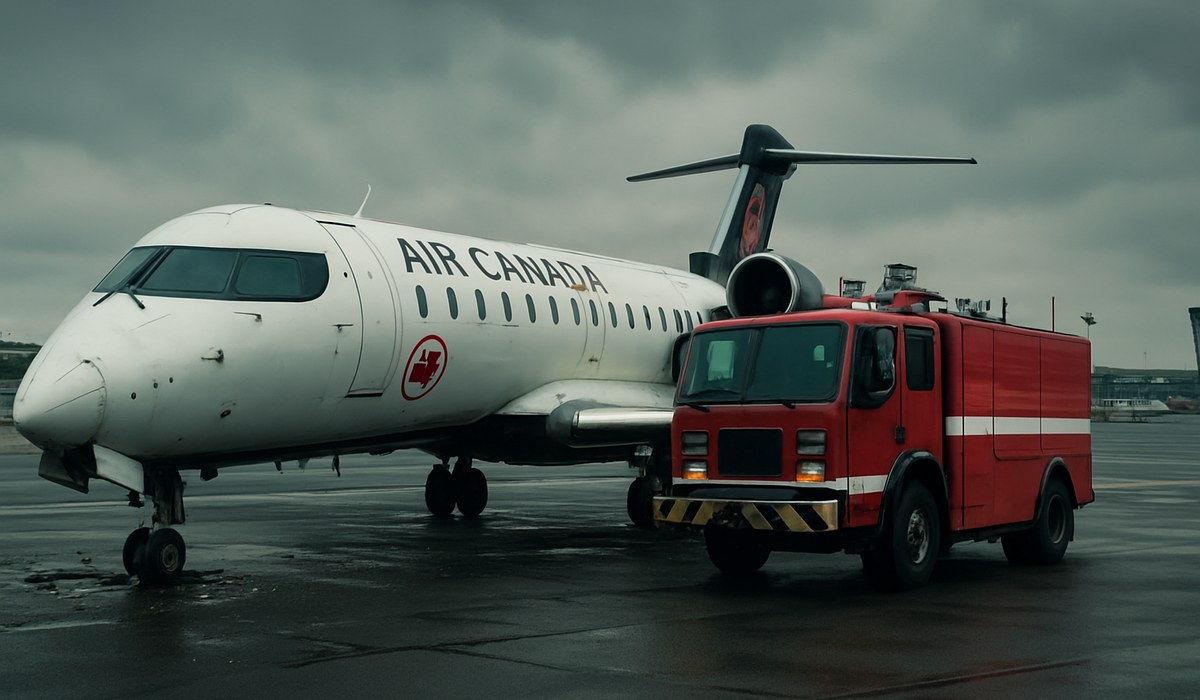
Image generated by AI
Breaking: Air Canada Ground Collision Disrupts New York Travel
Air Canada flight operations ground to a halt at New York's LaGuardia Airport (LGA) on March 23, 2026, after a CRJ-900 regional jet struck emergency response equipment on the tarmac. The Federal Aviation Administration (FAA) immediately suspended operations at the facility to assess airfield safety and prevent additional incidents. This collision marks a significant disruption for travelers on United States-Canada routes during peak spring travel season.
The incident occurred during ground operations when the 50-seat regional aircraft contacted a fire response vehicle positioned near the runway. No serious injuries were reported among crew or emergency personnel. However, the collision triggered comprehensive airfield inspections that resulted in full operational suspension lasting several hours.
Ground Collision Details at LaGuardia Airport
The CRJ-900 aircraft collided with emergency ground equipment during taxiing operations at LaGuardia's runway complex. Air Canada's regional affiliate operated the flight carrying passengers bound for Toronto and Montreal. The moment of impact occurred near taxiway intersection 8217, a high-traffic zone at the New York airport where multiple aircraft maneuver simultaneously.
Fire department units were stationed on the airfield for routine safety protocols when the aircraft failed to maintain proper taxiway clearance. The collision damaged both the aircraft's landing gear assembly and the emergency vehicle's equipment. Ground crews immediately cordoned off the affected runway and taxiway sections. The FAA launched a preliminary investigation while airport authorities rerouted all inbound and outbound traffic.
Air Canada Flight Suspensions and Route Impact
Air Canada suspended all scheduled departures and arrivals at LaGuardia for approximately eight hours following the March 23 incident. The airline operated roughly 18 daily flights from this hub, predominantly connecting New York to Toronto Pearson International Airport (YYZ) and Montreal-Trudeau Airport (YUL). Regional routes serving United States-Canada business corridors experienced significant delays.
The CRJ-900 aircraft involved has been grounded pending damage assessment and airworthiness certification. Air Canada deployed substitute aircraft from nearby facilities to resume operations by late afternoon. Passengers booked on the affected flights received rebooking options to alternative carriers or delayed departure times. The airline activated customer service protocols to address lodging and meal accommodations for stranded travelers.
FAA Operational Halt and Safety Assessment
The Federal Aviation Administration halted all LaGuardia airport operations immediately following the collision report. Runway inspections, taxiway surveys, and ground control system checks consumed approximately 480 minutes. The FAA coordinated with airport management to verify no additional damage existed beyond the immediate collision site.
Safety officials examined runway surface conditions, ground lighting systems, and taxiway markings to ensure continued airfield integrity. The incident triggered mandatory crew briefings about taxiway navigation procedures and ground controller communication protocols. All personnel involved in the collision received medical screening and statement documentation. Visit FlightAware for real-time updates on LaGuardia flight status during recovery operations.
Affected Airlines and Passenger Rebooking
Multiple carriers operating from LaGuardia experienced cascading delays as secondary effects of the initial disruption. American Airlines, Delta Air Lines, and Southwest Airlines diverted inbound aircraft to Newark Liberty International Airport (EWR) and John F. Kennedy International Airport (JFK). The disruption created bottleneck conditions across New York's three-airport system affecting approximately 6,200 passengers through evening hours.
Air Canada arranged alternative transportation for passengers with confirmed reservations. Travelers could rebook on subsequent Air Canada flights or choose partner airlines including United Airlines and Porter Airlines. The airline waived change fees and provided meal vouchers worth $25-$50 depending on delay duration. Customers holding flexible tickets retained full refund eligibility under Department of Transportation regulations.
Traveler Action Checklist
If your flight was affected by this LaGuardia incident, follow these steps:
-
Check your flight status on your airline's mobile app or at FlightAware before heading to the airport.
-
Contact your airline directly via phone or chat rather than relying on automated notifications, which may lag 30-60 minutes behind real developments.
-
Request written confirmation of any rebooking, meal credits, or hotel accommodations in your airline confirmation email.
-
Document all expenses including meals, ground transportation, and overnight lodging with itemized receipts for compensation claims.
-
File a complaint with the U.S. Department of Transportation if your airline failed to provide required accommodations using the DOT consumer complaint form.
-
Review your travel insurance policy to determine eligibility for delay reimbursement if applicable to your booking.
-
Monitor weather and airport conditions for 24-48 hours post-incident, as LaGuardia may experience residual scheduling constraints.
Incident Impact Summary Table
| Metric | Details |
|---|---|
| Airport Code | LGA (LaGuardia, New York) |
| Incident Date | March 23, 2026, 07:52 UTC |
| Aircraft Type | Bombardier CRJ-900 Regional Jet |
| Operating Airline | Air Canada Regional Service |
| Collision Object | Emergency Fire Response Vehicle |
| Taxiway Location | Intersection 8217 North Complex |
| Operational Suspension | Approximately 8 hours (480 minutes) |
| Affected Daily Flights | 18 Air Canada scheduled operations |
| Estimated Passengers Disrupted | 6,200+ across all New York airports |
| Primary Routes Impacted | LGA-YYZ (Toronto), LGA-YUL (Montreal) |
| Causation Status | Under FAA Investigation |
| Aircraft Status | Grounded pending damage assessment |
What This Means for Travelers
This LaGuardia ground collision demonstrates why travelers on United States-Canada routes should maintain flexible itineraries during peak seasons. The eight-hour operational halt created a ripple effect across New York's airport system, delaying travelers on non-Air Canada flights by 2-4 hours.
Passengers should expect similar disruptions in future incidents. Ground operations at major hubs like LaGuardia involve constant coordination between aircraft, emergency vehicles, and ground equipment. When collisions occur, safety takes precedence over schedule adherence.
Book flights with at least 90 minutes connection time at New York airports. Consider purchasing refundable or flexible tickets worth the premium cost. Enable notifications on your airline app and FlightAware to receive alerts before confirmation text messages. For international connections to Canada, leave extra buffer time. Review your airline's delay compensation policy before travel. Contact airlines immediately when delays exceed three hours.
Frequently Asked Questions
Will this incident affect flights between the United States and Canada? Yes, disruptions to LaGuardia operations create immediate impacts on United States-Canada air service. Air Canada operates 18 daily flights from LaGuardia to Toronto and Montreal. The eight-hour suspension affected approximately 1,400 passengers on cross-border routes. Delays may continue for 24-48 hours as airlines rebuild schedules.
How do I file a claim if I experienced a delay at LaGuardia? Document all expenses with receipts and contact your airline's customer service department within 30 days. The U.S. Department of Transportation requires airlines to provide meals, beverages, and lodging for delays exceeding 3-5 hours. File formal complaints through the DOT Consumer Complaint Form if your airline denies compensation.
What safety changes will follow this CRJ-900 collision incident? The FAA will review ground control procedures, taxiway markings, and vehicle positioning protocols at LaGuardia. Air Canada crew members will receive additional training on taxiway navigation. Investigation findings, typically released within 60-90 days, may mandate industry-wide procedural changes.
Are there alternative airports to LaGuardia for United States-Canada travelers? Yes, Newark Liberty International Airport (EWR) and John F. Kennedy International Airport (JFK) serve the same United States-Canada market. Both airports accommodate Air Canada service and alliance partners. Newark lies 10 miles farther west, while JFK is 15 miles east of LaGuardia.
Related Travel Guides
LaGuardia Airport Operations and Terminal Guide 2026
Air Travel Disruption Rights for United States Passengers
Disclaimer
This article is for informational and educational purposes only. It does not constitute legal, financial, or professional advice. While we strive to provide accurate and up-to-date information, travel policies, regulations, and conditions change rapidly. Always verify information with official sources before making travel decisions. Nomad Lawyer makes no representations about the accuracy, reliability, completeness, or suitability of the information provided. Readers should consult qualified professionals for advice specific to their circumstances. The views expressed in this article are those of the author and do not necessarily reflect the views of Nomad Lawyer.
Raushan Kumar
Founder & Lead Developer
Full-stack developer with 11+ years of experience and a passionate traveller. Raushan built Nomad Lawyer from the ground up with a vision to create the best travel and law experience on the web.
Learn more about our team →