
Air Canada Cancels Four Flights at Kelowna International Airport, Disrupting Toronto, Vancouver, and Nanaimo Routes July 2026
Air Canada cancelled four flights from Kelowna International Airport on July 3, 2026, disrupting major Canadian routes to Toronto, Vancouver, and Nanaimo. Passengers faced rebooking challenges and itinerary changes.

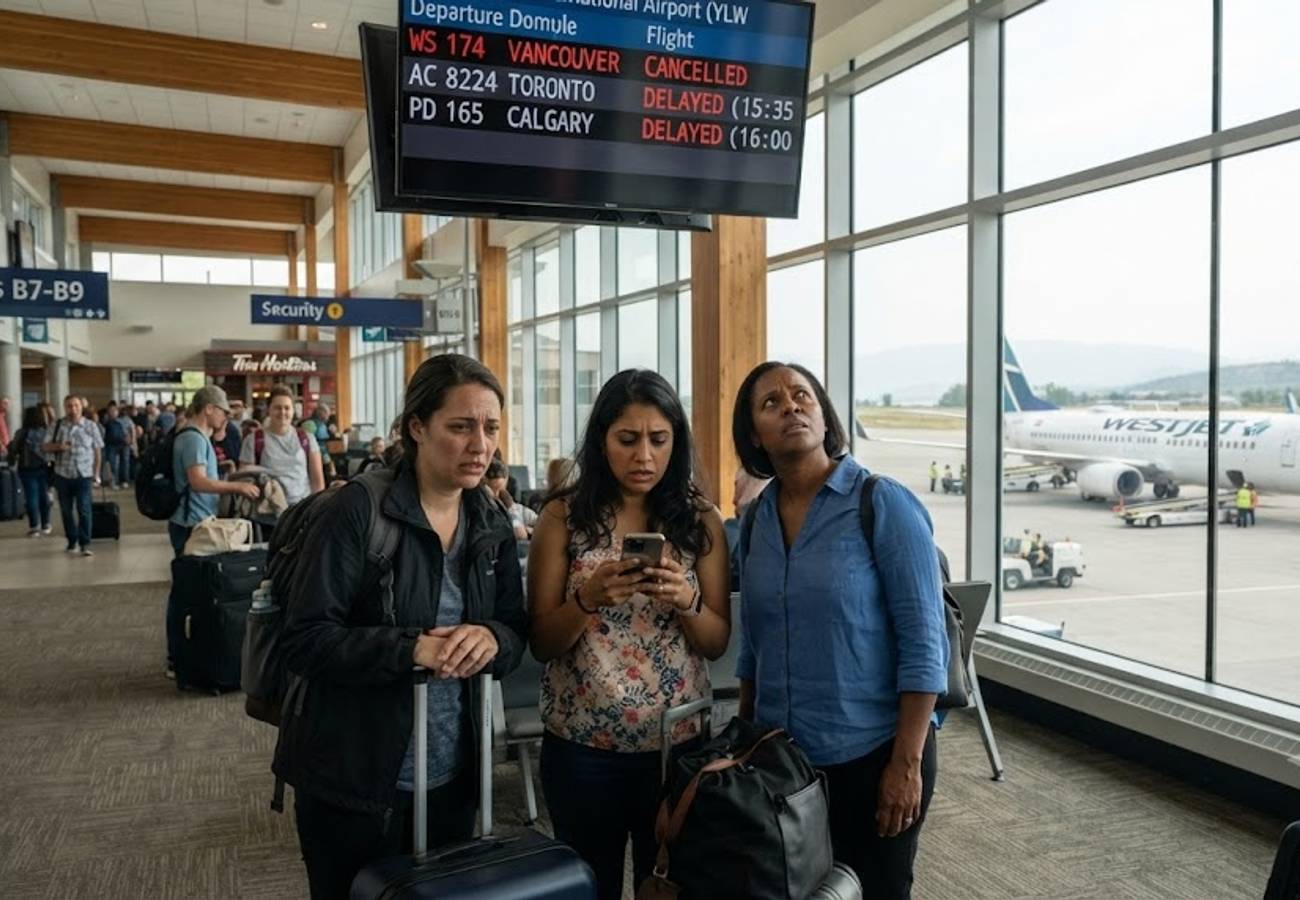
Image generated by AI
Four Air Canada Flights Grounded at Kelowna International Airport
Air Canada cancelled four flights departing from Kelowna International Airport on July 3, 2026, creating fresh travel chaos across Canada's interior and major urban corridors. The disruption hit high-traffic routes connecting Kelowna to Toronto, Vancouver, and Nanaimo, leaving hundreds of passengers scrambling for alternative travel options. The cancellations underscored how even limited schedule suspensions at regional airports can cascade into widespread travel disruption across provincial borders.
Kelowna serves as a critical gateway for business travellers, families, and connecting passengers moving between interior British Columbia and major Canadian hubs. When operations grind to a halt at this junction, the ripple effects extend far beyond the airport's immediate region.
Which Routes Were Affected?
The four cancellations spread across two primary flight corridors. Kelowna itself recorded two cancelled Air Canada services, while Toronto reported an additional two cancellations—a proportionally heavier blow for passengers on eastbound routes. Though both cities saw identical cancellation numbers, Toronto's impact was mathematically more severe, representing a 40% reduction in scheduled Air Canada capacity for the day compared to Kelowna's 2% reduction.
Reddit: "I was supposed to connect through Toronto and got stranded for 12 hours. Air Canada didn't offer meal vouchers or hotel accommodations." — r/travel
Ottawa, Nanaimo, and Vancouver escaped cancellations but faced significant delays in their Air Canada schedules. This pattern revealed that disruption concentrated heaviest on the Kelowna-Toronto corridor while leaving secondary routes compromised but operational.
What Actually Happened to These Passengers?
Travellers showed up at Kelowna International Airport expecting to depart for major Canadian cities only to find their flights removed from the departure board entirely. Without advance notice, many passengers discovered cancellations through airline apps or by arriving at check-in desks. The absence of transparent communication meant families rescheduled vacations, business professionals missed meetings, and connecting travellers faced hours of delay cascades.
Air Canada customers faced immediate choices: accept rebooking on later flights (sometimes days later), pay out-of-pocket for alternative airlines, or claim compensation where regulations allowed. For passengers connecting to international flights, missed connections meant automatic rebooking into the next available service—often days away.
The cancellations forced a critical question: Why did Air Canada remove these specific flights? The airline cited operational constraints but provided limited detail to affected passengers in real-time. This lack of transparency amplified frustration across social media channels and airline feedback platforms.
Your Rights When Air Canada Cancels Your Flight
If you're booked on Air Canada and face a cancellation, knowing your legal position matters enormously. According to Canadian Transportation Agency regulations, airlines must offer affected passengers either:
- Rebooking on the next available flight at no additional cost
- A full refund of your ticket price within 30 days
- Alternative transportation (train, bus, hotel accommodation if overnight wait required)
Passengers also have the right to claim compensation up to $2,400 CAD for flight cancellations caused by airline operational issues—though this requires formal filing with the Canadian Transportation Agency. EU-based passengers enjoy even stronger protections under EU Regulation 261/2004, which guarantees compensation ranging from €250 to €600 depending on flight distance.
The critical distinction: compensation applies when the airline controls the cancellation cause (staffing, mechanical failure, scheduling error). Natural disasters, security threats, and air traffic control decisions typically exempt airlines from compensation obligations.
Steps to Take Immediately After Cancellation
Stay digitally connected. Monitor your email, SMS alerts, and the Air Canada mobile app obsessively. Airlines often notify passengers of rebooking options through these channels before customers even reach the airport. Missing these notifications means missing your best rebooking window.
Contact Air Canada directly. Don't wait in airport queues. Call Air Canada Reservations or use their online chat system to access rebooking options faster. Phone representatives access real-time inventory before customer service desk agents do, giving you priority on better alternate flights.
Document everything. Photograph your original booking confirmation, the cancellation notice, and any communication from Air Canada. Screenshot your flight status on FlightAware or the airline's website with timestamps visible. This documentation proves your claim if you pursue compensation later.
Explore alternative carriers immediately. If Air Canada's rebooking options extend your journey beyond 24 hours, contact WestJet, Air Transat, or Porter Airlines for same-day alternatives. You can purchase tickets independently and request reimbursement from Air Canada afterward—keep all receipts for your claim submission.
File your compensation claim promptly. If your cancellation qualifies for compensation, submit your claim to the Canadian Transportation Agency within two years of the flight date. Include your booking confirmation, cancellation documentation, and proof of alternate travel costs. Many passengers recover $800-$2,400 through this process, though it requires patience—claim resolution typically takes 60-90 days.
The Bigger Picture: Why Regional Airports Face More Disruption Risk
Kelowna International Airport operates on tighter scheduling margins than major hubs like Toronto or Vancouver. When Air Canada reduces flights at smaller regional airports, there's minimal redundancy to absorb cancellations. Larger airports typically have multiple daily flights on popular routes; Kelowna often has only one or two daily services on key destinations.
This structural vulnerability means regional airport passengers face disproportionate disruption risk. A single mechanical issue or crew shortage cancels the day's entire Kelowna-Toronto service, whereas the same problem at Toronto only affects one of six daily flights on that route.
The July 3, 2026 cancellations illustrated this harsh reality: four grounded flights created operational havoc for passengers with limited flexibility. Business travellers facing missed meetings, families losing vacation days, and connecting passengers catching missed international flights all bore the consequences of Air Canada's scheduling decisions.
What Passengers Should Know Going Forward
Flexibility saves travel stress. Book flights with connections built in—avoid tight layovers under 90 minutes on regional airports. Choose early morning departures when possible; they're statistically less vulnerable to cascading delays from earlier disruptions.
Purchase travel insurance covering flight cancellations. Standard airline tickets offer zero refund protection; travel insurance recovers your full ticket price plus meal, hotel, and rebooking costs if cancellations occur. For trips exceeding $500, insurance pays for itself through a single cancellation event.
Monitor your airline's social media channels and official website obsessively. Airlines post schedule changes 24-48 hours before departure; catching these updates before airport arrival saves enormous hassle.
Stay patient but assertive with customer service representatives. They operate under operational constraints you don't control. Respectful communication gets faster rebooking than anger. But don't accept first-offered solutions passively—ask what better options exist, how long rebooking takes, and whether compensation applies.
Know your rights, stay connected, and never assume the airline's first offer represents your best option.
Related Travel Guides
Disclaimer
This article is for informational and educational purposes only. It does not constitute legal, financial, or professional advice. While we strive to provide accurate and up-to-date information, travel policies, regulations, and conditions change rapidly. Always verify information with official sources before making travel decisions. Nomad Lawyer makes no representations about the accuracy, reliability, completeness, or suitability of the information provided. Readers should consult qualified professionals for advice specific to their circumstances. The views expressed in this article are those of the author and do not necessarily reflect the views of Nomad Lawyer.
Preeti Gunjan
Contributor & Community Manager
A passionate traveller and community builder. Preeti helps grow the Nomad Lawyer community, fostering engagement and bringing the reader experience to life.
Learn more about our team →