
Air Canada A321XLR Brings Lie-Flat Business Class to Narrowbody Aircraft
Air Canada's new Airbus A321XLR introduces lie-flat Signature Class suites to single-aisle aircraft in 2026, disrupting transatlantic premium travel economics and expanding premium service to underserved European markets.

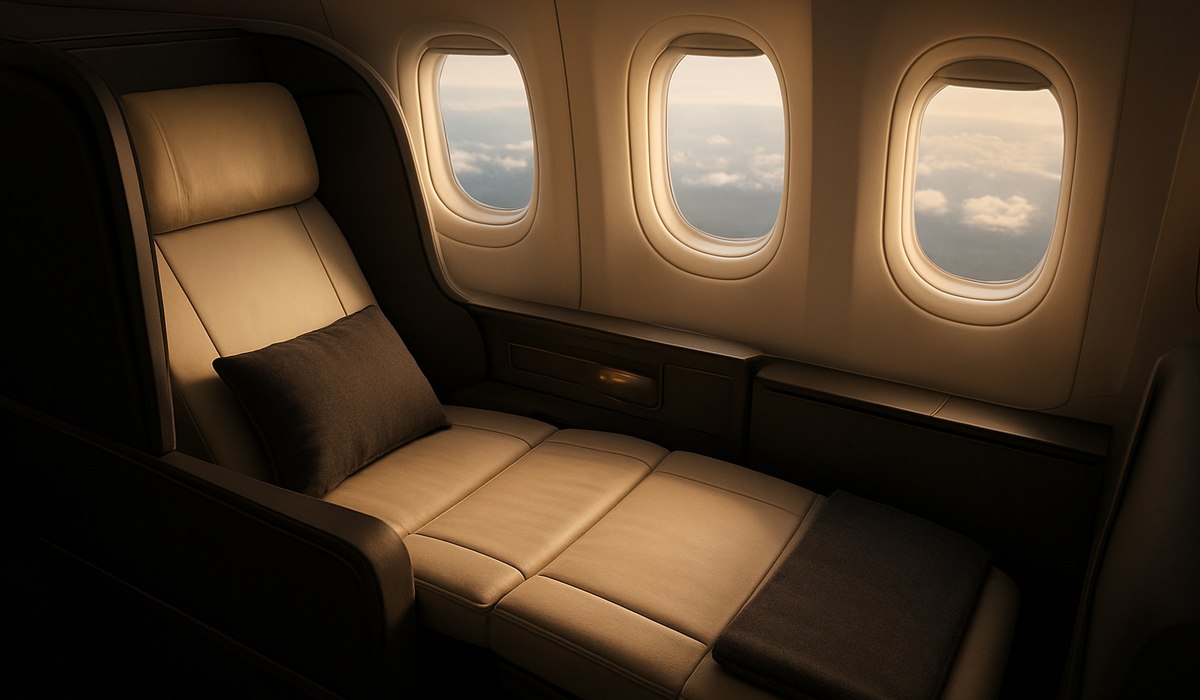
Image generated by AI
Air Canada A321XLR Launches Lie-Flat Premium Service on Narrowbody Fleet
Air Canada has introduced its Airbus A321XLR fleet with a revolutionary cabin configuration that challenges traditional widebody dominance on transatlantic routes. The aircraft features lie-flat Signature Class suites—a premium amenity previously reserved for widebody aircraft like the Boeing 787 Dreamliner. This single-aisle jet combines the fuel efficiency of narrowbody economics with the comfort features travelers expect from premium long-haul service, fundamentally reshaping how airlines approach transatlantic route profitability and market accessibility.
The A321XLR's deployment marks a watershed moment for airline cabin design. Air Canada can now operate premium service to secondary European markets—cities like Dublin, Edinburgh, and Shannon—that couldn't sustain the operational costs of a 300-seat widebody aircraft. This strategic positioning expands the airline's competitive footprint across the Atlantic while maintaining healthy profit margins on routes previously served by narrow regional aircraft or entirely unserved by premium operators.
The A321XLR's Game-Changing Narrowbody Design
The Airbus A321XLR represents nearly two decades of engineering focused on extending narrowbody range capabilities. With a maximum range exceeding 4,700 nautical miles, the aircraft bridges the operational gap between regional turboprops and widebody jets. Air Canada's specific configuration prioritizes the premium cabin experience, incorporating 76 Signature Class lie-flat seats in a 1-1 direct aisle configuration.
This layout ensures every premium passenger enjoys direct aisle access and full lie-flat sleeping surfaces—eliminating the middle-seat compromise found on traditional widebody business class seating. The cabin density remains lean by necessity: the aircraft accommodates approximately 244 total passengers in a 76-economy-seat configuration, compared to 250+ on comparable widebody flights. This favorable premium-to-economy ratio actually improves revenue per available seat-kilometer for Air Canada, as premium fares offset the reduced total capacity.
The aircraft's aerodynamic efficiency and advanced Pratt & Whitney GTF engines deliver fuel consumption 25% lower than legacy widebody jets. Air Canada benefits from significantly reduced operating costs while maintaining premium service levels, creating a competitive moat against airlines still dependent on larger, less efficient platforms. Learn more about aircraft efficiency standards at the FAA.
How Lie-Flat Suites Compare Across Aircraft Classes
The Canada airbus a321xlr lie-flat configuration directly competes with widebody business class offerings, yet operates under fundamentally different economics. Traditional widebody lie-flat suites span 6-7 feet in length, featuring direct aisle access in 1-2 configurations. Air Canada's narrowbody interpretation maintains the 6-foot-plus sleeping length while standardizing the 1-1 aisle arrangement across all premium seats.
Traveler comfort metrics reveal remarkable parity between the A321XLR and widebody alternatives. Seat width, recline angles, amenity access, and in-flight service quality match or exceed offerings on Boeing 777 and Airbus A350 premium cabins. The primary operational difference lies in aircraft diameter: the narrowbody fuselage creates a more intimate cabin environment with better humidity control and pressurization characteristics for passenger physiology.
Revenue implications shift significantly when lie-flat amenities reach narrowbody economics. Air Canada can offer premium transatlantic fares competitive with legacy carriers while maintaining superior margin profiles. Secondary markets—previously dependent on connecting service through hub airports—now access direct lie-flat flights, capturing high-yield business travelers and premium leisure passengers who previously chose alternative routing or different airlines entirely.
The competitive response from other carriers remains nascent. United, American, and Delta maintain large widebody fleets optimized for maximum capacity routes, creating potential market segmentation where Air Canada captures secondary-market premium traffic while legacy carriers dominate capacity-focused primary routes. Review aircraft certification standards with the FAA.
Transatlantic Route Economics and Market Implications
The Canada airbus a321xlr deployment directly impacts transatlantic route profitability calculations across the industry. Traditional widebody routes require minimum passenger volumes to justify fixed costs: fuel, crew, maintenance, and airport fees. Secondary European markets often generate insufficient volume for widebody viability, leaving premium service to regional carriers or forcing premium passengers onto economy-dense narrowbody flights.
Air Canada's A321XLR changes this equation fundamentally. The aircraft's 25% fuel efficiency advantage over comparable widebody jets reduces variable costs significantly. Premium yield pricing on transatlantic routes averages $3.50-$4.50 per available seat-mile; Air Canada's improved cost structure allows competitive pricing that still exceeds widebody margin profiles. Secondary-market routes—Dublin, Shannon, Edinburgh, Manchester—previously served with regional turboprops generating $1.20-$1.80 per available seat-mile, now justify premium service capable of $3.00+ per available seat-mile.
Route expansion potential extends across the North Atlantic. Air Canada has indicated plans to deploy A321XLR aircraft to up to 15 European destinations, many currently unserved by transatlantic premium operators. This expansion threatens the market share of carriers dependent on hub consolidation, particularly those with large widebody fleets requiring higher load factors. Secondary European gateways suddenly become viable alternatives to traditional hubs, benefiting business travelers and reducing connection friction.
Competitor response remains critical to market evolution. If legacy carriers introduce competitive narrowbody lie-flat offerings (discussions with Airbus and Boeing continue), transatlantic premium pricing could compress significantly. Currently, Air Canada captures first-mover advantages: brand perception, route exclusivity, and premium positioning in markets transitioning from legacy regional service to modern lie-flat transatlantic flights.
Air Canada's Competitive Advantage and Strategic Positioning
Air Canada's A321XLR adoption strategy leverages several competitive advantages against traditional widebody operators. First, the airline maintains substantial narrowbody operational expertise and infrastructure—gates, ground equipment, crew domiciles—optimized for single-aisle aircraft. Transitioning aircraft within existing infrastructure reduces capital expenditure compared to widebody expansion, maximizing return on aircraft investment.
Second, premium brand positioning benefits from product innovation. Offering lie-flat service on new, modern aircraft creates marketing differentiation in markets saturated with legacy widebody offerings. Air Canada's Signature Class receives consistent passenger ratings exceeding 4.5/5.0 across independent review platforms, suggesting the narrowbody experience rivals or exceeds widebody alternatives.
Third, Air Canada's regional route network uniquely positions the airline for secondary-market premium service. Unlike legacy carriers concentrated in major hubs, Air Canada operates substantial service throughout Canada and secondary U.S. markets. Transatlantic flights from smaller North American markets (Toronto, Montreal, Calgary) connect to secondary European gateways, capturing passenger segments previously forced onto connecting itineraries.
The strategic timeline remains favorable for Air Canada: the airline takes delivery of A321XLR aircraft through 2028, building critical mass while competitors evaluate similar platforms. By establishing brand presence and operational procedures across secondary-market routes before competitive offerings materialize, Air Canada creates switching costs (loyalty, schedule familiarity, booking preferences) that sustain competitive moats even after widebody alternatives emerge.
Key Data Table: A321XLR vs. Competitive Aircraft Specifications
| Metric | A321XLR (Air Canada) | Boeing 787-9 | Airbus A350-900 | Airbus A321neo |
|---|---|---|---|---|
| Maximum Range | 4,700 nm | 7,635 nm | 8,000 nm | 3,400 |
Disclaimer
This article is for informational and educational purposes only. It does not constitute legal, financial, or professional advice. While we strive to provide accurate and up-to-date information, travel policies, regulations, and conditions change rapidly. Always verify information with official sources before making travel decisions. Nomad Lawyer makes no representations about the accuracy, reliability, completeness, or suitability of the information provided. Readers should consult qualified professionals for advice specific to their circumstances. The views expressed in this article are those of the author and do not necessarily reflect the views of Nomad Lawyer.
Preeti Gunjan
Contributor & Community Manager
A passionate traveller and community builder. Preeti helps grow the Nomad Lawyer community, fostering engagement and bringing the reader experience to life.
Learn more about our team →