
Air Arabia Launches Double Daily Sharjah to London Gatwick Flights to Expand UAE-UK Aviation Connectivity in 2026
Air Arabia has increased its flight frequency between the UAE and UK, launching double daily non-stop services from Sharjah to London Gatwick to meet surging passenger demand.

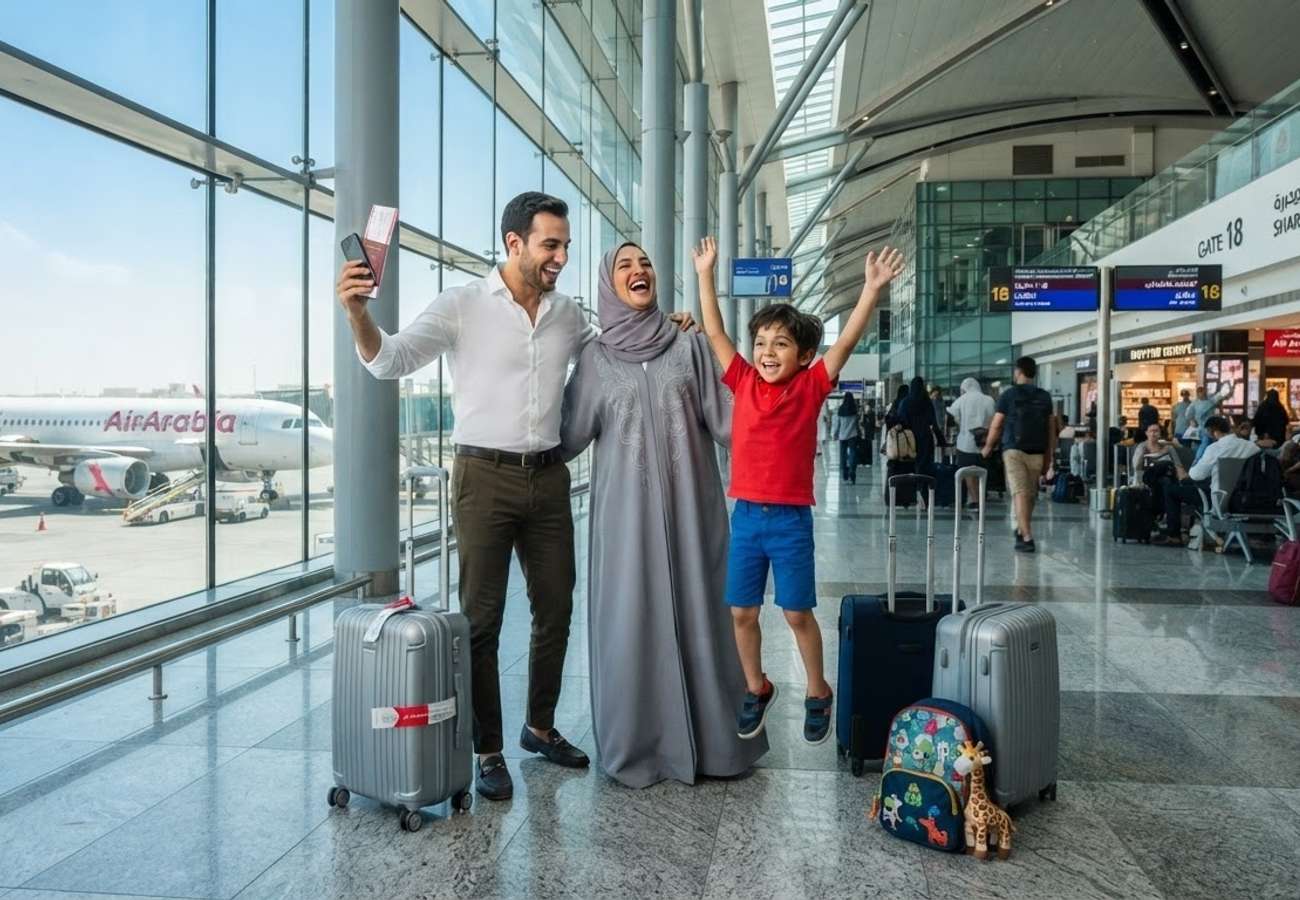
Image generated by AI
[Sharjah, July 7, 2026] — Air Arabia has significantly scaled its international operations by introducing double-daily non-stop flights connecting Sharjah International Airport in the United Arab Emirates and London Gatwick Airport in the United Kingdom. This expansion, which officially commenced on July 4, 2026, responds to a rapid surge in passenger traffic between the two nations and aims to redefine affordable long-haul travel.
The decision to double the frequency on this specific corridor follows a period of sustained growth in travel demand. By providing two flights in each direction every day, the carrier is addressing the needs of a diverse passenger base, including corporate travelers, students, and tourists, while strengthening the strategic link between the Middle East and Western Europe.
Strategic Frequency Increases at Sharjah and London Gatwick
The primary driver behind this service expansion is the requirement for greater scheduling flexibility. On long-haul routes, the ability to choose between morning and afternoon departures is a significant advantage for passengers managing tight business itineraries or coordinating complex onward connections.
Industry observers note that such a high level of frequency is typically only implemented when there is consistent, high-volume traffic. By offering two daily rotations, Air Arabia is not only increasing seat capacity but also reducing the impact of potential delays on the overall schedule, as passengers have more immediate alternatives for rebooking.
This operational shift allows for a more fluid movement of travelers. Passengers arriving in London or Sharjah can now better align their flights with local transit schedules and hotel check-in times, effectively lowering the friction associated with intercontinental travel.
Strengthening the UAE-UK Aviation Corridor
The aviation relationship between the United Kingdom and the UAE is one of the most robust in the global industry. London remains a primary destination for Gulf-based travelers, while the UAE serves as a critical transit point for UK citizens traveling toward Africa, South Asia, and the Indian Ocean.
While Dubai and Abu Dhabi have historically been the dominant hubs in the region, Sharjah is rapidly increasing its international footprint. The expansion of the Sharjah-London route underscores the airport's growing role as a viable alternative for those seeking efficient and cost-effective access to the UK.
London Gatwick was selected as the UK gateway for specific strategic reasons. Unlike Heathrow, Gatwick provides a specialized mix of long-haul and short-haul traffic that aligns with the low-cost carrier model. It offers streamlined processing for international arrivals and maintains strong transport links to central London and the southeast of England.
Market Drivers and Passenger Demand Trends
Several socio-economic factors are fueling the increased demand for flights between Sharjah and London. According to industry reports, the growth is attributed to:
- Bilateral Tourism: A steady rise in visitors from the UK exploring the UAE and vice versa.
- Expatriate Movement: High volumes of "Visiting Friends and Relatives" (VFR) traffic, which remains a stable revenue stream for carriers.
- Educational Exchange: An increase in students moving between UK universities and UAE-based institutions.
- Trade Relations: Expanding commercial ties and business ventures between the two regions.
The post-pandemic landscape has seen a shift in consumer behavior, with a marked preference for direct flights that offer a balance between cost and convenience. Air Arabia is positioning itself to capture this segment of the market.
Operational Efficiency via Airbus A321LR Aircraft
To maintain a low-cost structure on a long-distance route, Air Arabia utilizes the Airbus A321LR. This narrow-body aircraft is specifically engineered for extended-range operations, allowing airlines to bypass the need for massive, fuel-heavy wide-body jets on routes that do not require 300+ seats.
The A321LR provides several operational advantages:
- Fuel Economy: Lower fuel burn per seat compared to traditional wide-body aircraft.
- Range Capability: Specifically designed to handle the distance between the Middle East and Europe without refueling stops.
- Right-Sizing: The aircraft capacity allows the airline to maintain high load factors and competitive pricing.
This transition toward "long-range narrow-body" operations is a growing trend in the aviation industry, enabling carriers to open new routes that were previously deemed economically unviable.
Economic Impact on Tourism and Regional Trade
The increase in flight frequency is expected to have a ripple effect on the local economies of both Sharjah and the London metropolitan area. Increased accessibility typically leads to higher hotel occupancy rates and a boost in spending within the retail and hospitality sectors.
For British travelers, the ease of access to Sharjah opens a gateway to the wider Middle East, encouraging heritage and cultural tourism. Conversely, the UAE's professional and student populations gain a more flexible link to one of the world's leading financial and educational hubs.
Furthermore, the introduction of more seats at a lower price point increases competition within the UK-Gulf corridor. This traditionally high-margin market, often dominated by full-service carriers, is now seeing more pricing pressure, which generally benefits the end consumer through lower fares.
Sharjah's Evolution as a Global Transit Hub
The expansion of the London Gatwick route is a cornerstone of Sharjah's broader strategy to evolve into a global aviation hub. By linking London to Sharjah, Air Arabia creates a seamless connection for passengers traveling from the UK to destinations across North Africa, Central Asia, and South Asia.
The airport's focus on operational efficiency and affordability makes it an attractive base for long-haul growth. As the airline continues to add capacity, Sharjah is increasingly viewed not just as a regional airport, but as a strategic bridge connecting Western markets with the emerging economies of the East.
The move to double-daily services signals a new era of accessibility for budget-conscious long-haul travelers between the UAE and the UK.
Related Travel Guides
Disclaimer
This article is for informational and educational purposes only. It does not constitute legal, financial, or professional advice. While we strive to provide accurate and up-to-date information, travel policies, regulations, and conditions change rapidly. Always verify information with official sources before making travel decisions. Nomad Lawyer makes no representations about the accuracy, reliability, completeness, or suitability of the information provided. Readers should consult qualified professionals for advice specific to their circumstances. The views expressed in this article are those of the author and do not necessarily reflect the views of Nomad Lawyer.
Kunal K Choudhary
Co-Founder & Contributor
A passionate traveller and tech enthusiast. Kunal contributes to the vision and growth of Nomad Lawyer, bringing fresh perspectives and driving the community forward.
Learn more about our team →