
AI Revolution Transforms Tourism at Xiamen Summit: 1,000+ Leaders Reveal Personalized Travel Future in 2026
The 2nd China Tourism Entrepreneurs Summit in Xiamen showcased how artificial intelligence, smart tourism tech, and experience-driven travel are fundamentally reshaping the global tourism industry in 2026.

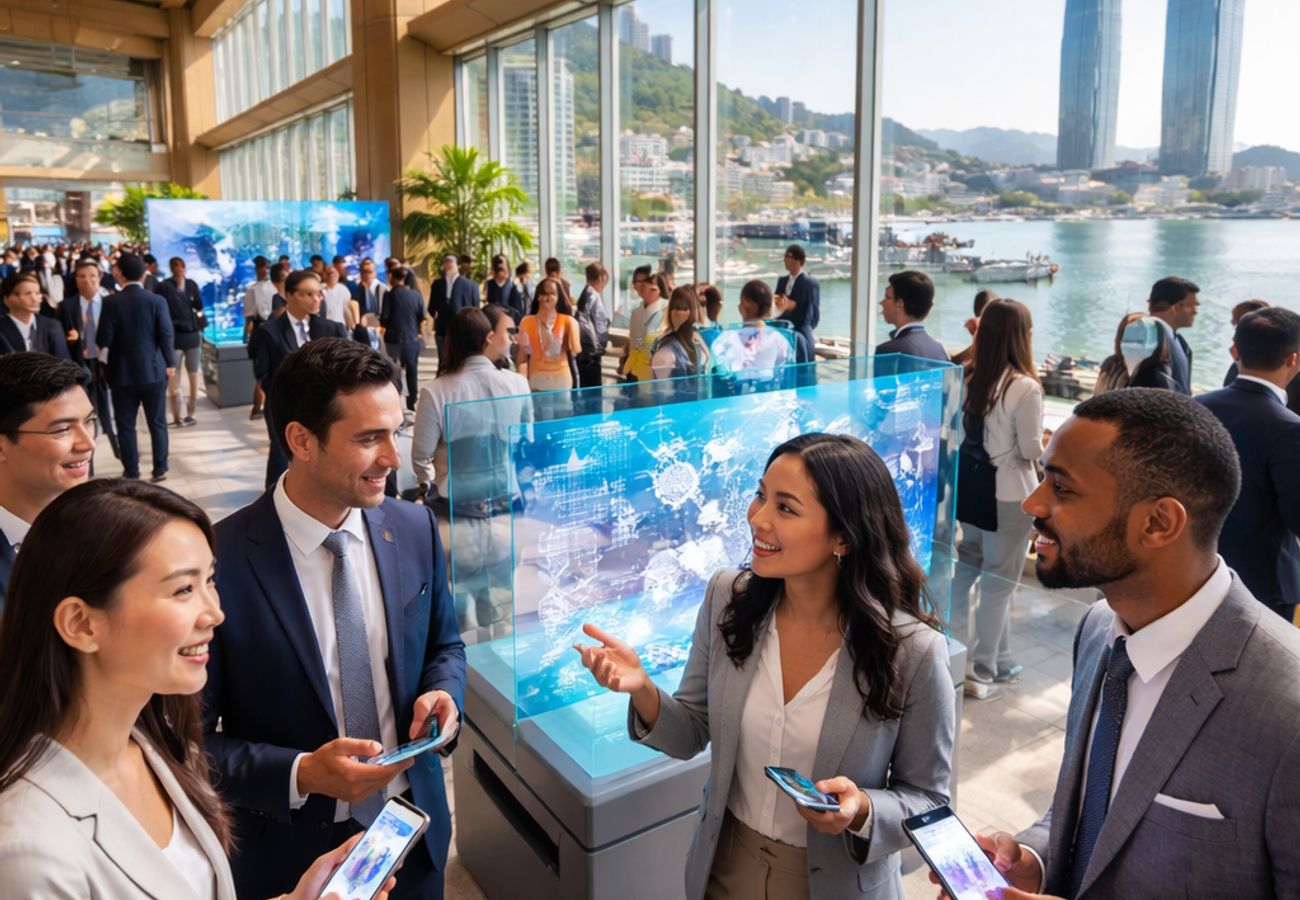
Image generated by AI
The global tourism landscape is experiencing a seismic shift. At the 2nd China Tourism Entrepreneurs Summit in Xiamen, more than 1,000 industry leaders from tourism, cultural sectors, technology, and investment gathered to confront a single undeniable reality: artificial intelligence and digital innovation are no longer optional—they are the infrastructure upon which modern travel is being built.
What unfolded over these discussions was not hype. It was a clear-eyed assessment of how AI tourism, smart tourism systems, personalized travel technology, and experience-driven journeys are systematically dismantling traditional tourism models and replacing them with something fundamentally more intelligent, responsive, and human-centered.
The message was stark: adapt or become irrelevant.
The Convergence: Where Tourism Meets Technology Meets Culture
For decades, the tourism industry operated in silos. Hotels managed guests. Airlines managed flights. Tour operators managed itineraries. These entities rarely spoke to each other, and data flowed in fragmented streams.
At Xiamen, speakers emphasized that this fragmentation is ending. The convergence of tourism, cultural industries, and technology is now creating unprecedented opportunities for destination managers and travel companies willing to embrace integration.
Reddit: "The future of travel isn't about visiting more places—it's about understanding yourself better through travel." — r/travel
The summit identified that when tourism and cultural preservation merge with intelligent technology systems, something remarkable emerges: destinations can become genuinely responsive ecosystems. Local cultural heritage becomes digitally accessible. Visitor flows can be optimized. Economic benefits can be distributed more equitably to communities.
This isn't theoretical. It's happening now across forward-thinking destinations worldwide.
Smart Tourism Is Operationalizing Intelligence Across Destinations
Smart tourism emerged as perhaps the most tangible transformation already underway. Unlike AI—which operates in the realm of algorithms and recommendations—smart tourism is the physical and digital infrastructure that makes AI recommendations actionable.
Consider a visitor arriving at a destination. Traditional tourism: they consult a printed map, ask hotel staff for directions, follow generic guidebooks. Smart tourism: real-time data systems understand crowd patterns, traffic flow, weather conditions, and that specific visitor's interests. Recommendations adjust dynamically. Pathways optimize automatically. Museums extend hours when demand spikes. Transportation services scale up before bottlenecks form.
Tourism businesses are now utilizing data-driven analytics platforms to understand visitor behavior patterns and predict demand with striking accuracy. The result: operational efficiency improves while traveler satisfaction increases simultaneously—a rare win-win in hospitality.
Industry experts at the summit noted that this shift represents a fundamental departure from standardized, one-size-fits-all tourism service models. Destinations are becoming adaptive organisms, not static exhibits.
The Death of Sightseeing—The Rise of Experience Architecture
Here's what caught my attention most at the summit narrative: the explicit rejection of "sightseeing" as a concept.
Traditional tourism is transactional. You visit a landmark. You take a photo. You move to the next landmark. The experience is standardized because efficiency demands it. But traveler expectations have evolved dramatically.
Modern travelers—especially younger demographics—seek meaningful engagement. They want culinary immersion in local food systems. They want to participate in traditional craftsmanship. They want to understand how communities actually live, not how they perform for tourists.
The summit highlighted that experiential tourism is restructuring the entire industry around this demand. Wellness retreats designed around personalized health profiles. Cultural workshops tailored to individual interests. Eco-tourism adventures matched to specific environmental commitments. Community-based experiences that create genuine intercultural dialogue.
And here's the critical piece: AI enables this personalization at scale. What was once possible only for ultra-luxury, ultra-expensive travel is becoming accessible across market segments because intelligent systems can tailor experiences without requiring human concierge intervention for every decision.
Artificial Intelligence: From Buzz to Core Infrastructure
AI was the intellectual heart of the Xiamen summit, and discussions moved beyond theoretical applications into concrete implementations already reshaping operations.
Travel planning platforms powered by AI are fundamentally simplifying what was once a time-consuming, research-intensive process. Modern AI systems analyze traveler preferences, budget constraints, travel history, seasonal trends, and destination conditions to generate recommendations that feel genuinely personalized rather than algorithmically generic.
Tourism companies are implementing AI-powered decision systems to automate routine operations—booking confirmations, customer service inquiries, resource allocation—freeing human staff to focus on high-value customer interactions and strategic work.
Predictive analytics are enabling travel companies to anticipate demand patterns weeks or months in advance, adjusting inventory, pricing, and service levels proactively rather than reactively.
The summit made clear: AI adoption isn't a luxury competitive advantage anymore. It's becoming table stakes for businesses wanting to remain relevant.
AI Travel Assistants: The New Travel Agent
Among the most visible emerging technologies discussed were AI travel assistants—intelligent digital entities embedded in platforms and mobile applications that serve as always-available travel guides.
These aren't simple chatbots. Modern AI assistants can:
- Generate itineraries in seconds based on hundreds of personal preference variables
- Provide real-time navigation adapted to current conditions and user mobility constraints
- Recommend dining, attractions, and experiences aligned with specific interests
- Adjust plans dynamically when circumstances change
- Communicate in multiple languages with cultural context awareness
What makes this revolutionary is accessibility. Previously, only wealthy travelers could afford human travel agents providing this level of customization. Now, AI assistants deliver comparable personalization to any traveler with a smartphone.
The summit consensus: AI travel assistants are eliminating the planning friction that once discouraged spontaneous or complex travel, democratizing access to sophisticated journey design.
Service Robots: Augmenting Human Hospitality, Not Replacing It
One discussion point that surprised many observers was the nuanced conversation around intelligent service robots in tourism facilities—hotels, airports, visitor centers, museums, tourist attractions.
These aren't science fiction. Robotic systems are actively deployed across hospitality environments, handling information provision, guest inquiries, routine service functions, and operational support tasks.
What became clear at the summit: well-implemented robotic service doesn't dehumanize hospitality. Instead, it liberates human staff from repetitive tasks, enabling them to focus on genuine guest interaction, problem-solving, and the emotional labor that machines still cannot replicate authentically.
Multilingual capabilities and 24/7 availability make service robots particularly valuable at high-traffic tourist facilities where human staff cannot economically provide continuous support across all languages.
Reddit: "Robot staff took our order and it was weirdly efficient, but the human bartender made my night memorable. Both matter." — r/travel
The summit message: robots are complementary tools, not replacement technology. When implemented thoughtfully, they enhance rather than diminish visitor experience.
Digital Heritage: Making Culture Accessible, Not Diluting It
Cultural preservation emerged as a crucial conversation thread throughout the summit. How do tourism and technology serve heritage without commodifying or degrading it?
Digital heritage navigation systems represent a sophisticated answer. Through interactive mapping, augmented reality applications, digital storytelling platforms, and intelligent navigation technologies, cultural sites become more engaging and educationally rich.
A visitor standing before an ancient structure can access layered historical narratives, architectural significance, cultural context, and contemporary relevance through their device—without diminishing the power of physical presence or disrupting the atmosphere of sacred or historical spaces.
These innovations are proving particularly effective at engaging younger audiences who expect digital integration while ensuring heritage resources remain contextually accessible in an increasingly digital world.
The summit highlighted that thoughtful digital integration actually strengthens cultural preservation by making heritage economically sustainable through increased visitation while creating educational opportunities that strengthen cultural understanding.
The New Tourism Paradigm Is Already Operating
By the conclusion of the 2nd China Tourism Entrepreneurs Summit, the narrative was undeniable: the tourism industry is undergoing structural transformation driven by AI, smart systems, and experience-centered design.
This isn't a future scenario. It's happening across destinations and tourism businesses implementing these technologies now. The competitive advantage flows to organizations recognizing this transformation and building capabilities accordingly.
The travelers who will benefit most are those who embrace AI-assisted planning, expect personalized experiences, and view travel as meaningful engagement rather than destination collection.
The question for the tourism industry isn't whether to adopt these technologies. It's how quickly they can implement them effectively.
The future of tourism is being written in real-time—and AI is holding the pen.
Related Travel Guides
Lufthansa Places Order for 20 Long-Haul Jets Worth $7.7B
Airlines' Newest Jets: Why US Carriers Still Operate 30-Year-Old Planes in 2026
Disclaimer
This article is for informational and educational purposes only. It does not constitute legal, financial, or professional advice. While we strive to provide accurate and up-to-date information, travel policies, regulations, and conditions change rapidly. Always verify information with official sources before making travel decisions. Nomad Lawyer makes no representations about the accuracy, reliability, completeness, or suitability of the information provided. Readers should consult qualified professionals for advice specific to their circumstances. The views expressed in this article are those of the author and do not necessarily reflect the views of Nomad Lawyer.
Kunal K Choudhary
Co-Founder & Contributor
A passionate traveller and tech enthusiast. Kunal contributes to the vision and growth of Nomad Lawyer, bringing fresh perspectives and driving the community forward.
Learn more about our team →