
Boeing 787 Dreamliner Reshapes Global Aviation After 15 Years: How One Aircraft Revolutionized Long-Haul Travel Economics
Breaking airline news and aviation industry updates for 2026.

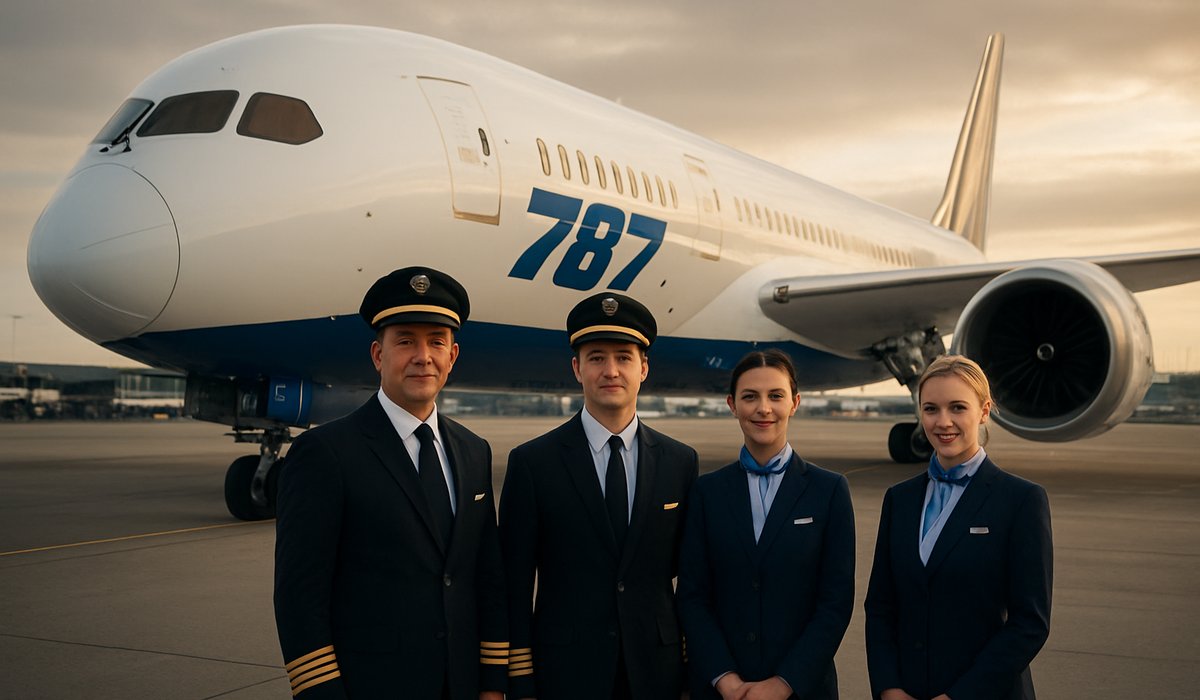
Image generated by AI
Boeing 787 Dreamliner Reshapes Global Aviation After 15 Years: How One Aircraft Revolutionized Long-Haul Travel Economics
The midsize widebody's fuel efficiency and extended range have dismantled the traditional hub-and-spoke model, enabling airlines to launch direct routes and transform passenger experience on intercontinental flights
A Paradigm Shift in Long-Haul Aviation
The Boeing 787 Dreamliner fundamentally altered the economics of intercontinental air travel since its commercial debut in 2011, challenging the industry's half-century dependence on sprawling hub-and-spoke networks. Rather than pursue Airbus's colossal A380 strategy, Boeing engineered a midsize widebody capable of traversing up to 7,565 nautical miles while consuming significantly less jet fuel than earlier-generation aircraft—a gamble that has redefined route planning across the global aviation sector.
Breaking the Hub Dependency Model
For decades, airlines concentrated international operations through massive connecting hubs at Heathrow, Dubai, and Frankfurt because older widebody aircraft proved economically unviable on thinner, long-distance routes. The 787's revolutionary fuel efficiency upended this constraint. By reducing operating costs per available seat kilometer, carriers gained the financial flexibility to establish direct point-to-point connections previously deemed unprofitable, bypassing traditional hubs and delivering passengers directly to secondary and tertiary markets.
Transforming Passenger Experience and Route Networks
The aircraft's advanced cabin pressure systems, humidity-controlled interiors, and larger windows have enhanced passenger comfort on extended flights, reducing jet lag and improving satisfaction metrics. More significantly, the 787's performance envelope has opened routes connecting cities that lacked the passenger volume to justify hub traffic. Airlines now operate nonstop services between regional centers, fundamentally reshaping global connectivity patterns and fragmenting the monopolistic control major hubs once exercised.
Industry-Wide Implications for Aviation Economics
The 787's presence has cascading effects across the aviation industry. Competitors have accelerated development of fuel-efficient widebodies, driving technological innovation sector-wide. Airlines have redirected capital from mega-hub expansion toward fleet modernization. Fuel cost efficiency remains critical amid volatile jet fuel prices influenced by geopolitical tensions—a factor that amplified the 787's competitive advantage during recent periods of elevated energy prices.
Over 15 years, the Dreamliner has become operational for more than 80 airlines and continues forcing industry participants to recalibrate business models around distributed networks rather than concentrated hubs. This shift carries profound implications for airport infrastructure planning, aircraft acquisition strategies, and passenger routing patterns globally.
FAQ: Common Questions About the Boeing 787 Dreamliner's Impact
How has the Boeing 787 affected airline operating costs compared to older widebody aircraft? The 787 consumes approximately 20-25% less fuel than comparable fourth-generation widebodies, translating to substantial per-flight savings. This efficiency advantage becomes amplified across long-haul routes where fuel comprises a major operational expense, particularly during periods of elevated jet fuel prices.
Why did Boeing choose the midsize widebody strategy instead of competing with the Airbus A380? Boeing prioritized fuel economics and route flexibility over maximum seating capacity. The A380's mega-hub strategy required sustained high passenger volumes, whereas the 787's efficiency enables profitable operations on lower-demand intercontinental routes, better aligning with actual market demand patterns.
Which routes became viable because of the 787's extended range capabilities? The aircraft's 7,565 nautical mile range enabled new nonstop connections between regional cities that previously required hub transfers. Examples include routes connecting secondary U.S. and European markets to Asia-Pacific destinations that older widebodies couldn't serve profitably.
Has the 787 impacted baggage charges and airline fee structures? Indirectly, yes. Improved profitability margins on previously marginal routes have given airlines greater flexibility in pricing strategies, though competitive pressures from expanded point-to-point routing have limited fee increases on certain corridors.
What percentage of the global widebody fleet now consists of 787 Dreamliners? As of 2026, the 787 represents approximately 15-18% of the widebody fleet across major carriers, with order backlogs suggesting continued market dominance among new long-haul aircraft acquisitions.
Related Travel Guides
Flight Delay Compensation Guide 2026
Understanding Airline Route Changes
Airport Security Process Updated (2026)
External Resources
Disclaimer
This article is for informational and educational purposes only. It does not constitute legal, financial, or professional advice. While we strive to provide accurate and up-to-date information, travel policies, regulations, and conditions change rapidly. Always verify information with official sources before making travel decisions. Nomad Lawyer makes no representations about the accuracy, reliability, completeness, or suitability of the information provided. Readers should consult qualified professionals for advice specific to their circumstances. The views expressed in this article are those of the author and do not necessarily reflect the views of Nomad Lawyer.
Kunal K Choudhary
Co-Founder & Contributor
A passionate traveller and tech enthusiast. Kunal contributes to the vision and growth of Nomad Lawyer, bringing fresh perspectives and driving the community forward.
Learn more about our team →