
Abu Dhabi Zayed International Joins Dubai and European Hubs in Managing Record Summer 2026 Passenger Surges
Abu Dhabi, Dubai, and major European airports are reporting skyrocketing passenger numbers for the 2026 summer season despite significant inflation and rising flight costs.

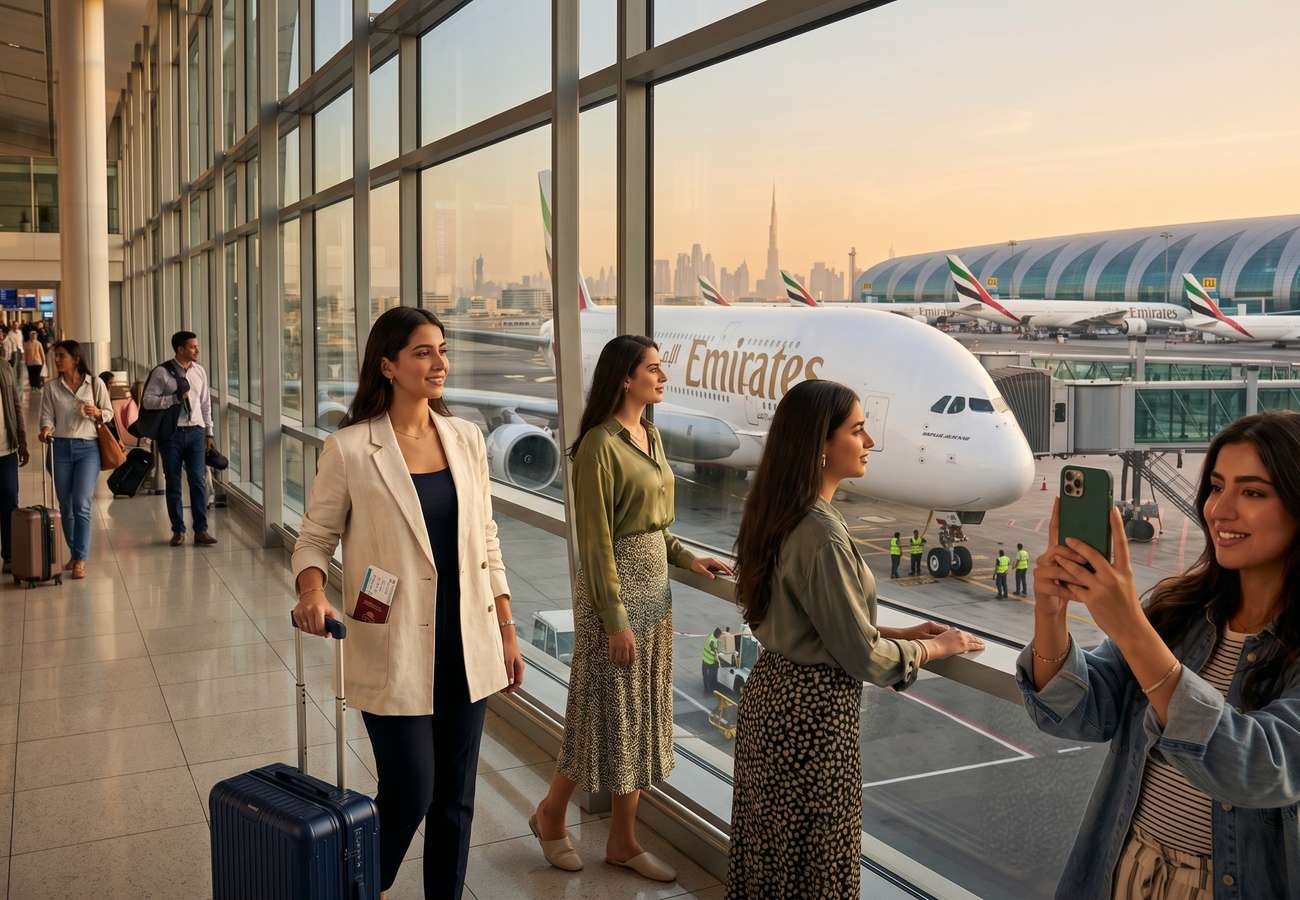
Image generated by AI
[Abu Dhabi, July 7, 2026] — Major aviation hubs including Abu Dhabi’s Zayed International, Dubai International, and several premier European gateways are reporting a massive surge in passenger traffic for the 2026 summer season. This spike in demand persists despite a challenging economic climate characterized by high inflation and a significant increase in airfares.
Industry data indicates that the current summer travel rush is accelerating faster than most market analysts had projected. While household budgets are under visible pressure, global travelers are continuing to prioritize international experiences, family reunions, and leisure holidays. In response, airlines have maintained aggressive flight schedules, forcing airport operators to scale up staffing and deploy new technologies to prevent systemic gridlock.
Zayed International Airport Records Massive Daily Traffic
Abu Dhabi’s Zayed International Airport has emerged as a primary driver of this regional growth. Recent operational data reveals that the facility handled more than 93,000 passengers daily over a five-day window, cementing the emirate's status as a critical global transit point.
The airport's infrastructure is currently managing nearly 500 aircraft movements every 24 hours. To sustain this volume, airport authorities have intensified customer support services and are aggressively pushing the adoption of digital check-in systems. Officials are urging travelers to arrive earlier than usual to mitigate the impact of the increased volume on security and immigration checkpoints.
Dubai International Maintains Global Connectivity Leadership
Dubai International Airport continues to position itself as one of the world's most utilized hubs during the northern hemisphere's peak travel window. As a central link between Europe, Asia, Africa, and the Americas, the airport is seeing a heavy influx of both business and leisure travelers.
To combat potential congestion, Dubai has expanded its frontline customer support teams and enhanced passenger wayfinding throughout the terminals. Airport management is heavily promoting online check-in to reduce the physical queues at departure gates during the most congested hours of the day.
European Hubs Scale Operations for Peak Demand
Across Europe, the "summer rush" has triggered a comprehensive operational ramp-up at several key gateways.
London Heathrow Airport Heathrow is experiencing the typical sharp rise in traffic associated with the start of United Kingdom school holidays. The airport has seen a surge in flights to North America, Asia, and Mediterranean leisure spots. Management is currently focusing on the efficiency of security screening and baggage handling to ensure that the increased terminal activity does not lead to widespread delays.
Amsterdam Schiphol Airport Following significant capital investments in staffing and passenger flow management, Amsterdam Schiphol is utilizing advanced planning systems to handle seasonal spikes. As one of Europe's busiest transfer hubs, Schiphol is coordinating closely with airlines to ensure that the transition between connecting flights remains fluid.
Frankfurt Airport Germany's primary aviation hub has focused its 2026 strategy on technology-driven efficiency. Frankfurt has expanded its digital service offerings and strengthened baggage handling capabilities to support the intensive schedules of long-haul and regional carriers.
Paris Charles de Gaulle Airport In France, Charles de Gaulle is balancing a high volume of outbound holidaymakers with a strong influx of international tourists. The airport is working in tandem with border authorities to maintain steady passenger processing speeds across its expansive network.
Southern Europe and Turkey Support Tourism Boom
The Mediterranean tourism surge is placing additional pressure on regional hubs. Madrid-Barajas and Rome Fiumicino airports have both increased their operational capacity, deploying additional service teams and digital solutions to manage the July and August traffic peaks.
Simultaneously, Istanbul Airport is leveraging its modern infrastructure and extensive route network to maintain its position as a premier bridge between Europe, Asia, and Africa. The facility continues to expand its transfer capabilities to accommodate the growing number of transit passengers.
Asian Aviation Hubs Implement Smart Technology
In Asia, the trajectory of international tourism remains strongly upward. Major hubs including Singapore Changi, Hong Kong International, Incheon International, and Narita International are utilizing high-tech solutions to process record numbers of travelers.
These airports have integrated biometric immigration, automated border controls, and smart baggage systems to reduce human bottlenecks. The combination of recovering long-haul demand and increased outbound leisure travel has made the Asian market one of the fastest-growing segments of the 2026 summer season.
Operational Data Summary: Key Hub Activity
| Airport | Key Metric / Focus | Primary Strategy |
|---|---|---|
| Zayed International | 93,000+ Daily Passengers | Digital check-in & early arrival prompts |
| Dubai International | Global Transit Volume | Expanded support teams & online processing |
| London Heathrow | Peak School Holiday Traffic | Security & immigration efficiency |
| Amsterdam Schiphol | Transfer Passenger Flow | Advanced planning & staffing investments |
| Frankfurt Airport | Long-haul Connectivity | Digital services & baggage tech |
| Istanbul Airport | Intercontinental Transit | Infrastructure expansion & transfer facilities |
| Asian Hubs (Changi/Incheon) | Biometric Integration | Automated border controls & smart baggage |
Analysis of the 2026 Travel Phenomenon
The current trend suggests a decoupling of travel demand from traditional economic constraints. Usually, a spike in inflation and flight costs leads to a proportional dip in passenger volumes. However, 2026 is proving to be an anomaly where "revenge travel" sentiments or a shift in consumer priorities toward "experience spending" are outweighing the cost of tickets.
This resilience puts immense pressure on airport infrastructure. The reliance on biometric and automated systems is no longer a luxury but a necessity for survival. Hubs that fail to digitize their passenger flow are likely to experience systemic failures, whereas those investing in AI-driven logistics—like those in Asia and the UAE—are maintaining stability.
The aviation industry is witnessing a fundamental shift where the demand for global mobility now transcends economic volatility.
Related Travel Guides
Disclaimer
This article is for informational and educational purposes only. It does not constitute legal, financial, or professional advice. While we strive to provide accurate and up-to-date information, travel policies, regulations, and conditions change rapidly. Always verify information with official sources before making travel decisions. Nomad Lawyer makes no representations about the accuracy, reliability, completeness, or suitability of the information provided. Readers should consult qualified professionals for advice specific to their circumstances. The views expressed in this article are those of the author and do not necessarily reflect the views of Nomad Lawyer.
Kunal K Choudhary
Co-Founder & Contributor
A passionate traveller and tech enthusiast. Kunal contributes to the vision and growth of Nomad Lawyer, bringing fresh perspectives and driving the community forward.
Learn more about our team →