
Breeze Airways Hits Fleet Milestone: 50 Airbus A220s in Service as Ultra-Low-Cost Carrier Accelerates US Expansion
Breaking airline news and aviation industry updates for 2026.

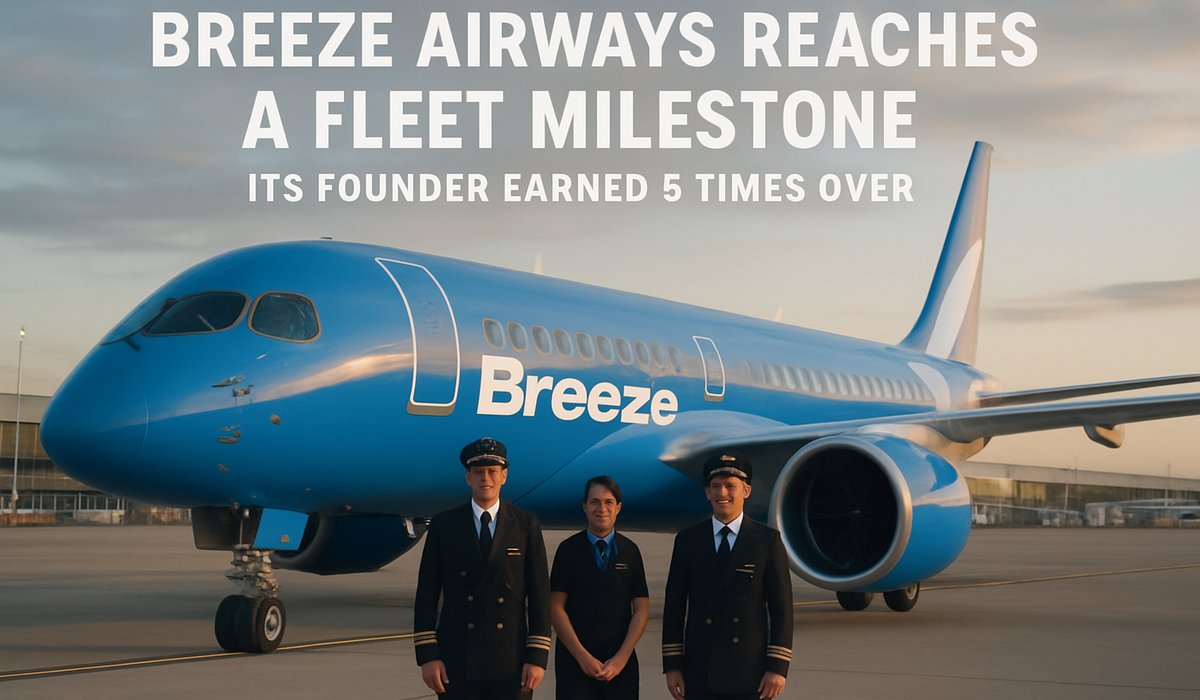
Image generated by AI
Breeze Airways Hits Fleet Milestone: 50 Airbus A220s in Service as Ultra-Low-Cost Carrier Accelerates US Expansion
The budget airline's rapid aircraft deployment underscores shifting dynamics in American aviation and the growing competition in regional air travel
Rising Star Reaches Major Fleet Benchmark
Breeze Airways, the U.S.-based ultra-low-cost carrier, has achieved a significant operational milestone by welcoming its 50th Airbus A220-300 aircraft into active service. The announcement represents a decisive moment for the rapidly expanding airline, which is executing an ambitious growth strategy centered on the fuel-efficient narrowbody jets. The carrier maintains an order book for 90 A220 aircraft total, positioning it as one of the most aggressive adopters of Airbus's modern single-aisle platform in North America.
The fleet expansion underscores Breeze Airways' commitment to modernizing U.S. regional aviation while capitalizing on the aircraft's superior economics and passenger comfort features—critical competitive advantages in an increasingly crowded market segment.
Fleet Composition and Operational Impact
The A220-300, configured to seat approximately 150 passengers, offers Breeze Airways significant operational flexibility across its growing network of American destinations. The aircraft's advanced avionics, fuel efficiency, and lower noise profile provide the carrier with structural advantages in unit costs compared to competing regional operators still relying on older platforms.
The deployment of 50 aircraft from the 90-unit order represents a substantial commitment to capacity expansion. Industry analysts note that Breeze's fleet modernization aligns with broader trends across the aviation sector, where carriers increasingly prioritize newer jets to reduce fuel consumption, maintenance expenses, and environmental impact—factors directly influencing airline fees, baggage charges, and ticket pricing strategies.
Competitive Positioning in a Transforming Market
The milestone arrives amid significant restructuring within U.S. aviation. Breeze's rapid growth contrasts sharply with legacy carriers managing mature fleets and higher operational costs. As jet fuel prices remain volatile and influenced by geopolitical tensions, airlines operating younger, more efficient aircraft enjoy structural cost advantages that translate into competitive pricing—or improved margins.
The ultra-low-cost carrier sector has demonstrated resilience despite macroeconomic headwinds, with travelers increasingly prioritizing budget-friendly options. Breeze's investment in modern aircraft suggests management confidence in sustained demand for affordable air travel across secondary and tertiary U.S. markets.
Industry Implications
The A220's proliferation among North American carriers signals a generational shift in regional aviation economics. For consumers, modernized fleets typically correlate with improved on-time performance and reduced mechanical delays—though airline fees and baggage charges remain fundamental to ultra-low-cost business models.
Breeze Airways now operates one of the country's youngest commercial fleets, positioning the carrier competitively as environmental regulations tighten and fuel efficiency becomes an increasingly decisive market factor.
Frequently Asked Questions
What is the Airbus A220-300 and why do airlines choose it? The A220-300 is a modern, fuel-efficient narrowbody jet seating approximately 150 passengers. Airlines select it for lower operating costs, reduced fuel consumption, advanced avionics, and environmental compliance—advantages that improve profitability and competitive pricing.
How do modern aircraft affect airline fees and baggage charges? Newer aircraft reduce per-seat operating costs, potentially allowing carriers to maintain lower base fares. However, ultra-low-cost models like Breeze still rely on ancillary revenue (baggage fees, seat selection) to sustain profitability, regardless of fleet age.
Why is Breeze Airways expanding so rapidly? The carrier targets underserved U.S. markets with low-cost service, capitalizing on modern aircraft efficiency and evolving consumer preferences for budget travel options. Its growth reflects confidence in sustained demand across regional routes.
How do jet fuel prices impact airline operations and pricing? Volatile fuel costs directly influence operational expenses. Carriers with newer, efficient aircraft like the A220 absorb fuel price fluctuations more effectively, maintaining competitive ticket pricing—a critical advantage during periods of elevated aviation fuel costs.
What makes Breeze Airways different from other U.S. airlines? Breeze positions itself as an ultra-low-cost carrier focused on secondary markets, operating exclusively modern A220 aircraft, and emphasizing no-frills service bundled with transparent ancillary fees.
Related Travel Guides
Flight Delay Compensation Guide 2026
Understanding Airline Route Changes
Airport Security Process Updated (2026)
External Resources
Disclaimer
This article is for informational and educational purposes only. It does not constitute legal, financial, or professional advice. While we strive to provide accurate and up-to-date information, travel policies, regulations, and conditions change rapidly. Always verify information with official sources before making travel decisions. Nomad Lawyer makes no representations about the accuracy, reliability, completeness, or suitability of the information provided. Readers should consult qualified professionals for advice specific to their circumstances. The views expressed in this article are those of the author and do not necessarily reflect the views of Nomad Lawyer.
Preeti Gunjan
Contributor & Community Manager
A passionate traveller and community builder. Preeti helps grow the Nomad Lawyer community, fostering engagement and bringing the reader experience to life.
Learn more about our team →