
Alaska Airlines Breaks Its Own Record With First-Ever 3,600-Mile Boeing 737 Transatlantic Route
Breaking airline news and aviation industry updates for 2026.

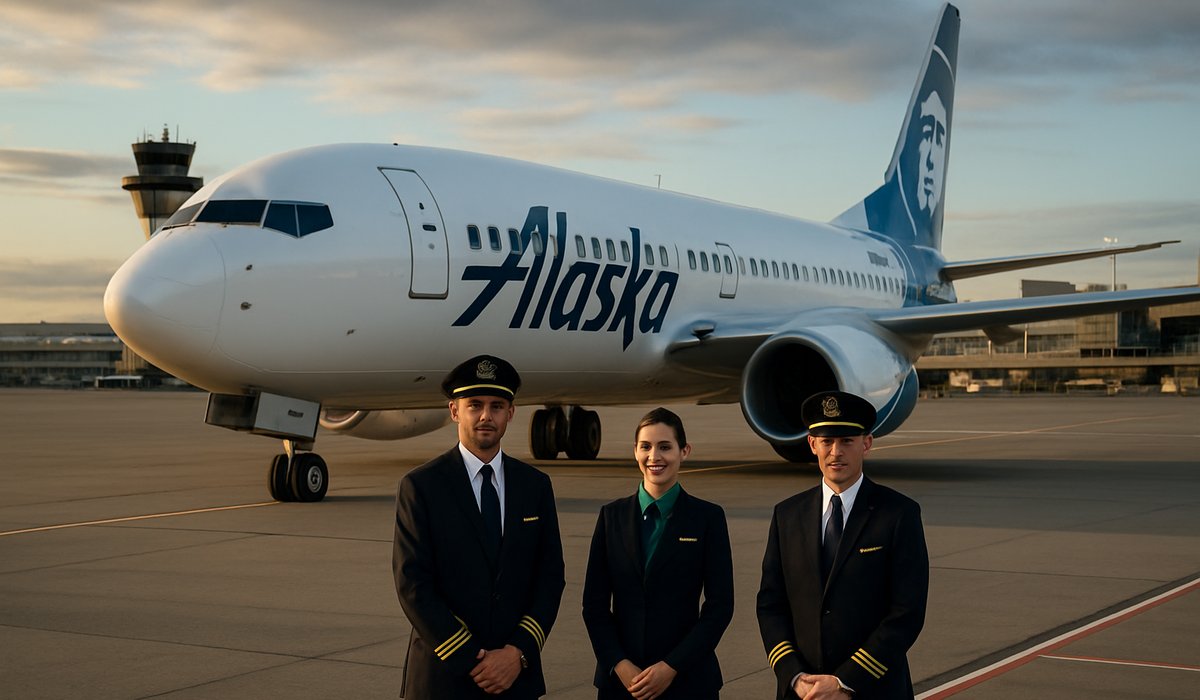
Image generated by AI
Alaska Airlines Breaks Its Own Record With First-Ever 3,600-Mile Boeing 737 Transatlantic Route
Seattle-Reykjavik service marks a pivotal moment in narrow-body aircraft utilization across North American aviation
Alaska Airlines has officially entered new operational territory, establishing the longest Boeing 737 flight route for any U.S. carrier with its newly launched Seattle-to-Keflavik service. The approximately 3,600-mile transatlantic connection surpasses the airline's previous distance record and signals a significant shift in how North American carriers are deploying narrow-body aircraft on extended international routes.
Breaking the Narrow-Body Distance Barrier
The addition of this Icelandic route demonstrates Alaska Airlines' confidence in the Boeing 737's fuel efficiency and range capabilities—a strategic positioning that could reshape competitive dynamics in medium-to-long-haul aviation. By deploying single-aisle aircraft on routes traditionally reserved for larger wide-body planes, the carrier is capitalizing on modern engineering advances while optimizing operational costs.
The Seattle-Keflavik service exceeds the airline's previous record of Anchorage-to-New York flights, which had held the distinction as Alaska Airlines' longest 737 operation. This expansion underscores the evolving economics of transatlantic travel, where carriers are increasingly testing the boundaries of narrow-body aircraft capabilities.
Strategic Implications for U.S. Aviation
The route launch reflects broader industry trends reshaping how American carriers approach capacity and connectivity. With jet fuel prices and operational efficiency driving strategic decisions, Alaska Airlines' willingness to extend the 737's reach to Europe signals confidence in the aircraft's economic viability for longer missions—a calculation that would have seemed unthinkable a decade ago.
This development also positions Alaska Airlines competitively against larger carriers on the lucrative Seattle-Europe market, traditionally dominated by legacy airlines operating wide-body fleets. The move allows the carrier to establish presence on transatlantic routes without the massive capital expenditure associated with ordering larger aircraft.
Market Access and Competitive Positioning
Iceland's strategic geographic location has become increasingly attractive for North American carriers seeking to penetrate European markets. The Keflavik connection potentially opens pathways for connecting passengers traveling beyond Iceland to continental European destinations—a hub-and-spoke advantage that maximizes the 737's operational efficiency.
For Alaska Airlines, the route expansion aligns with aggressive capacity growth strategies and market diversification efforts. The carrier continues to strengthen its position as a West Coast aviation anchor while testing operational parameters for aircraft deployment that could influence future route planning across the industry.
What's Next for Extended Narrow-Body Operations?
As Alaska Airlines pioneers this transatlantic 737 application, aviation analysts will closely monitor passenger demand, operational performance metrics, and fuel consumption data. Success on this route could encourage competitors to reconsider their own narrow-body deployment strategies, potentially reshaping the competitive landscape for medium-haul and emerging long-haul markets.
FAQ: Alaska Airlines' Record-Breaking 737 Route
What is the longest Boeing 737 flight operated by a U.S. airline? Alaska Airlines' new Seattle-Keflavik service at approximately 3,600 miles holds this record, surpassing the carrier's previous Anchorage-New York route.
Why are airlines using narrow-body aircraft for transatlantic flights? Modern 737 variants offer improved fuel efficiency, lower operating costs, and adequate range for transatlantic operations, making them economically competitive against traditional wide-body aircraft on certain routes.
How does jet fuel pricing impact these route decisions? Higher jet fuel prices incentivize carriers to deploy more fuel-efficient narrow-body aircraft on extended routes, improving overall profitability and competitiveness in long-haul markets.
Could other U.S. carriers launch similar 737 transatlantic routes? Potentially yes. If Alaska Airlines' Seattle-Keflavik service demonstrates strong demand and operational viability, competitors may pursue comparable narrow-body transatlantic strategies.
What advantages does the Keflavik hub offer North American carriers? Iceland's geographic position provides a strategic gateway to European markets, enabling efficient connections and allowing carriers to serve multiple continental destinations through a single hub operation.
Related Travel Guides
- British Airways Expands Long-Haul Operations with Six New International Routes from London Heathrow and Gatwick Airports
- Breaking Airline News: American Airlines Deploys Premium Lounge Sanctuaries to Shield Football Fans from Game-Day Travel Chaos
- Aviation Tech Chaos: Major Carriers Desperately Deploy Agentic AI to Battle Massive Tarmac Delays and Overwhelmed Call Centers
Disclaimer
This article is for informational and educational purposes only. It does not constitute legal, financial, or professional advice. While we strive to provide accurate and up-to-date information, travel policies, regulations, and conditions change rapidly. Always verify information with official sources before making travel decisions. Nomad Lawyer makes no representations about the accuracy, reliability, completeness, or suitability of the information provided. Readers should consult qualified professionals for advice specific to their circumstances. The views expressed in this article are those of the author and do not necessarily reflect the views of Nomad Lawyer.
Raushan Kumar
Founder & Lead Developer
Full-stack developer with 11+ years of experience and a passionate traveller. Raushan built Nomad Lawyer from the ground up with a vision to create the best travel and law experience on the web.
Learn more about our team →