
Hawaiian Airlines Flight Attendants Ordered to Abandon Iconic Aloha Uniforms on Alaska-Branded Seattle Routes
Breaking airline news and aviation industry updates for 2026.

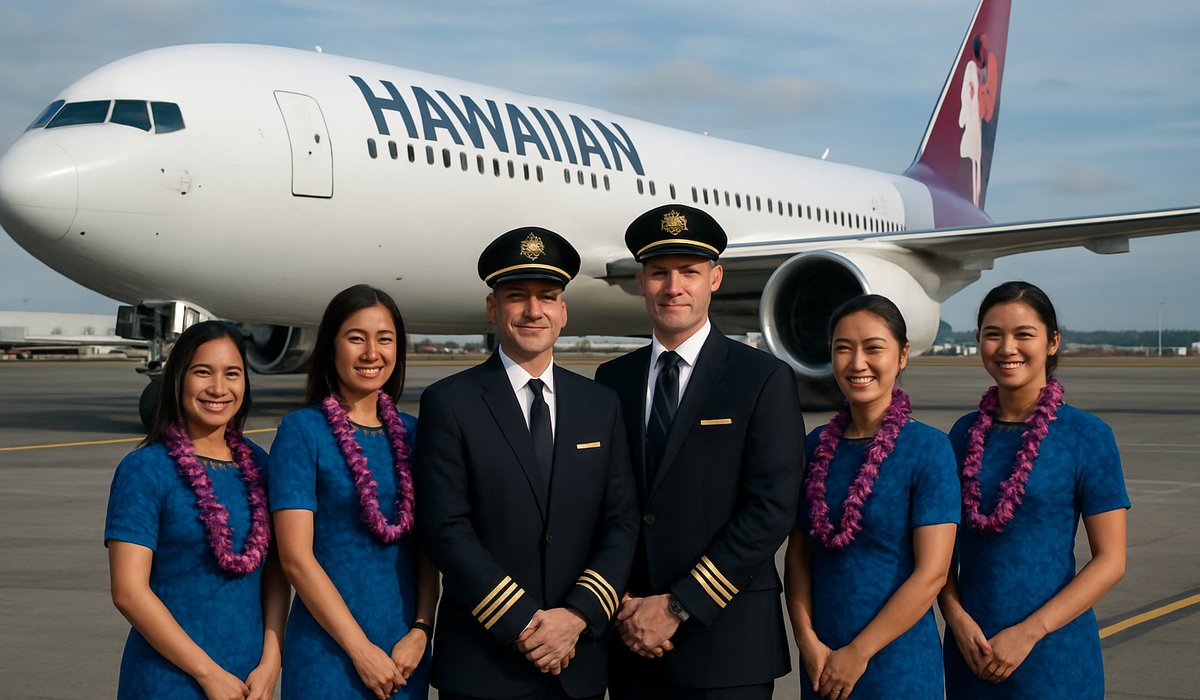
Image generated by AI
Hawaiian Airlines Flight Attendants Ordered to Abandon Iconic Aloha Uniforms on Alaska-Branded Seattle Routes
Integration tensions emerge as Alaska Air Group consolidates Hawaiian Airlines operations, raising questions about brand identity and workforce morale in the competitive aviation industry
Consolidation Creates Operational Friction
Hawaiian Airlines' integration into Alaska Air Group is triggering significant operational changes that extend far beyond typical corporate restructuring. Approximately 250 flight attendants have been instructed to forgo traditional Hawaiian service elements—including lei, floral accessories, and signature aloha shirts—when operating routes departing from Seattle–Tacoma International Airport (SEA) under the Alaska Airlines brand banner.
The directive represents a visible clash between two distinct airline cultures as Alaska Air Group moves to streamline its dual-brand operations following the acquisition. For Hawaiian Airlines crew members accustomed to embodying the carrier's distinctive Pacific island identity, the requirement marks a departure from the carrier's established service philosophy that has long differentiated it in the competitive aviation marketplace.
Brand Strategy Versus Cultural Identity
The move reflects broader consolidation strategy within Alaska Air Group, which maintains both Hawaiian and Alaska Airlines as separate operational entities despite unified ownership. However, the restriction on traditional Hawaiian uniforms signals how integration priorities are filtering down to frontline staff on international long-haul routes from Seattle.
Industry observers note this represents a delicate balance—preserving operational consistency across a multi-brand portfolio while managing employee expectations and maintaining the cultural identity that historically set Hawaiian Airlines apart in a crowded market.
Workforce Pushback Signals Deeper Concerns
West Hawaii Today's reporting on the uniform restrictions suggests underlying tensions within the newly consolidated operation. Flight attendant unions and employee advocacy groups have flagged concerns about workforce morale and the erosion of distinctive service standards that once gave Hawaiian Airlines competitive advantages.
The directive raises questions about how airlines navigate brand consolidation without alienating staff or diluting the service differentiation that attracts passengers. In an industry where personnel costs and operational efficiency drive profitability, workforce satisfaction remains critical to service quality metrics.
Broader Aviation Industry Implications
This consolidation challenge occurs amid broader industry trends toward mega-carrier consolidation and cost optimization. As legacy carriers and regional operators merge under holding company structures, questions about maintaining brand distinction and employee culture grow increasingly relevant to aviation analysts.
The Hawaiian Airlines-Alaska Air Group integration will likely serve as a case study for how airlines manage dual-brand operations while maintaining operational efficiency and workforce engagement in an era of industry consolidation.
FAQ: Airline Consolidation and Crew Operations
Q: Why are airlines consolidating uniform standards across brands? A: Operational efficiency and cost reduction drive consolidation efforts, though they can conflict with distinctive brand identities and employee culture.
Q: How does airline consolidation affect travel costs? A: While crew uniforms don't directly impact baggage charges or jet fuel pricing, consolidation typically precedes cost optimization that may affect passenger fees and service standards.
Q: What is Hawaiian Airlines' current operational status? A: Hawaiian Airlines operates as a subsidiary brand under Alaska Air Group ownership, maintaining separate branding while integrating operational systems.
Q: How do flight attendant unions respond to uniform policy changes? A: Unions typically negotiate uniform standards as part of labor agreements, and significant changes often trigger employee grievances and morale concerns.
Q: Does this affect passengers booking Hawaiian Airlines flights from Seattle? A: Service quality and crew experience may be impacted by operational changes, potentially affecting passenger-facing service consistency on affected routes.
Related Travel Guides
Flight Delay Compensation Guide 2026
Understanding Airline Route Changes
Airport Security Process Updated (2026)
External Resources
Disclaimer
This article is for informational and educational purposes only. It does not constitute legal, financial, or professional advice. While we strive to provide accurate and up-to-date information, travel policies, regulations, and conditions change rapidly. Always verify information with official sources before making travel decisions. Nomad Lawyer makes no representations about the accuracy, reliability, completeness, or suitability of the information provided. Readers should consult qualified professionals for advice specific to their circumstances. The views expressed in this article are those of the author and do not necessarily reflect the views of Nomad Lawyer.
Kunal K Choudhary
Co-Founder & Contributor
A passionate traveller and tech enthusiast. Kunal contributes to the vision and growth of Nomad Lawyer, bringing fresh perspectives and driving the community forward.
Learn more about our team →