
2050 SITA Report Reveals AI and Biometrics Transform Global Aviation
SITA's 2025 Impact Report shows how AI, biometrics, and digital tech enable airports to handle 10 billion annual passengers by 2050 without major infrastructure expansion. Key benefits include faster borders and fewer delays for travelers worldwide.

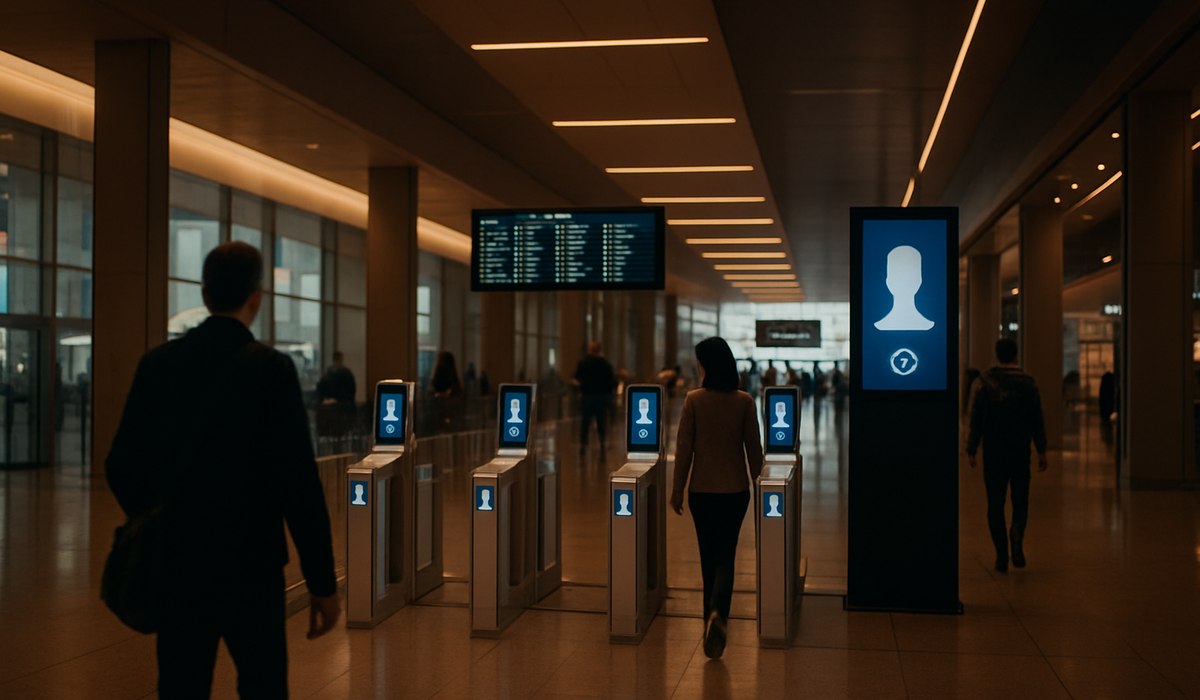
Image generated by AI
SITA's 2050 Vision: Managing 10 Billion Passengers Through Digital Innovation
SITA's Impact Report 2025 reveals how artificial intelligence, biometrics, and digital technologies will enable the aviation industry to accommodate nearly 10 billion passengers annually by 2050 without requiring massive physical infrastructure expansion. The report demonstrates that smarter airport operations, streamlined border processing, and intelligent baggage systems will become essential tools for managing unprecedented travel demand. Rather than building new terminals and runways at every major hub, airports worldwide will leverage technology to increase capacity, reduce delays, and enhance passenger safety. This shift fundamentally changes how the industry prepares for decades of growth.
How AI and Biometrics Are Transforming Airport Operations
Artificial intelligence and biometric authentication are revolutionizing passenger flow through airports. The 2050 SITA report highlights how facial recognition, iris scanning, and AI-powered systems reduce bottlenecks at security checkpoints and immigration gates. Passengers move through terminals faster when systems verify identities instantly rather than relying on document inspection alone.
Airlines and airport operators increasingly deploy AI algorithms to predict equipment failures before they occur, minimizing unexpected maintenance delays. Machine learning models analyze weather patterns in real time, enabling better flight planning and route optimization. These technologies work together to create seamless passenger experiences while maximizing operational efficiency. Modern airports testing these systems report 30-40% improvements in processing times, setting the foundation for handling exponentially larger crowds without service degradation.
Faster Borders and Fewer Delays: Key Benefits for Travelers
The technology highlighted in the 2050 SITA report directly benefits millions of international travelers annually. Biometric borders eliminate traditional passport queues, reducing wait times from 45 minutes to under 10 minutes at major hubs. Passengers clear immigration faster, meaning more time for shopping, dining, or reaching departure gates without stress.
Baggage mishandling—currently affecting 24.8 million bags annually worldwide—drops dramatically with AI tracking systems. Each bag receives real-time monitoring from check-in through final delivery, with automated notifications keeping passengers informed. Weather-related delays decrease when AI provides accurate predictions and suggests optimal routes before storms develop. The cumulative effect creates smoother journeys with fewer surprises and missed connections. Business travelers particularly benefit from predictable flight schedules, while leisure passengers enjoy reduced airport anxiety and stress.
Building Capacity Without Physical Expansion
Traditional airport expansion costs billions and takes 10-15 years to complete. The 2050 SITA report emphasizes that digital transformation offers a faster, cheaper alternative. Smart gate management systems optimize aircraft turnaround times, allowing each gate to handle more flights daily. Automated baggage handling facilities reduce physical sorting space requirements while processing more items hourly.
Artificial intelligence optimizes passenger routing through terminals, preventing crowding at specific areas. Digital signage and wayfinding systems direct travelers efficiently, reducing time spent searching for bathrooms, restaurants, or gates. Parking management systems guide drivers to available spots instantly, reducing congestion in airport approaches. These innovations allow airports to increase annual passenger capacity by 50-70% using existing infrastructure, avoiding environmentally destructive sprawl and preserving communities surrounding aviation hubs.
What Airlines and Airports Must Do Now
Industry leaders cannot wait until 2050 to implement these technologies. The report calls for immediate investment in digital infrastructure, staff training, and regulatory alignment. Airlines must upgrade booking systems to integrate with biometric databases and AI prediction engines. Airports need to modernize security infrastructure, baggage systems, and operational control centers.
Governments play a crucial role by standardizing biometric data sharing across borders and establishing consistent AI governance frameworks. Privacy regulations must evolve to protect passenger information while enabling seamless technology integration. Airports and airlines should pilot new systems at scale now, identifying challenges before they affect millions of travelers. Early investment positions industry leaders as innovators while building competitive advantages in an increasingly crowded market.
| Technology | Current Impact | 2050 Projection | Key Benefit |
|---|---|---|---|
| Facial Recognition | 15% of major airports | 85% global coverage | Reduces border wait times by 75% |
| AI Maintenance Prediction | 12% reduction in delays | 40% reduction in delays | Prevents equipment failures preemptively |
| Biometric Baggage Tracking | 8 million bags tracked | 2.5 billion bags tracked | Near-zero mishandling rates |
| Smart Gate Management | 5-8% capacity increase | 50-70% capacity increase | No terminal expansion needed |
| Weather AI Forecasting | 20% of flight planning | 95% of flight planning | Optimizes routes in real time |
| Passenger Flow AI | 3 major hubs | 300+ airports globally | Prevents terminal congestion patterns |
What This Means for Travelers
Understanding the 2050 SITA report's implications helps you prepare for aviation's digital future. Here's what changes for passengers like you:
-
Arrive earlier for documents – Biometric systems work faster, but initial setup requires your voluntary participation; early adoption ensures smooth integration into your routine.
-
Expect digital-first communication – Airlines and airports will notify you via apps rather than announcements; download official carrier apps and enable notifications.
-
Register biometric data proactively – Many countries now offer advance biometric enrollment; complete this before traveling to receive faster border processing benefits.
-
Check real-time baggage tracking – Monitor your luggage through airline apps rather than worrying during layovers; digital systems eliminate mystery about bag locations.
-
Plan for weather-optimized itineraries – Expect more accurate delay forecasts and route changes based on AI predictions; flexibility becomes more valuable than rigid schedules.
-
Verify airline technology adoption – Not all carriers implement these systems simultaneously; confirm your airline uses the technology highlighted in the 2050 SITA report before booking.
Frequently Asked Questions
What is the 2050 SITA report, and why does it matter for travelers?
The SITA Impact Report 2025 projects how aviation will accommodate 10 billion annual passengers by 2050 using AI, biometrics, and digital technology rather than massive infrastructure expansion. It matters because these technologies directly improve your travel experience through faster processing, fewer delays, and better baggage handling across all international routes.
When will biometric airports be standard globally?
Major hubs in North America, Europe, and Asia will implement biometric systems by 2030-2032. Secondary airports and developing nations may follow by 2040-2045. The 2050 SITA report suggests worldwide adoption by mid-century, but early adopter regions will benefit first.
Do I have to use biometric systems, or can I opt out?
Current regulations require biometric participation for international travelers in most countries. However, traditional document verification typically remains available as backup, though with longer processing times. Check your destination country's specific requirements before traveling.
Will AI reduce airline ticket prices?
Operational efficiency improvements could lower airline costs, potentially leading to modest ticket savings. However, demand for air travel typically rises faster than price decreases, so ticket affordability remains unpredictable. The 2050 SITA report emphasizes capacity and reliability benefits rather than pricing impacts.
Related Travel Guides
- Boston Logan Launches America's First Remote TSA Screening Hub, Transforming Airport Security Experience
- Kyrgyzstan and Montenegro Tourism Records Massive Expansion as $200 Oil and US-Iran Conflict Disrupt Global Travel Hubs: How Bishkek, Podgorica, Saudi Arabia, and UAE Navigate 2026 Energy Crisis and Strait of Hormuz Lockdown
- American Airlines Pilot Executes Emergency Braking To Avert Collision With Ground Vehicle at Charlotte Airport
Disclaimer
This article is based on SITA's publicly released Impact Report 2025
Disclaimer
This article is for informational and educational purposes only. It does not constitute legal, financial, or professional advice. While we strive to provide accurate and up-to-date information, travel policies, regulations, and conditions change rapidly. Always verify information with official sources before making travel decisions. Nomad Lawyer makes no representations about the accuracy, reliability, completeness, or suitability of the information provided. Readers should consult qualified professionals for advice specific to their circumstances. The views expressed in this article are those of the author and do not necessarily reflect the views of Nomad Lawyer.
Preeti Gunjan
Contributor & Community Manager
A passionate traveller and community builder. Preeti helps grow the Nomad Lawyer community, fostering engagement and bringing the reader experience to life.
Learn more about our team →