
Zinc Airline Australia Jetstar: New Ultra-Low-Cost Disruptor Takes Flight 2026
Zinc airline Australia is launching an ultra-low-cost challenge to Jetstar and the Big Three, leveraging Western Sydney International Airport to bypass legacy constraints that grounded previous rivals in 2026.

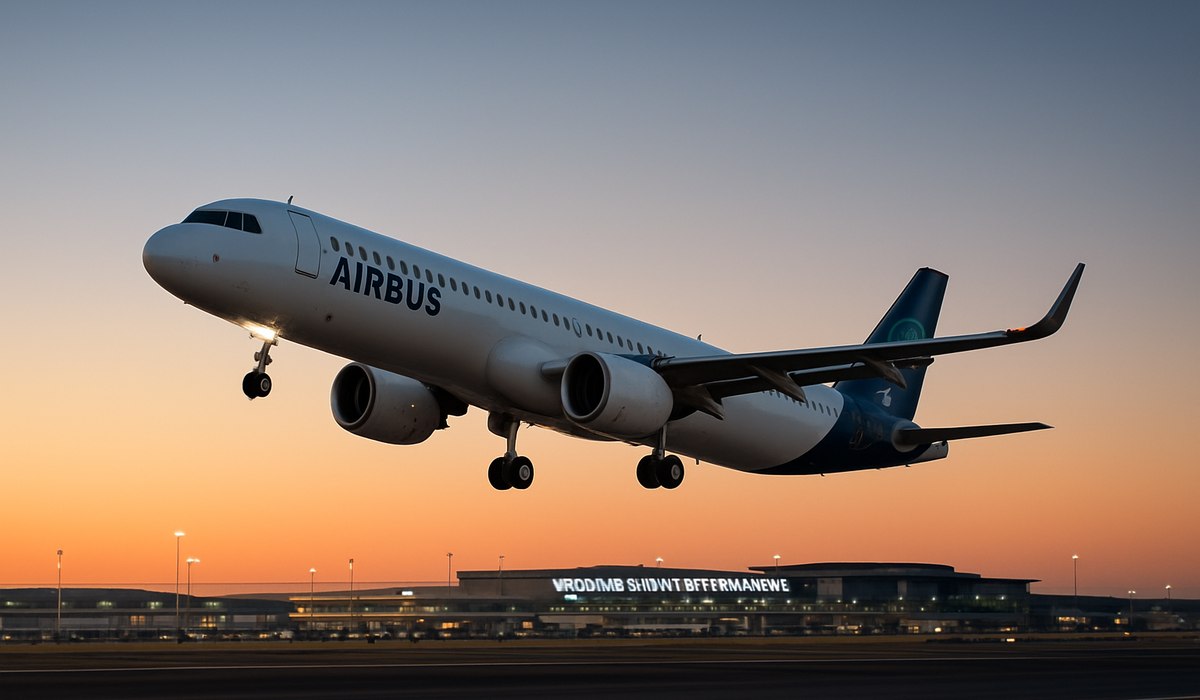
Image generated by AI
Australian Startup Zinc Aims to Disrupt Domestic Aviation With Ultra-Low Fares
Zinc airline Australia is launching an ambitious challenge to Jetstar, Qantas, and Virgin Australia with a bold ultra-low-cost model targeting Western Sydney International Airport as its home base. The proposed carrier, founded by aviation veteran Peter Kelly (former Ansett, Qantas, and Jetstar executive), seeks to raise $100 million to launch commercial operations in late 2026. Unlike previous challengers that faltered—Bonza, Compass, Impulse, and Tigerail—Zinc believes it has engineered a sustainable cost structure by deploying new Airbus A321neo aircraft in high-density 232-seat configurations from an uncongested airport hub. The carrier plans to avoid the slot congestion and curfew restrictions that grounded earlier Sydney market entrants, fundamentally reshaping how competition functions in Australia's domestic aviation sector.
Zinc's Challenge to Australia's Big Three
The Australian ultra-low-cost carrier market has been a graveyard for startups. Zinc airline Australia enters a saturated duopoly where Qantas and Virgin Australia control approximately 65% of domestic capacity, with Jetstar (owned by Qantas) commanding another significant slice. Zinc's positioning directly confronts this oligopoly with a fare promise below all three incumbents—a claim that demands structural cost advantages beyond marketing hyperbole.
Zinc's competitive argument rests on addressing what killed its predecessors. Bonza, launched in 2021, collapsed under insufficient capitalization and poor route selection. Regional Express (Rex) struggled when it expanded from regional monopolies into high-competition city pairs. These failures weren't demand-driven; they reflected poor operational planning. Zinc founder Kelly explicitly references these lessons, positioning his airline as "capital-disciplined, single-fleet, focused, efficient."
The ultra-low-cost model depends on ruthless unit cost reduction. A single aircraft type (A321neo) simplifies maintenance, crew training, and spare parts inventory. The 232-seat all-economy cabin maximizes revenue per flight hour. Base-assigned operations—where aircraft and crew return home nightly—eliminates expensive transient crew hotels and reduces turnaround complexity. For routes like Western Sydney to Melbourne or Brisbane, this model theoretically works. Whether passengers accept stripped-down service and tight schedules remains the commercial test.
Why Western Sydney Changes the Game
Western Sydney International Airport fundamentally alters the structural economics of Sydney aviation competition. Scheduled to open October 2026, WSI operates without the curfew (airport closes 10 p.m. at Kingsford Smith) or slot controls that have made Sydney Kingsford Smith (SYD) a fortress for legacy carriers. This operational freedom is revolutionary for ultra-low-cost economics.
Aircraft utilization—flights per aircraft per day—drives profitability in thin-margin, high-volume models. At Kingsford Smith, curfews force overnight idle time and slot scarcity demands premium positioning fees. WSI's 24-hour operations and unlimited capacity let Zinc schedule five or six flights per aircraft daily. A Melbourne shuttle running 06:00, 09:00, 12:00, 15:00, and 18:00 departures generates double the revenue per airframe compared to competitors hamstrung by curfew windows.
WSI's catchment adds another advantage. The airport serves nearly 3 million people in Western Sydney—a market comparable to Brisbane's entire metropolitan area, yet previously underserved by premium-priced SYD operations. Government investment exceeding $25 billion (airport, M12 motorway, Sydney Metro extensions) creates infrastructure that directly subsidizes Zinc's cost base through reduced ground handling and improved surface transport.
Learning From Previous Airline Failures
Australian aviation history documents repeated ultra-low-cost failures, each offering strategic lessons Zinc airline Australia claims to have internalized. Compass Airlines (1990-1991) launched with unsuitable aircraft and inadequate capitalization. Impulse (1995-2001) struggled with route expansion discipline. Tigerair Australia (2007-2020) faced aggressive incumbent response and fuel cost volatility. Bonza (2021-2023) exemplified undercapitalization and poor market timing during post-COVID cost inflation.
What separates these failures wasn't passenger demand—it was execution. Compass lacked deep pockets to survive competitive response. Impulse expanded too broadly across regional and capital-city routes, diluting focus. Tigerair underestimated Jetstar's willingness to match fares temporarily, bleeding Tigerair's limited equity. Bonza launched during peak fuel costs and aviation inflation, destroying unit economics before scale arrived.
Zinc's strategy explicitly avoids these traps. Rather than attempting regional penetration, it focuses on high-frequency, high-volume city pairs: Sydney–Melbourne, Sydney–Brisbane, Melbourne–Brisbane. Rather than launching with legacy aircraft, it orders new A321neos with modern fuel efficiency and high commonality (reducing pilot/mechanic training costs). Rather than underfunding, it targets $100 million in equity, enough for three years' pre-operational costs and initial aircraft deposits.
The competitive response Zinc faces will differ fundamentally from its predecessors. Jetstar cannot match Zinc's unit costs—legacy infrastructure, broader networks, and union labor agreements preclude the ruthless simplification Zinc executes. Qantas and Virgin Australia will likely compete through service differentiation rather than wholesale price wars. This structural separation gives Zinc breathing room earlier entrants never possessed.
The Aircraft and Cost Model
Zinc's aircraft selection—Airbus A321neo—represents a calculated departure from previous ultra-low-cost experiments. Tigerair operated older 180-seat A320 aircraft; Bonza planned 188-seat 737 MAX aircraft. Zinc's A321neo, seating 232 in dense all-economy, generates approximately 15-20% greater revenue per flight hour than competitors while consuming only 5-10% additional fuel per seat.
The ultra-low-cost economics depend on four cost pillars: fuel efficiency, unit labor costs, capital efficiency, and utilization. The A321neo achieves 23-25% better fuel burn per seat than A320 family predecessors. New aircraft defer maintenance for 5-7 years, reducing reserve fund requirements. The single-type fleet shrinks training expenses—all pilots and mechanics qualify for identical operations.
Unit labor costs represent the critical vulnerability. Jetstar pays significantly less than Qantas mainline, yet more than ultra-low-cost norms globally. Ryanair operates at approximately $40-50 per revenue hour for crew; Jetstar at $80-100. Zinc's target remains undisclosed but must land below Jetstar to sustain fares 15-20% lower than competitors. Whether Australian labor agreements permit such costs remains uncertain.
The base-assignment model drives utilization economics. A 232-seat aircraft generating 6 flights daily at 80% load factor (typical for city pairs) produces 1,113 seats daily. At $55 average fare (Zinc's rumored target), that's $61,215 revenue per aircraft daily. With crew, fuel, maintenance, and overhead allocated across this volume, unit economics become sustainable at Zinc's pricing targets—assuming everything functions as planned.
Zinc's Planned Route Network and Growth Timeline
Zinc articulates a methodical, five-year expansion plan rather than aggressive growth. Year one targets three bases: Western Sydney, Melbourne, and Brisbane. Year two adds Gold Coast services. Year three brings Adelaide. By year four, seven route pairs operate across five airports: Sydney–Melbourne, Sydney–Brisbane, Sydney–Gold Coast, Melbourne–Brisbane, Melbourne–Gold Coast, Brisbane–Adelaide, Adelaide–Sydney.
This measured expansion contrasts sharply with
Disclaimer
This article is for informational and educational purposes only. It does not constitute legal, financial, or professional advice. While we strive to provide accurate and up-to-date information, travel policies, regulations, and conditions change rapidly. Always verify information with official sources before making travel decisions. Nomad Lawyer makes no representations about the accuracy, reliability, completeness, or suitability of the information provided. Readers should consult qualified professionals for advice specific to their circumstances. The views expressed in this article are those of the author and do not necessarily reflect the views of Nomad Lawyer.
Raushan Kumar
Founder & Lead Developer
Full-stack developer with 11+ years of experience and a passionate traveller. Raushan built Nomad Lawyer from the ground up with a vision to create the best travel and law experience on the web.
Learn more about our team →