
The Boeing 747's Iconic Upper Deck Hump: Why Modern Aviation Has Abandoned Its Most Distinctive Design Feature
Breaking airline news and aviation industry updates for 2026.

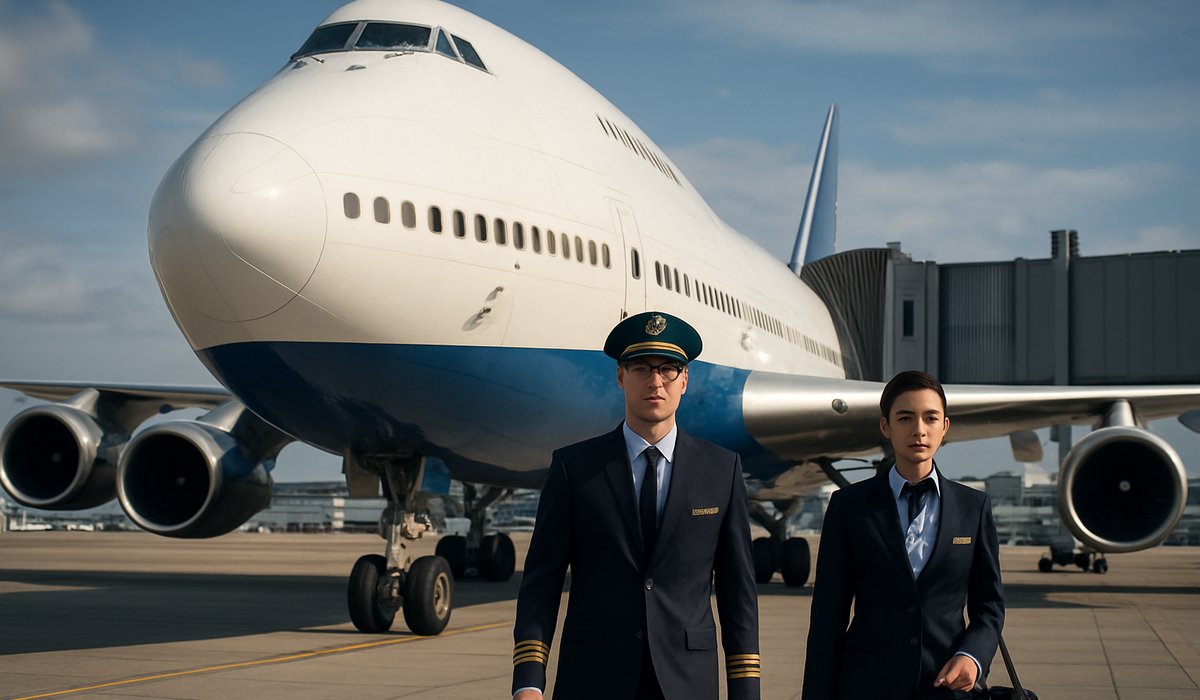
Image generated by AI
The Boeing 747's Iconic Upper Deck Hump: Why Modern Aviation Has Abandoned Its Most Distinctive Design Feature
Engineering constraints, aerodynamic efficiency, and changing market demands explain why aircraft manufacturers have shelved one of commercial aviation's most beloved silhouettes
A Silhouette That Defined an Era
The Boeing 747's upper deck hump remains one of the most instantly recognizable profiles in transportation history. That distinctive bulge—rising elegantly from the fuselage just behind the cockpit before tapering back into the aircraft's body—became synonymous with long-haul luxury travel for nearly five decades. The shape conveyed sophistication and engineering prowess to the traveling public, even to those who had never set foot inside an airport. Yet despite the 747's legendary status and the design's undeniable appeal, no contemporary aircraft manufacturer has seriously attempted to resurrect this architectural hallmark of the jet age.
The Engineering Realities Behind Modern Aircraft Design
The reasons lie in fundamental shifts in aerodynamic philosophy and structural engineering. Modern widebody aircraft prioritize continuous fuselage efficiency and weight optimization in ways that fundamentally conflict with the 747's signature bump. Contemporary jets, including the Airbus A380 and Boeing 787, employ alternative designs that maximize cargo and passenger capacity without the structural complications the hump introduces.
The upper deck arrangement, while visually striking, creates complex structural stress points where the hump meets the main fuselage. These transition zones demand reinforced materials and intricate engineering solutions that add weight and manufacturing complexity. In an industry where fuel efficiency directly impacts profitability and environmental performance, such design inefficiencies have become economically untenable.
Evolving Market Demands and Passenger Expectations
Beyond engineering constraints, airline economics have transformed dramatically since the 747 first flew in 1970. Modern carriers prioritize cargo capacity, operational flexibility, and lower per-seat costs rather than the ostentatious multi-deck luxury arrangements that once defined premium international travel. The rise of twin-aisle widebodies with distributed seating has rendered the concentrated upper-deck layout obsolete from a commercial standpoint.
Furthermore, contemporary aircraft feature advanced composite materials and sophisticated avionics that demand different structural approaches. The modular, uniform fuselage designs employed by manufacturers like Airbus and Boeing accommodate modern systems more effectively than heritage configurations ever could.
The 747's Legacy in a Streamlined Future
As the aviation industry pivots toward sustainability and operational efficiency, the 747's upper deck hump remains an artifact of aviation's golden age—beloved in memory but incompatible with modern realities. The silhouette endures as an icon precisely because it belongs to a bygone era, one where form could triumph alongside function.
FAQ: Boeing 747 Design and Modern Aircraft Engineering
Why didn't manufacturers copy the 747's upper deck design for newer aircraft? Modern aerodynamic efficiency, fuel economy requirements, and structural engineering principles make the hump design economically and technically impractical for contemporary jets.
What advantages did the 747's upper deck provide? It increased passenger capacity while maintaining aerodynamic integrity, offered distinctive first-class seating arrangements, and created an iconic visual identity that became synonymous with premium air travel.
Do modern widebody aircraft have comparable deck arrangements? No. Aircraft like the A380 and 787 employ continuous double-deck or single-deck configurations optimized for current manufacturing, fuel efficiency, and operational requirements.
Could future aircraft revive this design feature? Unlikely, unless revolutionary materials or propulsion systems fundamentally change aircraft engineering constraints—developments that remain speculative at present.
Why is the 747's shape still culturally significant? The silhouette represents aviation's glamorous era and remains instantly recognizable globally, transcending its functional origins to become a cultural symbol.
Related Travel Guides
Flight Delay Compensation Guide 2026
Understanding Airline Route Changes
Airport Security Process Updated (2026)
External Resources
Disclaimer
This article is for informational and educational purposes only. It does not constitute legal, financial, or professional advice. While we strive to provide accurate and up-to-date information, travel policies, regulations, and conditions change rapidly. Always verify information with official sources before making travel decisions. Nomad Lawyer makes no representations about the accuracy, reliability, completeness, or suitability of the information provided. Readers should consult qualified professionals for advice specific to their circumstances. The views expressed in this article are those of the author and do not necessarily reflect the views of Nomad Lawyer.
Preeti Gunjan
Contributor & Community Manager
A passionate traveller and community builder. Preeti helps grow the Nomad Lawyer community, fostering engagement and bringing the reader experience to life.
Learn more about our team →