
A380 Comeback Becomes High-Stakes Gamble as UK Startup Bets Its Future on Superjumbo Aircraft
Breaking airline news and aviation industry updates for 2026.

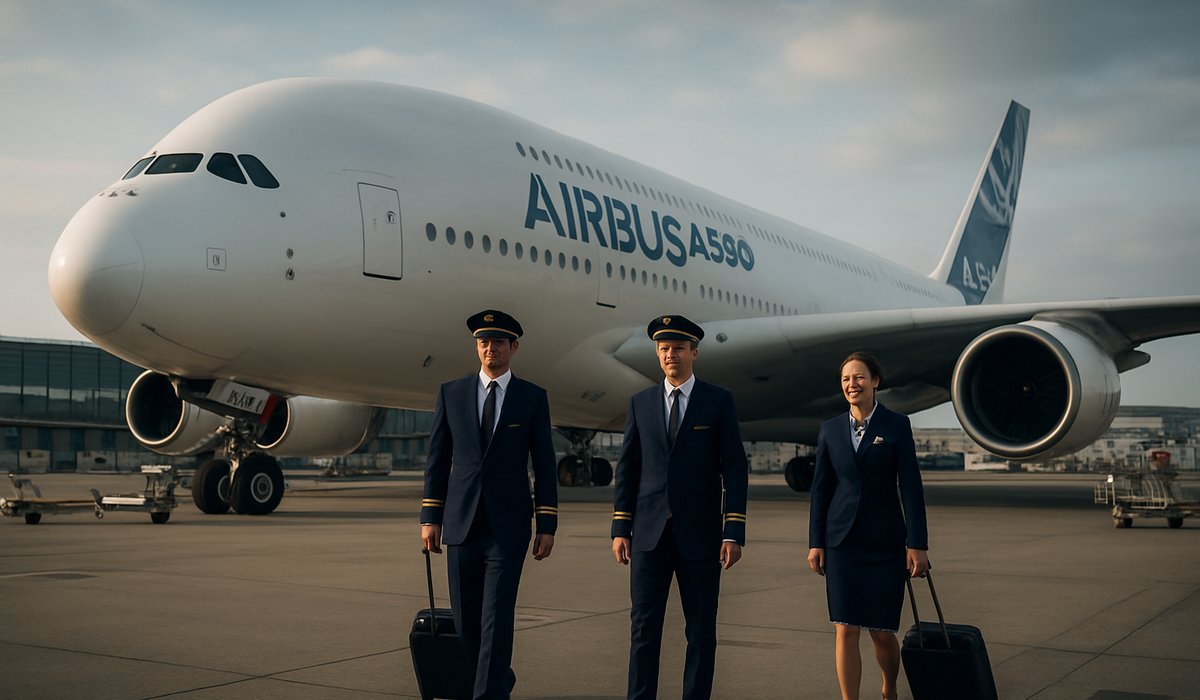
Image generated by AI
A380 Comeback Becomes High-Stakes Gamble as UK Startup Bets Its Future on Superjumbo Aircraft
Established carriers forced back to massive jets face supply pressures, but a new airline's voluntary choice raises critical questions about aircraft economics and startup viability
The Paradox of the World's Largest Passenger Jet
The Airbus A380—once celebrated as the pinnacle of aviation ambition—is experiencing an unexpected resurgence. Yet this revival masks a fundamental contradiction in today's airline industry: while legacy carriers are reluctantly returning the double-deck superjumbo to active service due to capacity constraints and aircraft shortages, an audacious United Kingdom-based startup has voluntarily selected the A380 as its flagship aircraft for launch operations.
The strategic calculus differs sharply between these two scenarios. Established airlines operating mature route networks with dense passenger demand have found themselves backed into a corner. Persistent delays affecting Boeing's 777X program have compressed aircraft delivery timelines, leaving carriers with limited options to meet soaring travel demand and secure scarce airport slots. For these operators, reviving retired A380s represents a pragmatic, if costly, interim solution.
The startup's decision, however, defies conventional wisdom and raises urgent questions about whether the world's largest commercial aircraft can generate sustainable economics for a carrier operating from a limited base with nascent brand recognition.
Supply Pressures Drive Unexpected Resurrection
The aviation manufacturing landscape remains severely constrained. Boeing's 777X—initially promised as the next-generation wide-body workhorse—continues experiencing production setbacks that have cascaded across airline fleets globally. Simultaneously, Airbus production capacity remains stretched thin despite ongoing ramp-up efforts.
This supply scarcity has transformed the A380 from a commercial burden into unexpected demand. Airlines that retired the superjumbo just years ago are now evaluating bringing mothballed examples back into revenue service. The aircraft's 555-seat capacity (in typical three-class configurations) allows carriers to deploy significant capacity on peak-demand routes without multiplying daily flight frequencies—a critical advantage when airport slot availability remains fiercely constrained.
The Startup Equation: Ambition or Miscalculation?
The emerging British carrier's commitment to the A380 represents either visionary strategy or a high-stakes miscalculation that could define its operational future. Launching a new airline demands extraordinary operational efficiency, cost discipline, and rapid market penetration. The A380's operational model—requiring specialized ground infrastructure, maintenance expertise, and crew training—compounds startup complexity considerably.
Newer aircraft typically offer superior fuel economics and lower maintenance burden, providing cost advantages crucial for establishing market position. The A380's operating costs per available seat mile remain substantially higher than modern twin-aisle alternatives, a disadvantage that startups can ill-afford while building brand loyalty and market share.
What This Means for Aviation's Future
The competing narratives surrounding the A380 illustrate aviation's current inflection point. Capacity constraints and manufacturing delays are reshaping fleet strategies across the industry. Whether the superjumbo's comeback represents a temporary pandemic-recovery phenomenon or signals a genuine shift in wide-body demand remains uncertain.
Frequently Asked Questions
Why are airlines bringing A380s back into service? Established carriers face severe aircraft supply constraints due to Boeing 777X delays and intense pressure to secure airport slots. The A380's large capacity allows them to increase seat availability without additional daily flights, maximizing scarce slot utilization.
Is the A380 economically viable for new airlines? Operating an A380 requires substantial upfront infrastructure investment, specialized crew training, and maintenance expertise—challenges that can strain startup budgets. Modern twin-aisle aircraft typically offer superior fuel efficiency and lower costs per seat.
What does the A380 comeback reveal about aviation capacity? Current manufacturing delays and slot scarcity are forcing carriers to reconsider previously retired aircraft, indicating that demand recovery has outpaced industry supply capacity and production capabilities.
How do A380 operating costs compare to newer aircraft? The A380's cost per available seat mile substantially exceeds modern alternatives like the Boeing 787 or Airbus A350, though unit costs decrease on very high-capacity, high-frequency routes.
Could A380 production resume? Airbus halted A380 production in 2021 due to insufficient demand. Widespread fleet reactivation could influence future production decisions, though significant tooling and supply chain reestablishment would be required.
Related Travel Guides
- Dublin Airport Abolishes 100ml Liquid Rule With Next-Gen C3 Scanners as Aer Lingus, Ryanair, British Airways, Lufthansa, United, Delta and American Airlines Prepare for Record 11 Million Summer Passengers in 2026
- London Airport Transfers Bypass Travel Chaos: How Private Chauffeurs Defeat Heathrow and Gatwick Rail Strikes: Airline News
- Da Nang Tourism Explodes as Vietjet Air Reopens Direct Moscow Route, Eradicating Multi-Hub Travel Chaos and Securing Central Vietnam as Russia’s Premier Tropical Escape: Latest Airline News and Aviation Updates
Disclaimer
This article is for informational and educational purposes only. It does not constitute legal, financial, or professional advice. While we strive to provide accurate and up-to-date information, travel policies, regulations, and conditions change rapidly. Always verify information with official sources before making travel decisions. Nomad Lawyer makes no representations about the accuracy, reliability, completeness, or suitability of the information provided. Readers should consult qualified professionals for advice specific to their circumstances. The views expressed in this article are those of the author and do not necessarily reflect the views of Nomad Lawyer.
Kunal K Choudhary
Co-Founder & Contributor
A passionate traveller and tech enthusiast. Kunal contributes to the vision and growth of Nomad Lawyer, bringing fresh perspectives and driving the community forward.
Learn more about our team →