
Next-Generation Supersonic Jet Breaks 30-Year Commercial Aviation Drought—But Design Marks Radical Departure From Concorde Legacy
Breaking airline news and aviation industry updates for 2026.

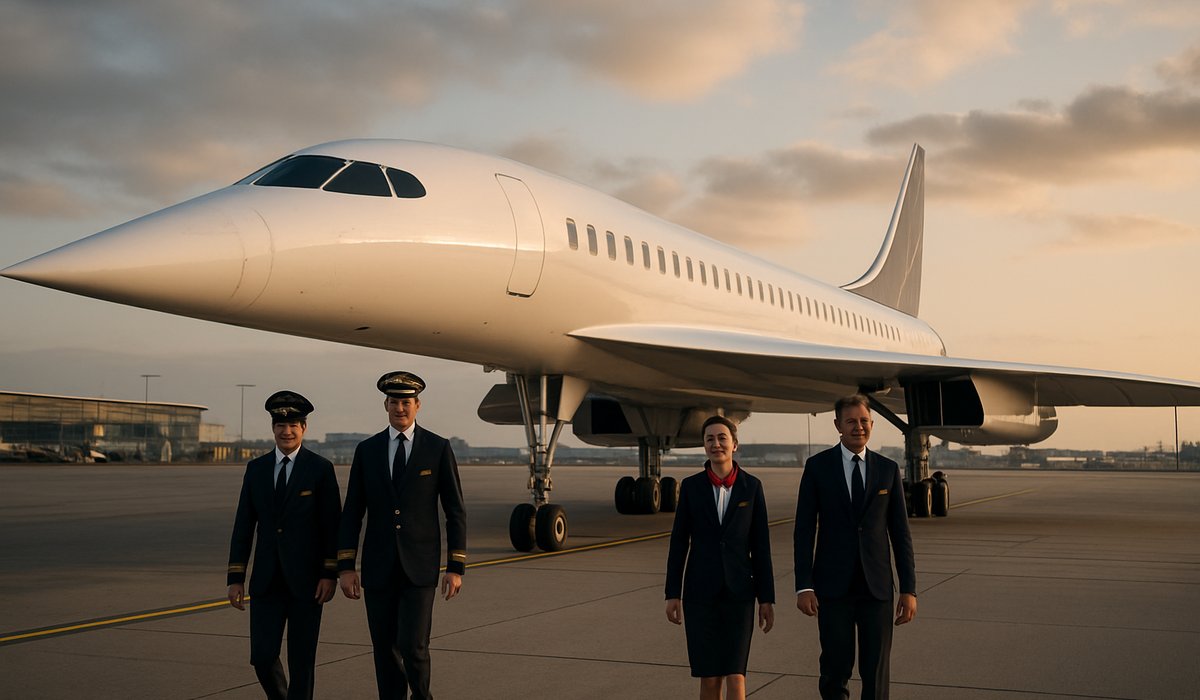
Image generated by AI
Next-Generation Supersonic Jet Breaks 30-Year Commercial Aviation Drought—But Design Marks Radical Departure From Concorde Legacy
Boom Overture secures 130 orders from major carriers as aviation industry pivots toward faster, more efficient hypersonic travel
Revolutionary Aircraft Signals End of Post-Concorde Era
After three decades without commercial supersonic service, the aviation industry is poised for a dramatic transformation. The Boom Overture—an entirely reimagined approach to high-speed flight—has already secured unprecedented backing from three of the world's largest airlines, signaling genuine market confidence in the return of supersonic passenger travel.
United Airlines, American Airlines, and Japan Airlines have collectively placed 130 orders for the aircraft, representing a substantial commitment to technology that will fundamentally reshape how premium long-haul passengers experience air travel. The development comes amid growing demand for time-efficient connectivity between major global business hubs, where the ability to halve flight duration commands significant commercial appeal.
A Design Philosophy Worlds Apart From Concorde
Unlike the iconic, needle-nosed Concorde that dominated transatlantic routes from 1969 until 2003, the Overture represents an entirely different engineering paradigm. The aircraft will accommodate up to 80 passengers—substantially larger than its predecessor—while employing advanced aerodynamic principles, modern materials, and fuel-efficient propulsion systems that reflect four decades of technological advancement.
The architectural shift reflects lessons learned from Concorde's operational challenges: extreme fuel consumption, limited passenger capacity, and the substantial infrastructure modifications required at airports. The Overture addresses these constraints through next-generation design innovations that promise greater operational viability and economic sustainability.
Market Momentum and Industry Implications
The 130 pre-orders demonstrate compelling confidence from major carriers traditionally focused on cost optimization and operational efficiency. This institutional backing suggests that airlines believe supersonic capability will command premium pricing sufficient to offset elevated operational expenses—a critical factor that plagued Concorde's profitability throughout its service history.
The aircraft's development emerges during a period of significant aviation industry transformation, as carriers balance carbon-neutral growth mandates with consumer demand for faster connectivity. The Overture's projected performance characteristics position it as a potential bridge between traditional jet-powered aviation and future sustainable propulsion technologies.
What Comes Next
Boom Aeronautics has outlined ambitious timelines for design maturation and initial deliveries. The aircraft faces regulatory certification challenges, fuel efficiency validation, and infrastructure readiness assessments at candidate departure airports. Industry observers will closely monitor whether the company can deliver on performance specifications while maintaining economic viability in an increasingly sustainability-conscious market.
Frequently Asked Questions
How does the Boom Overture differ from Concorde in design? The Overture employs modern materials, advanced aerodynamics, and contemporary propulsion systems that improve fuel efficiency and passenger capacity compared to the 1960s-era Concorde technology.
Which airlines have ordered the Boom Overture? United Airlines, American Airlines, and Japan Airlines have collectively placed 130 orders for the aircraft.
When will supersonic commercial flights resume? Boom Aeronautics has outlined development timelines, but regulatory certification and infrastructure preparation remain ongoing. Commercial operations remain several years away.
How many passengers will the Overture carry? The aircraft will accommodate up to 80 passengers, substantially larger than the Concorde's 100-seat capacity allowed for actual supersonic cruising.
What speeds will the Overture achieve? The aircraft is designed to cruise at approximately twice the speed of conventional commercial airliners, significantly reducing long-haul flight durations.
Related Travel Guides
Flight Delay Compensation Guide 2026
Understanding Airline Route Changes
Airport Security Process Updated (2026)
External Resources
Disclaimer
This article is for informational and educational purposes only. It does not constitute legal, financial, or professional advice. While we strive to provide accurate and up-to-date information, travel policies, regulations, and conditions change rapidly. Always verify information with official sources before making travel decisions. Nomad Lawyer makes no representations about the accuracy, reliability, completeness, or suitability of the information provided. Readers should consult qualified professionals for advice specific to their circumstances. The views expressed in this article are those of the author and do not necessarily reflect the views of Nomad Lawyer.
Preeti Gunjan
Contributor & Community Manager
A passionate traveller and community builder. Preeti helps grow the Nomad Lawyer community, fostering engagement and bringing the reader experience to life.
Learn more about our team →